Owner’s manual
 Error Codes





Does my Kenmore top load washer have a filter?
Yes. The Kenmore 11044722401 top load washer uses a lint filter that’s attached to the fabric softener dispenser on the agitator; you remove the dispenser to access the filter, then wash or wipe it clean and reinstall it firmly (see the 11044722401 owner's manual).
Where the “filter” is on this washer
On this model, the filter is a lint filter, not a front-access drain pump filter like many front-load washers.
- Lift the washer lid.
- Grab the top of the fabric softener dispenser.
- Pull straight up to remove it (a gentle twist can help).
- The lint filter is attached to the bottom of the dispenser shaft.
- Clean it, then push the dispenser and filter back into the agitator.
How often to clean it
The manual’s washer care section calls for cleaning the lint filter after every load.
Quick cleaning checklist
- Rinse the filter under warm water or wipe it clean
- Remove any fabric softener residue or lint buildup
- Make sure it seats fully when reinstalling
- Do not run a load with the dispenser removed
What to expect (top load vs front load)
| Washer type | Common “filter” location | Typical maintenance |
|---|---|---|
| Top load (like 11044722401) | Lint filter on agitator/dispenser | Clean frequently (often every load) |
| Front load | Drain pump filter behind a small access door | Clean periodically, especially if draining issues occur |
Why it matters
A clogged lint filter can contribute to lint redepositing on clothes and can make rinsing less effective. Keeping the dispenser and lint filter clean also helps prevent softener buildup inside the agitator area.
Last updated: February 2026
How to force a Kenmore Elite washer to drain?
To force-drain a Kenmore washer model 11044722401, we first cut power, then manually empty water through the drain path (hose or pump/filter access, if equipped) and clear any kinks or clogs so the drain pump can move water out normally. Use the steps in the 11044722401 owner's manual for your exact drain setup.
Safe force-drain steps (manual drain)
- Unplug the washer (or switch off the breaker).
- Turn off the water faucets to prevent additional filling.
- If the tub is full, bail water into a bucket first to reduce spill risk.
- Check the drain hose for kinks, crushing, or a clogged standpipe/laundry tub.
- Lower the drain hose into a shallow pan or floor drain (if your setup allows) to let gravity help.
- Restore the correct drain-hose position afterward (hooked end, air gap).
Drain hose setup checks that prevent repeat problems
Your manual calls out key drain-hose rules that directly affect draining and siphoning:
- Keep the hooked end of the drain hose; do not straighten it.
- Do not force excess hose down into the standpipe.
- Leave an air gap; the hose should be secure but loose enough to allow airflow.
- Rotate the hook to eliminate kinks.
Quick checklist
| What to check | What “good” looks like | What it prevents |
|---|---|---|
| Hose routing | No sharp bends or pinches | Slow/no drain |
| Standpipe/tub | Water can flow freely | Backup/overflow |
| Air gap | Hose not sealed tight in pipe | Siphoning, refills |
If the hose connection is leaking or slipping
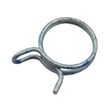
A loose hose at the washer outlet can leak and also reduce drain performance. The manual specifies using a clamp positioned correctly on the drain hose connection. If your clamp is damaged or missing, replace it with the exact style used on this design, such as the clamp WP285655.
Why it matters
A washer that will not drain is usually a restriction (hose kink, standpipe clog) or a drain-path connection issue. Correct hose routing and an air gap help the drain pump work properly and prevent dirty water from flowing back into the tub.
Last updated: February 2026
How to identify a Kenmore washer model?
Your Kenmore washer model number is printed on the model and serial number label; on Kenmore model 11044722401, the manual notes this label is located under the washer lid. Once you have the full model number, we can match the correct parts and service information.
Where to look on the washer
Check these common label locations (start with the one that matches your washer style):
- Top-load Kenmore washers: under the lid, around the tub opening (common for 110-prefix models)
- Front-load Kenmore washers: inside the door opening, along the door frame
- All styles: back panel, near the power cord, or along the control console area
For the exact label location and how it is shown for your unit, use the 11044722401 owner's manual.
What the model number looks like (and what to write down)
Record the model number exactly as printed, including all digits.
| Item | What to capture | Example for this washer |
|---|---|---|
| Model number | Full number from the label | 11044722401 |
| Serial number | Full serial from the same label | (varies by unit) |
| Purchase date | Date on receipt (helpful for service) | (your date) |
Why the model number matters for parts
Kenmore washers can look similar but use different components. Using the full model number helps us match the right fit for items like:
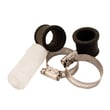
- Drain hose and connectors (for example, washer drain hose sleeve connector WP384496)
- Hose clamps (for example, clamp WP285655)
- Wire harnesses and electrical parts
- Suspension and balance components
Quick tips to avoid mix-ups
- Copy the model number directly from the label, not from the control panel styling
- Include every digit (Kenmore 110 models are often 11 digits)
- If the label is worn, clean it gently and use a flashlight to read stamped characters
Why it matters
The model number is the fastest way to prevent wrong-part returns and to pull the correct diagrams, troubleshooting steps, and maintenance guidance for your exact Kenmore washer.
Last updated: February 2026
Is it worth repairing a Kenmore washing machine?
Yes, it’s usually worth repairing a Kenmore washer when the fix restores reliable operation for less than replacing the machine. For Kenmore model 11044722401, we focus on the failure type (drain, spin, leaks, electrical) and whether the repair addresses the root cause per the 11044722401 owner's manual.
Quick way to decide (repair vs. replace)
We use these practical checkpoints:
- Repair it when the issue is isolated (hose leak, loose clamp, minor electrical part) and the washer is otherwise solid.
- Repair it when the symptom is repeatable and diagnosable (consistent no-drain, consistent no-spin).
- Replace it when multiple major systems are failing (drain + spin + control problems) or the tub/drive system damage is extensive.
- Repair it when parts are available and the repair is straightforward for a technician.
- Replace it when corrosion, chronic leaks, or repeated breakdowns have already occurred.
Common repairs that are often worth it
These are frequent, cost-effective fixes on many Kenmore washers:
| Symptom | Often-related area | Example part you might need |
|---|---|---|
| Water on floor near drain | Drain hose connection | Clamp WP285655 |
| Slow or incomplete draining | Drain hose routing/connection | Washer drain hose sleeve connector WP384496 |
| Vibration or banging | Suspension/leveling | Suspension W10764578 |
Why it matters
A targeted repair can extend the washer’s usable life and prevent secondary damage (for example, a small leak can lead to bigger failures if it reaches wiring or bearings). The manual also emphasizes safe servicing practices and routine care that reduce repeat problems. See the safety and maintenance sections in the 11044722401 owner's manual.
Before you spend money: 5 checks we recommend
- Confirm the washer is level and the load is balanced.
- Inspect hoses for cracks, kinks, or loose connections.
- Look for fresh rub marks or water tracks that pinpoint the leak source.
- Run a rinse and drain cycle and listen for pump/drain changes.
- If an error code appears, match it to the correct Kenmore washer error-code family (many Kenmore designs use different code sets).
Last updated: February 2026
What is the average lifespan of a Kenmore washer?
A Kenmore washer typically lasts 10 to 15 years. For Kenmore model 11044722401, regular care (proper loading, periodic cleaning, and keeping hoses in good shape) helps you reach the high end of that range and reduces wear on key drive and suspension components.
Typical lifespan and what affects it
Most washers land in the same general window, but real-world life depends on usage and maintenance.
- Loads per week: more cycles equals more wear
- Overloading: stresses the basket, suspension, and drive system
- Water quality: hard water can increase buildup and odor issues
- Drain and fill health: slow filling or draining makes the washer work harder
- Vibration control: an unlevel washer accelerates suspension wear
Maintenance that extends washer life
The 11044722401 manual includes routine care topics like cleaning, loading guidance, and water inlet hose checks; follow the schedule in the 11044722401 owner's manual.
- Run periodic cleaning cycles as recommended
- Leave the door/lid area dry between uses to reduce odor and residue
- Check fill hoses for bulges, cracking, or seepage
- Keep the washer level to limit shaking and out-of-balance stress
- Use the right detergent amount to prevent excess suds and buildup
Quick “replace vs. repair” guide
| What you’re seeing | Common cause | Best next step |
|---|---|---|
| Won’t drain or drains slowly | Drain path restriction or hose issue | Inspect drain hose routing and connections; consider a drain-hose related part if damaged |
| Excessive shaking or banging | Load balance or worn support | Re-level washer, reduce load size; inspect suspension components |
| Intermittent starting or weak spin | Electrical start/drive issue | Check power supply and wiring; test start components |
If you’re chasing a drain connection leak or a loose hose fit, a correct clamp often solves it; match the connection style and consider the clamp WP285655 when the original clamp is distorted or won’t hold tension.
Why it matters
Planning around a 10 to 15 year lifespan helps you decide when maintenance is worth it, when a single part replacement is the smart move, and when repeated failures signal it’s time to retire the washer.
Last updated: February 2026
What is the cubic ft capacity of a Kenmore washer model 11044722401?
Kenmore washer model 11044722401 is a compact automatic washer (portable and permanent-install variants are listed in the documentation). Compact washers of this type typically run about 1.5 to 2.5 cu. ft. capacity; confirm the exact published capacity in the 11044722401 washer manual.
What we can confirm for model 11044722401
The manual identifies this unit as a compact automatic washer and references both:
- 110.4418__ (permanent installation)
- 110.4472__ (portable installation)
That compact design is the key reason the capacity is smaller than a full-size top-load washer.
Typical capacity range for compact washers (what to expect)
Most compact top-load washers are designed for smaller loads and tighter spaces. In real-world use, that usually means:
- Smaller basket volume than standard 27-inch top-load models
- Better results with small to medium loads
- Less water and detergent per cycle (use HE detergent if your cycle guidance calls for it)
- More frequent loads for bulky items like comforters
How to find the exact capacity for your unit
Use these quick checks to locate the manufacturer-stated number:
- Look in the Specifications section of the 11044722401 washer manual
- Check the model and serial tag (commonly under the lid or around the lid opening)
- If your washer is installed as portable, compare any included paperwork for the portable kit details
Fast reference table
| Washer style | Typical capacity | Common use case |
|---|---|---|
| Compact top-load (11044722401 family) | 1.5 to 2.5 cu. ft. | Apartments, small laundry areas |
| Full-size top-load | 3.2 to 5.0+ cu. ft. | Larger households, bulky loads |
Why it matters
Capacity directly affects load size, cleaning performance, and spin balance. Keeping loads within the intended capacity helps prevent out-of-balance spinning, poor agitation, and longer cycle times.
Last updated: February 2026