
Are air compressor parts interchangeable?
Most parts on a Craftsman 106153680 air compressor are not interchangeable across brands or even across similar-looking models; major components (pump, motor, pressure switch, regulator/manifold, tank fittings) must match the compressor’s PSI/CFM design and mounting. Some external fittings can interchange if the thread and coupler style match.
What’s usually model-specific (not interchangeable)
These parts must match the Craftsman 106153680 design, port sizes, and performance specs:
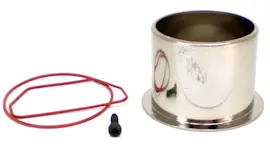
- Pump and cylinder head components (valves, gaskets, reed plates)
- Motor and capacitor (voltage, RPM, frame, shaft size)
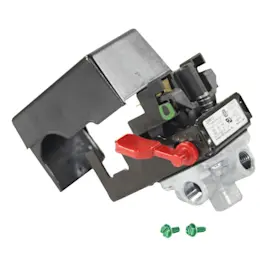
- Pressure switch (cut-in/cut-out range, port type, unloader style)
- Regulator and manifold assemblies (port layout, gauge range, relief valve rating)
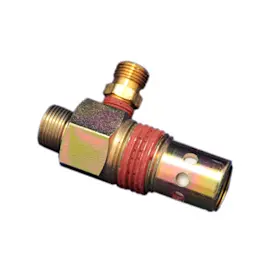
- Check valve and unloader tube connections (thread type and seat style)
What’s often interchangeable (if you match the standard)
Some “plumbing” and accessory items can cross over when you match the exact standard and size:
- Quick-connect couplers and plugs (same coupler series and body size)
- NPT threaded fittings (same NPT size and sealing method)
- Air hose ends and adapters (matching thread and coupler type)
- Drain valve replacements (matching thread size)
Quick compatibility checklist
Use this before swapping any part from another compressor.
| Item you’re swapping | Must match | What happens if it doesn’t |
|---|---|---|
| Pump or motor | Mounting pattern, RPM, rotation, CFM/PSI capability | Overheating, poor output, early failure |
| Pressure switch | Cut-in/cut-out, port thread, unloader compatibility | Won’t shut off, won’t restart, safety risk |
| Coupler/plug | Coupler “profile” and size, thread type | Leaks, won’t connect, restricted airflow |
| Threaded fitting | NPT size, sealing method (tape/sealant) | Leaks, cracked ports, stripped threads |
Why it matters
Interchangeable-looking parts can still change airflow, pressure control, and safety behavior. On a twin-cylinder tank-type paint sprayer compressor like the Craftsman 106153680, mismatched components commonly cause slow recovery, constant running, nuisance tripping, or persistent leaks.
Best practice when you’re unsure
- Match thread type and size first (many compressor ports are NPT)
- Match coupler series (industrial, automotive, ARO, etc.) before buying plugs/couplers
- Replace leaking fittings with the same style first, then upgrade as a set (coupler plus plugs)
- If the issue is electrical, test safely with a meter before replacing parts
For electrical checks that affect motors, switches, and wiring, we use the steps in how to use a multimeter to test electrical parts video.
Last updated: February 2026
How to find air compressor model number?
On a Craftsman air compressor like model 106153680, the model number is stamped on the unit’s identification label (often a metal or foil placard). Once you find it, match the characters exactly; that is what we use to pull the correct parts list and diagrams.
Where to look on the compressor
Check these common spots first (wipe dust and overspray off the surface so the stamp is readable):
- The tank near the drain valve or tank seam
- The pump or motor mounting plate area
- The frame or handle upright
- Near the pressure switch or regulator manifold
- The rear or underside of the tank (use a flashlight)
What the label usually includes (and what to write down)
Most air compressor ID labels include several fields. Record them exactly as shown:
| Label item | What it’s used for | Tip |
|---|---|---|
| Model number | Correct parts lookup | Copy every digit and dash |
| Serial number | Production run details | Helpful when parts changed mid-run |
| Voltage/amps | Electrical troubleshooting | Match to your outlet/circuit |
| Tank capacity/pressure | Performance reference | Useful for diagnosing slow fill |
Tips to avoid ordering the wrong parts
Small differences in the model number can point to a different pump, pressure switch, or regulator setup.
- Don’t use the tank size or brand name alone
- Don’t guess missing characters; re-check the label with better lighting
- If the label is painted over, gently clean it so the stamp shows
- Use the exact model number when searching on Sears PartsDirect
Why it matters
Air compressor parts are highly model-specific. Using the exact model number ensures the correct match for wear items like check valves, regulators, pressure switches, and safety valves, and it prevents fit and pressure-rating issues.
Last updated: February 2026
What is the most common cause of air compressor failure?
On the Craftsman 106153680 (a twin-cylinder tank-type paint sprayer with an air compressor), the most common failure cause is preventable overheating and wear from poor airflow and moisture management. Leaks that force long run times and electrical stress (cords, outlets, switches) are also frequent drivers of breakdowns.
Most common failure causes (what to check first)
- Overheating: clogged cooling fins, dust buildup, or poor ventilation around the pump and motor
- Moisture and corrosion: not draining the tank, leading to rust and valve problems
- Air leaks: fittings, hose connections, regulator area, unloader line, or check valve seepage
- Overwork: running near nonstop because demand exceeds the unit’s duty cycle
- Electrical stress: undersized extension cords, weak outlets, or failing start components
Quick prevention checklist
- Keep the pump and motor clean and well-ventilated; maintain clear space around the unit.
- Drain the tank after each use to remove water.
- Do a leak test with soapy water on fittings and connections.
- Use a proper power source; avoid long, light-gauge extension cords.
- If your unit is oil-lubricated, keep oil at the correct level and change it on schedule; if it is oil-free, do not add oil.
Symptom-to-cause guide
| Symptom | Most likely cause | Best first step |
|---|---|---|
| Runs hot or shuts off | Overheating, restricted airflow | Clean cooling areas; improve ventilation |
| Won’t build pressure | Leak, valve/reed issue | Soapy-water leak check; inspect valves |
| Cycles too often | Small leaks, check valve seep | Tighten fittings; test for backflow |
| Hums or trips breaker | Power/starting issue | Use correct outlet; test electrical parts |
Why it matters
Heat, moisture, and leaks make the compressor run longer and hotter; that accelerates wear on the pump, valves, and motor and turns minor issues into a no-start or no-pressure failure.
For safe, accurate electrical checks, use how to use a multimeter to test electrical parts video.
Last updated: February 2026
Will a 20 gallon air compressor run an impact wrench?
Yes. A 20-gallon air compressor can run an impact wrench for short, occasional bursts, but real-world performance depends on the compressor’s CFM at 90 PSI and the wrench’s air demand; if CFM is low, the tool will hit hard briefly, then weaken while the tank refills.
What to check first (the specs that matter)
Look at the data plate or listing for your compressor and impact wrench, then compare these items:
- Compressor CFM at 90 PSI (most important)
- Cut-in/cut-out pressure (often around 90 to 120-150 PSI on many units)
- Impact wrench required CFM at 90 PSI (often listed on the tool)
- Hose and fitting size (3/8-inch hose flows better than 1/4-inch for impacts)
- Regulator setting at the tool (set for the wrench’s rated pressure)
Practical CFM guidelines for a 20-gallon setup
Tank size helps with short bursts; CFM determines whether you can keep working without waiting.
| Impact wrench use case | Typical tool demand (CFM @ 90 PSI) | What you’ll experience with a 20-gal compressor |
|---|---|---|
| Lug nuts, occasional use | 4 to 5 | Works if compressor can keep up; brief pauses may be needed |
| Repeated fasteners, shop use | 5 to 8 | Tank drains quickly; frequent recovery time |
| Heavy continuous work | 8+ | Not a good match; pressure drops and torque falls off |
How to get better impact performance (without changing the compressor)
These steps improve airflow and reduce pressure drop, which directly affects torque:
- Use a 3/8-inch ID air hose (shorter is better)
- Install high-flow couplers and avoid restrictive quick-connects
- Drain the tank and use a water separator to keep moisture out of the tool
- Add 2 to 3 drops of air tool oil in the inlet (if your tool requires it)
- Let the tank reach full pressure before starting, then work in bursts
Why it matters
Impact wrenches are “air hungry.” A 20-gallon tank gives you stored air, but if the pump’s CFM cannot match the wrench’s demand, pressure at the tool drops and you lose torque, especially on stubborn fasteners.
For help confirming you have the correct model number before ordering compressor parts, use how to find your appliance model number (and what it means for parts).
Last updated: February 2026