Installation guide
 Owner’s manual
 Error Codes



Does a side-by-side refrigerator have a freezer?
Yes. A side-by-side refrigerator like the GE ZIS420NXB is built with two full-height compartments: one side is the fresh food (refrigerator) section and the other side is the freezer section. This layout keeps both refrigerated and frozen items at easy-to-reach shelf height.
In a side-by-side design, the cabinet is split vertically into two tall sections.
- Fresh food side: shelves, bins, and drawers for everyday refrigerated items
- Freezer side: shelves and bins for frozen foods
- Full-height access: both sections run from top to bottom
- Common add-ons: some models include in-door ice and water features (varies by configuration)
For model-specific features and compartment details, we recommend checking the installation guide.
| Refrigerator style | Where the freezer is | Best for |
|---|---|---|
| Side-by-side | Full-height on one side | Easy access to both fresh and frozen items |
| Top freezer | Upper compartment | Budget-friendly, simple storage |
| Bottom freezer | Lower drawer/door | More fresh-food access at eye level |
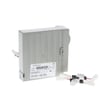
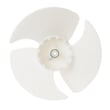
Knowing that a side-by-side refrigerator always includes a dedicated freezer helps when you are planning kitchen space, organizing food storage, or ordering the right replacement parts for the freezer side (like door components, fans, or temperature sensing parts).
Last updated: February 2026
Are GE side-by-side refrigerators good?
Yes. GE side-by-side refrigerators like model ZIS420NXB are a solid choice when you want easy access to both fresh food and frozen items, strong organization, and built-in features such as ice and water. Long-term satisfaction depends most on correct installation, airflow, and keeping the cooling system clean (see the installation guide).
A side-by-side design typically performs best for households that value daily convenience and storage organization.
Common strengths
- Consistent access to both compartments without bending as much as a bottom-freezer design
- Adjustable shelving and door bins for flexible storage
- Convenient ice and water dispensing (on dispenser models)
- Narrow door swing compared to many French door models
Common tradeoffs
- Freezer compartment is narrower; wide pizza boxes and large platters can be harder to fit
- Ice makers can be louder than expected during harvest cycles
- Performance is more sensitive to airflow restrictions (overpacking, blocked vents)
These steps prevent many “not cooling,” “warm fridge,” and “slow ice” complaints.
- Keep vents inside both compartments clear of food packages
- Set stable temperatures and avoid frequent changes
- Replace the water filter on schedule if you use the dispenser; a restricted filter can reduce water flow and affect ice production (use GE refrigerator water filter MWFP)
- Clean dust from the condenser area periodically to protect cooling efficiency
- Confirm the unit is level and installed to the required clearances and water line guidance
| Feature | Side-by-side (ZIS420NXB style) | French door | Top freezer |
|---|---|---|---|
| Everyday access | Very good | Very good | Good |
| Freezer space for wide items | Fair | Good | Fair |
| Organization | Very good | Very good | Basic |
| Door swing clearance | Often better | Often needs more | Often better |
Most “quality” complaints come from setup and maintenance issues, not the brand itself. Proper installation practices (grounding, water line routing, and clearances) and routine care help the compressor, fans, and controls maintain stable temperatures and reduce noise.
Last updated: February 2026
What size are side-by-side refrigerators?
Most side-by-side refrigerators are about 33 to 36 inches wide, around 68 to 70 inches tall, and roughly 29 to 35 inches deep. For the GE ZIS420NXB built-in side-by-side platform, the installation design guide shows a typical height of 68-3/8 inches for common configurations.
These ranges work for most side-by-side refrigerators when you are measuring a kitchen opening:
- Width: 33 to 36 inches (some built-ins run wider)
- Height: 67 to 70 inches
- Depth: 29 to 35 inches (built-ins vary based on panel and trim)
- Door swing clearance: plan extra space beyond the cabinet opening
The GE ZIS420NXB is a built-in style unit that often uses custom panels and trim, so the most important “size” is the installation and panel dimensions, not just the cabinet opening.
From the installation guide, the design guide lists 68-3/8 inches as a common height reference for the side-by-side configurations shown.
| Built-in series shown | Typical width reference | Typical height reference |
|---|---|---|
| 36-inch class | 33-7/8 in | 68-3/8 in |
| 42-inch class | 39-7/8 in | 68-3/8 in |
| 48-inch class | 45-7/8 in | 68-3/8 in |
- Measure the opening width at top, middle, and bottom
- Measure height from finished floor to the lowest overhead obstruction
- Measure depth to confirm door and handle clearance
- Confirm panel thickness limits if you are using an overlay dispenser panel
- Check for clearance for toe kick and grille areas
Side-by-side refrigerators need enough room for airflow, door swing, and (for built-ins like GE ZIS420NXB) custom panel fit. Using the installation dimensions prevents surprises like doors that hit cabinets or panels that do not seat correctly.
Last updated: February 2026
Is side-by-side better than a French door?
A side-by-side is better than a French door when you want easy access to both fresh and frozen food at eye level and you prefer narrower door swing clearance; a French door is better when you regularly store wide platters and want more full-width refrigerator shelving. For your GE ZIS420NXB, the “better” choice depends on how you use space and doors.
| Feature | Side-by-side (like ZIS420NXB) | French door |
|---|---|---|
| Fresh food shelf width | Narrower, split by center wall | Wider, full-width shelves |
| Freezer access | Eye-level shelves and bins | Lower drawer, deeper storage |
| Door swing clearance | Often needs less side clearance per door | Two upper doors, similar clearance; freezer drawer needs front clearance |
| Organization style | More vertical storage | More horizontal storage |
- You want frozen foods at eye level (less bending).
- You like tall, narrow storage (pizza boxes and wide trays can be harder).
- Your kitchen aisle is tight and you want narrower doors.
- You use door bins heavily for drinks and condiments.
- You want a built-in look with panel options (common on this style).
- You store wide items often (sheet pans, party platters, large deli trays).
- You want more uninterrupted refrigerator shelf space.
- You prefer a large freezer drawer for bulk items.
On built-in side-by-side designs, door and grille panel choices affect fit and usability. The installation design guide for this style also calls out maximum panel weights (fresh food door 75 lb, freezer door 53 lb, grille 18 lb) and dispenser trim thickness limits on dispenser models. Use the installation guide to match your cabinet opening, panel thickness, and door clearances.
- Measure your widest “must-fit” item (platter, pizza box, sheet pan).
- Check your aisle depth for door swing and drawer clearance.
- Decide whether you access the freezer daily (side-by-side advantage).
- If you plan custom panels, confirm weight and thickness limits.
Last updated: February 2026
What is the most common problem with a GE refrigerator?
The most common GE refrigerator complaint is not cooling properly. On your GE ZIS420NXB side-by-side, the usual causes are airflow problems (evaporator fan), dirty condenser area, or a temperature-sensing/control issue; start with basic checks in the installation guide.
- Fresh food warm, freezer OK: evaporator fan issue, blocked vents, frost buildup
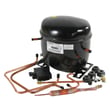
- Both sections warm: condenser fan not running, dirty condenser coil, compressor/inverter problem
- Temps swing up and down: temperature sensor or control board issue
- Loud humming or rattling: fan blade hitting ice or a failing fan motor
- Water leaking: clogged/iced drain, water line/valve issue
- Confirm the unit has proper power on a 115V, 60 Hz, 15 or 20 amp grounded circuit (avoid GFI outlets for this style of installation).
- Make sure nothing blocks interior air vents; rearrange items so air can circulate.
- Listen for fans: you should typically hear a steady fan sound when the compressor is running.
- Check door closure and gasket seal; a poor seal causes warm temps and frost.
- If the unit was recently moved, keep it upright and allow time for normal operation before judging cooling.
If basic checks point to a component, these model-matched parts are common solutions:
| Symptom you see | Common suspect part | Example part for this model |
|---|---|---|
| Warm fresh food, weak airflow | Evaporator fan motor | Rca refrigerator evaporator fan motor WR60X10185 |
| Fan noise, vibration | Evaporator fan blade | Refrigerator evaporator fan blade WR60X41627 |
| Temps inaccurate or erratic | Temperature sensor | Temperature sensor WR55X10025 |
| Random cooling issues | Electronic control board | Refrigerator electronic control board WR55X11070 |
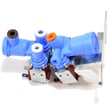
| No water to icemaker/dispenser | Water inlet valve assembly | Refrigerator water inlet valve assembly WR57X10084 |
A refrigerator that is not cooling can spoil food quickly and can also force the compressor and inverter to run longer than normal. Catching airflow and sensor issues early often prevents bigger, more expensive failures.
Last updated: February 2026