Owner’s manual
 View engine





How to replace line on Craftsman gas trimmer?
On the Craftsman gas line trimmer model 917773747, we replace the trimmer line by cutting new line to the correct length, removing the worn line from the carrier plate, then folding and seating the new line under the retainer clips so both sides match. See the 917773747 owner's manual for the illustrated steps.
- Turn the engine off and let it cool completely.
- Disconnect the spark plug wire and keep it away from the spark plug.
- Wear gloves and eye protection.
- Work on a flat surface so the trimmer cannot roll.
- Clean grass buildup from the underside so you can see the carrier plate and clips.
Your 917773747 uses .155-inch diameter trimmer line. If you buy bulk line, cut each piece to 18-3/4 inches before installing.
- Use the built-in length gauge marks on the debris shield/chassis cover.
- Cut two equal lengths so the head stays balanced.
- Replace the line when it is worn to less than half its original length.
| Item | What to use |
|---|---|
| Line diameter | .155 in |
| Cut length (bulk line) | 18-3/4 in |
| Install style | Folded line under retainer clip |
- Remove the worn line from the line carrier plate.
- Fold a new, pre-cut line in half.
- Insert the folded end through the carrier plate opening to the back side of the retainer clip.
- Pull the line outward until it is fully seated under the retainer clip.
- Repeat for the other side.
- Confirm both lines are the same length.
- Reconnect the spark plug wire.
If the line will not stay put after installation, inspect the carrier plate and retainer clip area for damage; a worn carrier plate can cause the head to stop retaining line.
Correct line length and equal sides reduce vibration, improve cutting performance, and help prevent the line from breaking off and becoming a safety hazard.
Last updated: February 2026
What is the fuel mixture for a Craftsman trimmer?
For Craftsman model 917773747, use fresh unleaded gasoline and 2-cycle oil mixed at 40:1 (that is 3.2 oz of oil per 1 gallon of gas). This ratio helps the engine lubricate correctly and prevents hard starting, smoking, and premature wear.
Use this table to measure accurately before you fill the tank.
| Gasoline amount | 2-cycle oil needed | Notes |
|---|---|---|
| 1 gallon | 3.2 oz | Most common mix size |
| 1/2 gallon | 1.6 oz | Good for small batches |
| 1 quart | 0.8 oz | Mix in an approved container |
Mixing in the right order reduces the chance of an oil-lean mix.
- Use a clean, approved fuel can (not the trimmer tank) for mixing
- Add about half the gasoline first
- Add the measured 2-cycle oil
- Cap and shake to blend
- Add the remaining gasoline, then shake again
- Fill the trimmer; tighten the gas cap securely
The 917773747 manual allows gasoline with up to 10% ethanol (E10). Higher ethanol blends can cause poor running and fuel system issues.
- Use fresh fuel (ideally within 30 days)
- Avoid E15 and E85 fuels
- Store fuel can tightly sealed to limit moisture absorption
- If the trimmer will sit, run it dry or use a fuel stabilizer
A correct 40:1 mix keeps the air-fuel-oil balance where the carburetor and cylinder are designed to run. Too little oil can score the cylinder; too much oil can foul the spark plug and reduce power.
For the exact fuel and operating instructions for Craftsman 917773747, follow the 917773747 owner's manual.
Last updated: February 2026
Why does my Craftsman trimmer die when I give gas?
When a Craftsman gas line trimmer model 917773747 dies as you squeeze the throttle, the most common cause is a fuel-air problem: a dirty air filter, stale or contaminated fuel, or a carburetor that cannot deliver enough fuel under load. Use the checks in the 917773747 owner's manual to pinpoint the exact cause.
- Inspect the air filter: if it is dirty or oil-soaked, clean or replace it so the engine can breathe.
- Drain old fuel and refill with fresh gas: the manual allows gasoline with up to 10% ethanol (E10); higher ethanol blends can create running problems.
- Check for water or debris in fuel: rust or dirt in the gas can clog fuel passages.
- Verify throttle control position and operation: make sure the throttle control moves smoothly to FAST.
- Check the spark plug and wire: a loose wire or worn plug can misfire when you accelerate.
The troubleshooting section for this model lists these “loss of power” causes that often show up as stalling when you give it gas:
| Symptom when throttling up | Likely cause | What to do |
|---|---|---|
| Dies immediately | Dirty air filter | Service the air filter first |
| Surges, then stalls | Stale fuel or water in fuel | Replace fuel; clean tank if needed |
| Bogging under load | Grass/debris buildup under trimmer | Clean underside and debris shield |
| Smokes, runs rough | Too much oil in engine | Correct oil level using dipstick |
This trimmer uses a carburetor with a nonadjustable fixed main jet. If the air filter and fuel are good and it still stalls on acceleration, the carburetor is typically restricted internally and needs professional service or replacement (rather than mixture adjustment).
Stalling on throttle usually means the engine cannot maintain the correct fuel-air mix at higher RPM. Fixing it early prevents hard starting, plug fouling, and poor cutting performance.
Last updated: February 2026
Why is my Craftsman Weedeater not starting?
If your Craftsman gas line trimmer model 917773747 will not start, the most common causes are stale fuel, a dirty air cleaner, a fouled spark plug, or a fuel delivery issue. Start with the quick checks below, then follow the starting and troubleshooting steps in the 917773747 owner's manual.
- Use fresh fuel: Drain old gas and refill with fresh, properly mixed fuel (if your engine requires mix). Old fuel is the #1 no-start cause after storage.
- Check the stop switch: Make sure the engine switch is in the ON/RUN position.
- Set choke correctly: Full choke for a cold start; move to half or run as the engine fires.
- Inspect the air cleaner: A clogged air cleaner can flood the engine (too much fuel, not enough air). Replace if dirty.
- Check the spark plug: If it is wet, black, or damaged, clean or replace it and set the gap per the manual.
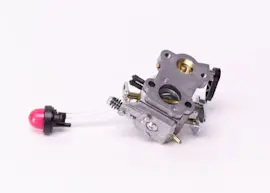
- Prime (if equipped): Press the primer bulb until fuel moves through the lines (do not over-prime).
| What you see | Likely cause | What to do |
|---|---|---|
| Plug is wet with fuel | Flooded engine, restricted air flow | Open choke, hold throttle open, pull to clear; check air cleaner |
| Plug is dry | Fuel not reaching cylinder | Check fuel level, fuel lines, primer bulb, carburetor |
| Starts then dies | Dirty carburetor or restricted fuel flow | Replace fuel, clean fuel path; service carburetor |
| No spark | Ignition issue | Try new plug first; then inspect ignition wiring and switch |
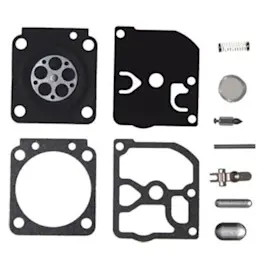
Your 917773747 uses several wear items that can contribute to hard starting over time (the manual lists items like air cleaners and spark plugs as normal wear components). If the cutting head system is binding, it can also load the engine.
- Craftsman line trimmer throttle cable 586861201 (if the throttle is not opening correctly)
- Husqvarna line trimmer cutting head control cable 584954101 (if the head engagement is not responding)
- Line trimmer belt 532185476 (if the drive system is dragging or damaged)
A no-start condition is usually fuel, air, or spark. Fixing the root cause prevents repeated flooding, reduces pull-start strain, and helps protect the engine from running too rich or too lean.
Last updated: February 2026
What size is the fuel line on a Craftsman trimmer?
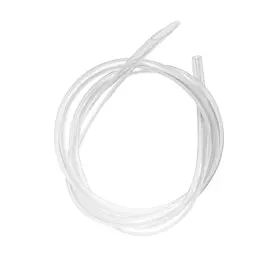
For the Craftsman gas line trimmer model 917773747, the correct fuel line size is the one that matches your tank grommet and carburetor or primer fittings; this model’s manual focuses on fuel type and capacity, so we size the hose by measuring the existing line and fittings, then confirming routing in the 917773747 owner's manual.
We recommend measuring both the old hose and the fittings it connects to so the replacement seals tightly and does not leak air.
- Measure the inside diameter (ID) of the old line (or the outside diameter of the carburetor or primer nipple)
- Measure the outside diameter (OD) of the old line where it passes through the tank grommet
- Replace the line if it is hard, cracked, swollen, or loose on the fitting
- If the line is distorted, size the new hose to the fitting (snug push-on fit)
- If your trimmer uses a primer bulb, you may have two lines that can be different sizes
These are typical ranges used on many small-engine fuel systems; use them only as a starting point and match your measurements.
| Fuel line location | Typical ID range | Typical OD range |
|---|---|---|
| Tank to carburetor (supply) | 1/8 in to 3/16 in | 3/16 in to 1/4 in |
| Primer return (if equipped) | 3/32 in to 1/8 in | 5/32 in to 3/16 in |
A fuel line that is even slightly oversized can pull air and cause hard starting, surging, or stalling. A line that is undersized restricts fuel flow and makes the engine bog down under load.
Last updated: February 2026
How to replace a line trimmer head?
On the Craftsman 917773747 gas line trimmer, “trimmer head” service usually means servicing the cutting head at the bottom of the unit: either installing new fixed trimmer lines on the carrier plate or replacing the cutting head assembly if it is damaged. Use the steps in the 917773747 owner's manual for the correct procedure and hardware order.
- Shut the engine off and wait for all moving parts to stop
- Disconnect the spark plug wire and secure it away from the plug
- Work on a flat surface with the trimmer stable
- Wear gloves and eye protection
- Keep fuel and vapors away from ignition sources
Many walk-behind trimmers like model 917773747 use fixed-length line pieces that lock into a carrier plate.
- Remove the worn line from the carrier plate
- Cut new line to the length specified in the manual (pre-cut line is also referenced there)
- Fold the new line in half
- Insert the folded end through the carrier plate opening to the back side of the retainer clip
- Pull the line outward until it seats fully under the retainer clip
- Repeat for the other side and confirm both lines match in length
Use this approach when the head is cracked, bent, or will not hold line.
- Remove the chassis cover fastener(s) as shown in the manual
- Remove debris shield fasteners to access the head area
- Note the order of washers, spacers, and fasteners before removal
- Replace the head components, then tighten hardware securely
- Spin the head by hand to confirm it turns freely without rubbing
| What you are replacing | What to look up for model 917773747 | Why it matters |
|---|---|---|
| Carrier plate (line holder) | Line trimmer carrier plate 594935003 | Worn openings or clip area can let line slip out |
| Complete cutting head area | Cutting head assembly in the parts diagram | A bent or damaged head causes vibration and poor cut |
A secure cutting head and correctly installed trimmer line prevent vibration, improve cut quality, and reduce the chance of line ejecting during operation.
Last updated: February 2026