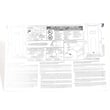
Installation guide
 Owner’s manual
 Error Codes


How long should a Kenmore gas stove last?
A Kenmore gas range like model 79078813402 typically lasts 15 years with normal household use. Regular cleaning to prevent grease buildup, using the self-clean cycle correctly, and fixing ignition or heating issues early are the best ways to reach that lifespan.
Typical lifespan and what affects it
Most gas ranges reach their full service life when the burners light reliably, the oven heats evenly, and grease is kept from accumulating in hot areas.
Common factors that shorten lifespan:
- Heavy daily cooking (high heat and long bake times)
- Grease buildup under burner areas and inside the oven cavity
- Skipping routine cleaning and inspection
- Ignition problems that delay lighting and stress components
- Overheating from blocked ventilation or poor airflow
Maintenance that helps your range reach 15 years
We recommend following the cleaning and use guidance in the 79078813402 owner's manual. The manual emphasizes regular cleaning to keep parts free of grease that could catch fire, and it outlines safe self-clean practices.
Practical upkeep checklist:
- Wipe spills promptly; remove sugary or melted plastic spills as soon as the surface is safe
- Clean the cooktop and areas around burners so ports stay clear
- Keep the oven bottom and door liner areas clean (soil can bake on and cause hot spots)
- Use self-clean only as directed; ventilate the kitchen during the first self-clean cycle
- Address slow ignition early; a weak oven igniter can prevent proper burner lighting
Parts that commonly impact performance over time
If performance drops, these parts are frequent culprits on gas ranges:
| Symptom | Common cause | Example part for 79078813402 |
|---|---|---|
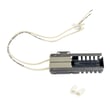
| Oven won’t heat or heats slowly | Weak oven igniter | Igniter 5303935066 |
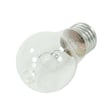
| Oven light out | Burned-out bulb or socket issue | Range oven light bulb 316538904 |
| Uneven surface flame | Dirty or worn burner head/cap | Range surface burner head 316212400 |
Why it matters
A 15-year lifespan assumes safe, efficient combustion and stable oven temperatures. Keeping grease from building up and correcting ignition or burner issues early helps prevent overheating, poor baking results, and premature wear.
Last updated: February 2026
How to know if a gas stove regulator is bad?
On the Kenmore 79078813402 gas range, a failing pressure regulator most often shows up as unstable burner flames (too weak, too high, or hard to adjust) and oven heat that is inconsistent. The installation instructions also emphasize correct inlet pressure and proper leak testing, because incorrect regulation can mimic other problems.
Common signs of a bad range regulator
- Surface flames are consistently too low or too high on multiple burners
- Flames lift off the burner, roar, or blow out easily
- Oven bake or broil heat is inconsistent even after preheating
- Sooting or heavy black residue appears around burners or cookware
- You smell gas or hear hissing near the regulator or supply connection (shut off gas immediately)
Quick checks that rule out look-alike issues
Before blaming the regulator, we check the basics that commonly cause the same symptoms:
- Confirm the regulator gas valve is in the ON position (called out in the installation instructions)
- Make sure burner caps and heads are seated correctly and ports are clear
- After cleaning, let burners run a few minutes; the manual notes orange flame can be temporary from moisture or dust
- Verify the range is set up for the correct fuel (natural gas vs LP/Propane conversion)
What the installation guide tells us about pressure and leak testing
The 79078813402 installation guide gives key limits that matter when diagnosing regulation problems:
| Item | What “normal” looks like | Why it matters |
|---|---|---|
| Maximum inlet pressure to regulator | 14 inches water column | Higher pressure can cause unsafe operation and poor flame control |
| Leak test method | Liquid leak detector only | Never use a flame to check for leaks |
| Manifold pressure check | Use a manometer at a specified top burner orifice | Confirms whether regulation is correct under load |
For the exact procedure and diagrams, use the installation guide.
When replacement is the right fix
If multiple burners and the oven all show poor flame control, and cleaning and fuel setup are correct, replacing the regulator is the most direct repair. For this model, the correct replacement is the range pressure regulator 5304521339.
Why it matters
A regulator controls gas flow to every burner and the oven. When it fails or is mis-set, you can get poor cooking performance, soot, and unsafe gas leakage risk. Correct shutoff, leak testing, and pressure checks prevent misdiagnosis.
Last updated: February 2026
How to take the top off a Kenmore gas range?
On the Kenmore 79078813402 gas range, removing the cooktop (main top) typically starts with lifting off the grates and burner caps, then removing any burner-head screws so the top can lift or hinge up. Follow the exact fastener locations and lift points in the 79078813402 installation guide.
Before you start (safety and prep)
- Turn all burner knobs to OFF and let the range cool completely.
- Shut off the gas supply at the external manual shut-off valve.
- Unplug the range (or switch off the breaker) before working near wiring.
- Protect the countertop and enamel surfaces with a towel or cardboard.
- Keep a small container for screws so nothing drops into the burner box.
Typical cooktop removal steps
- Remove the grates.
- Lift off the burner caps.
- Remove the surface burner heads (some versions use screws through the burner head into the cooktop).
- Look for screws at the front lip (under the control panel edge) or under the burner heads; remove them.
- Lift the cooktop from the front; if it hinges, support it so it does not strain the gas tubing or igniter wires.
If your burner head is damaged or seized, replacing the exact burner head can be easier than forcing it; use the correct part such as the range surface burner head 316212400 when it matches your position and size.
What you may see under the top (and what it means)
| What you find | Common cause | What to do next |
|---|---|---|
| Heavy grease buildup | Spillovers and heat-baked residue | Clean before reassembly so burners seat flat |
| Loose igniter wires | Vibration or prior service | Reseat connectors; repair damaged wiring |
| Misaligned burner head/cap | Parts not seated | Reinstall so the cap sits level |
Why it matters
A cooktop that is not seated correctly can cause uneven flames, clicking igniters, or burners that light slowly. Removing the top the right way prevents bent metal, stripped screws, and pinched igniter wiring.
Last updated: February 2026
How to tell if a gas stove igniter is bad?
On the Kenmore 79078813402 gas range, an igniter is bad when it won’t spark or glow properly, the burner takes longer than normal to light, or you smell gas without ignition. In normal operation, surface burners should light within about 4 seconds after air is purged; the oven burner typically lights within 30 to 60 seconds. See the 79078813402 installation guide for the expected ignition behavior.
Quick symptoms checklist
- Surface burner clicks/sparks but won’t light, or lights only after repeated tries
- Oven igniter glows but the burner never lights (or lights very late)
- Ignition is slow, then lights with a noticeable “whoosh”
- You smell gas but there’s no flame (turn the knob back to OFF immediately)
- Igniter looks cracked, heavily discolored, or damaged
What “normal” looks like on this model
The installation instructions describe these typical timeframes once gas and power are correct.
| Location | What you should see/hear | Typical timing |
|---|---|---|
| Surface burner | Sparking at the electrode, burner lights when gas is available | About 4 seconds (after air is purged) |
| Oven burner | Igniter “glows” like a light bulb, then gas valve opens and flame appears | About 30 to 60 seconds |
Common causes that mimic a bad igniter
Before replacing parts, we check these because they cause the same “won’t light” complaint.
- Burner cap/head not seated correctly (misaligned parts can prevent proper lighting)
- Food spills or cleaners blocking the burner ports
- Debris entering the orifice holder opening (keep it clear)
- Air in the gas line after installation; leave the knob at LITE briefly to purge air
When replacement is the right fix
If the oven igniter glows weakly or the oven burner won’t light reliably, replacing the oven igniter is a common repair for this Kenmore range. The correct replacement part for this model is the igniter 5303935066.
Why it matters
A weak igniter can delay ignition and cause gas odor, uneven heating, and unreliable baking or broiling. Restoring proper ignition protects cooking performance and helps the gas valve open when it should.
Last updated: February 2026
Where can I find the gas range model number?
On Kenmore gas range model 79078813402, the model and serial number are on the appliance identification plate. For sealed-burner ovens, the plate is located on the right-hand surface of the oven front frame at the storage or warmer drawer opening, or in the lower panel area; see the 79078813402 installation guide for the exact wording and access steps.
Where to check on model 79078813402
- Pull out the storage drawer (or warmer drawer) and look at the right side of the front frame
- If your range has a removable lower panel instead of a drawer, check behind the lower panel area
- Look for a metal plate or foil label with model and serial information
- Use a flashlight; the label is easiest to read from a low angle
- Write the numbers down exactly, including any dashes or extra digits
What information is on the plate
This is the information we use to match the correct Kenmore parts diagrams and specifications.
| Identification plate item | Why we use it |
|---|---|
| Model number | Matches the correct parts list for your range |
| Serial number | Helps identify the production run for compatibility |
| Lot number or letter (if shown) | Helps narrow down version changes |
| Fuel type and pressure | Confirms how the range was set up from the factory |
Why it matters
Using the full model number prevents ordering the wrong parts for your range, especially for items that can vary by version such as an igniter, burner components, control board, or oven door seal.
Last updated: February 2026