Owner’s manual
 Error Codes



What is the life expectancy of a Jenn Air refrigerator?
Jenn-Air refrigerators typically last 15 years. With steady maintenance (clean airflow, correct temperatures, and timely water filter changes), many units reach 15 to 20 years of service; heavy use, poor ventilation, and cooling-system strain can shorten that lifespan. For model-specific care details for JFC2089HTB, use the owner's manual.
Typical lifespan and what affects it
Most refrigerator life expectancy comes down to how hard the sealed system and fans have to work.
- Ventilation and condenser cleanliness: restricted airflow makes the compressor run longer
- Door seal condition: air leaks cause longer run times and temperature swings
- Evaporator fan performance: weak airflow leads to warm spots and frost issues
- Defrost system health: failures can ice up the evaporator and reduce cooling
- Water quality and filter maintenance: protects the water system and helps ice maker performance
Maintenance schedule we recommend
These intervals help a Jenn-Air refrigerator like JFC2089HTB reach its normal service life.
| Task | How often | Why it helps |
|---|---|---|
| Replace water filter | Every 6 to 12 months | Maintains flow and ice/water performance |
| Clean condenser area | Every 6 to 12 months | Reduces compressor run time |
| Check door gaskets for gaps | Every 6 months | Prevents warm air leaks and frost |
| Verify temperatures (37°F fresh food, 0°F freezer) | Monthly | Reduces food spoilage and overwork |
If you need a replacement filter for this model, we list the refrigerator water filter EDR4RXD1 on this page; you can also search by model on Sears PartsDirect.
Why it matters
A refrigerator that runs longer than it should (from dirty coils, air leaks, or poor airflow) wears out high-cost components sooner, especially the compressor and fan motors. Keeping temperatures stable and airflow clear is the simplest way to protect long-term reliability.
Last updated: February 2026
What are common problems with Jenn Air refrigerators?
Common problems we see with Jenn-Air refrigerators like model JFC2089HTB include not cooling well, water leaks, ice maker or dispenser issues, doors not sealing, and louder-than-expected operating sounds. Many of these start with airflow restrictions, a weak door seal, or a clogged water filter; our JFC2089HTB owner's manual troubleshooting section helps narrow it down fast.
Most common symptoms and what they usually point to
- Not cooling or warm temperatures: blocked vents, evaporator fan issue, dirty condenser coil, or a defrost problem
- Water leaking: water line connection issues, low water pressure, kinked tubing, or a clogged filter
- Ice maker not working: water supply shutoff, frozen fill tube, low pressure, or inlet valve trouble
- Water dispenser slow: clogged filter or air in the water line
- Door not closing or moisture inside: drawers/bins obstructing the door, refrigerator not level, or worn/dirty gaskets
- Unfamiliar clicking or humming: often normal compressor and control operation
Quick checks we recommend first (before replacing parts)
- Confirm temperatures: set refrigerator to about 37°F and freezer to about 0°F.
- Check door seal and obstructions: make sure drawers, bins, and containers are not preventing a full close.
- Clean the condenser coil: dust buildup can cause poor cooling and longer run times.
- Verify water supply: fully open shutoff valve; avoid kinked lines.
- Replace the water filter on schedule: a clogged filter commonly causes slow flow and ice maker fill issues.
Parts that commonly solve these problems on JFC2089HTB
| Problem | Common fix | Example part for this model |
|---|---|---|
| Slow water flow, weak ice production | Replace clogged filter | Refrigerator water filter EDR4RXD1 |
| Ice maker not cycling or not making ice | Replace ice maker assembly | Refrigerator ice maker D7824706Q |
| Warm temps, poor airflow | Inspect evaporator fan blade/motor | Evaporator motor WPW10128551 |
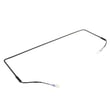
| Frost buildup, warm fridge section | Check defrost system | Refrigerator defrost heater WP67002493 and refrigerator defrost bi-metal thermostat WP67003426 |
Why it matters
Cooling, ice, and water issues often cascade: restricted airflow or a dirty condenser can raise temperatures, which can also reduce ice production and increase condensation. Fixing the root cause first prevents repeat failures and wasted food.
Last updated: February 2026
What are the advantages of bottom mount refrigerators?
Bottom-mount refrigerators like the Jenn-Air JFC2089HTB keep fresh-food shelves at eye and waist level, so we reach everyday items with less bending. The freezer sits below, which fits how most households use a refrigerator more often than the freezer.
Key advantages you will notice day to day
- Easier access to fresh food (less stooping for produce, drinks, and leftovers)
- Better organization for frequently used items because the main compartment is higher
- Freezer storage stays separate and contained in the lower drawer area
- Good fit for kitchens where you want the refrigerator section to be the primary focus
- Often supports efficient use habits (keeping doors closed, avoiding overcrowding) that help cooling performance
How this layout can help performance and efficiency
A bottom-mount design encourages quick access to the refrigerator section, which helps reduce door-open time. In our experience, that matters because frequent or long door openings make the refrigerator run more often. The manual also emphasizes good airflow and avoiding overcrowding for efficient operation. See the JFC2089HTB owner's manual.
| What you do most | Bottom-mount benefit | Why it helps |
|---|---|---|
| Grab fresh food many times a day | Fresh-food section is higher | Less bending, faster access |
| Use freezer less often | Freezer is lower | You only bend when you need frozen items |
| Want steadier temps | Easier to keep doors closed quickly | Less warm air entering the cabinet |
Related parts that support common bottom-mount features
If your model has an ice maker or water filtration setup, keeping those systems maintained helps convenience match the design benefits.
- Refrigerator water filter EDR4RXD1 for water and ice quality
- Refrigerator ice maker D7824706Q if ice production becomes inconsistent
Why it matters
Most people access fresh food far more than frozen food. A bottom-mount layout puts the most-used space where it is easiest to reach, and it supports habits that help the refrigerator cool efficiently over time.
You can order replacement parts for your Jenn-Air JFC2089HTB from the parts list for this model, or search by model number on Sears PartsDirect.
Last updated: February 2026
Why is my Jenn Air refrigerator leaking water from the bottom?
Water leaking from the bottom of your Jenn-Air JFC2089HTB refrigerator is typically caused by a clogged or frozen defrost drain, or a leak in the ice maker water supply connection (tubing, fittings, or inlet valve). Use the troubleshooting steps in the JFC2089HTB owner's manual to pinpoint the source.
Most common causes to check first
- Defrost drain blocked or iced over: Defrost water can’t reach the drain pan and ends up on the floor.
- Water line connection seep: A loose fitting or cracked line can drip down to the base.
- Inlet valve leaking: The valve body or fittings can weep even when not dispensing.
- Ice maker fill tube issue: Kinks or restrictions can cause odd fills and overflow.
- Door gasket sealing problem: Warm air creates heavy condensation that can look like a leak.
Quick diagnostic: match the puddle to the source
| What you notice | Most likely source | Best next step |
|---|---|---|
| Water near back/bottom | Water line or inlet valve | Inspect tubing and valve area for the first drip point |
| Water after defrosting, ice in freezer | Defrost drain | Clear ice and flush the drain path |
| Water near front, doors used often | Condensation or gasket | Clean gasket, reduce door-open time |
Steps we recommend (in order)
- Dry everything first, then check again in 1 to 3 hours to find the first wet spot.
- Inspect the water connection; the manual recommends copper tubing because plastic is less durable.
- Check for kinks and rubbing points in the supply line.
- Look at the inlet valve and fittings for mineral tracks or slow drips.
- Confirm doors seal fully; bins or drawers can prevent proper closure.
Parts that often fix bottom leaks
- Refrigerator water inlet valve assembly WP67006531
- Refrigerator water supply tube union, 5/16 x 5/16-in WP2300868
Why it matters
Stopping the leak prevents floor damage and helps the ice maker maintain steady water flow and normal operation.
If you’re ordering replacement parts, use the parts list for JFC2089HTB or search by model number on Sears PartsDirect.
Last updated: February 2026