Owner’s manual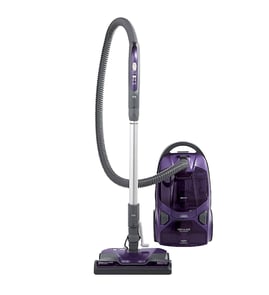


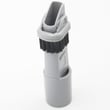
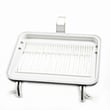
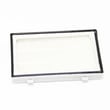


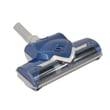
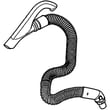
How do I find my Kenmore vacuum model number?
For your Kenmore canister vacuum model 12510701610, the model number is printed on the model and serial number plate on the vacuum body (the canister). Use that exact number when ordering parts or requesting help; it ensures the correct fit and compatibility. See the 12510701610 use & care manual.
On Kenmore canister vacuums like 12510701610, the model/serial plate is typically on the canister housing, not on the wand or floor nozzle.
- Check the underside of the canister body near the hose storage or wand holder area
- Look near the cord rewind area or carry handle on the canister
- Check around the air inlet where the hose plugs into the canister
- If you remove the dust bin, look inside the dust bin compartment area
The label usually includes both identifiers and is often titled similarly to “Model and Serial Number Plate.”
| What you’ll see | Why it’s important |
|---|---|
| Model number (example: 12510701610) | Matches parts diagrams and compatible replacement parts |
| Serial number | Helps with service history and support requests |
| Electrical ratings | Confirms power requirements and safety specs |
- Write the model number exactly as shown (all digits, no spaces).
- Do not use numbers from accessories; items like the wand or nozzle can have their own part markings.
- If you are replacing filters, match by model first, then part ID (for example, the exhaust filter is Kenmore vacuum exhaust filter KC38KDRDZ000).
Kenmore model numbers can look similar across different canister vacuums; using the exact 12510701610 model number prevents ordering the wrong filter, hose, wand, or floor nozzle.
Last updated: January 2026
How long do canister vacuums last?
A Kenmore canister vacuum like model 12510701610 typically lasts 8 to 12 years with normal household use and routine maintenance (filters kept clean, clogs cleared, and airflow maintained). If suction stays weak after maintenance, the vacuum is usually nearing end-of-life.
- Filter care: clogged filters make the motor run hotter and shorten life
- Airflow restrictions: hair, lint, and debris in the hose, wand, or floor nozzle
- Dust bin habits: running with an overfilled bin reduces pickup and stresses the motor
- Cord and rewind use: yanking the cord or letting the plug whip during rewind causes damage
- Floor type and frequency: heavy carpet use generally wears components faster
Use the steps and safety notes in the 12510701610 use & care guide.
| Item | What to do | Typical timing |
|---|---|---|
| Dust bin | Empty before it gets packed | Every use or as needed |
| Primary filter | Clean when dirty; replace if torn or suction does not recover | Check monthly |
| Exhaust (HEPA media) filter | Replace to keep airflow strong | About once per year |
| Clog check | Inspect hose, wand, turbine unit clean-out port | When pickup drops |
If you need replacements, match parts to this model, such as the Kenmore vacuum primary filter KC30KDRDZ000 and the Kenmore vacuum exhaust filter KC38KDRDZ000.
- Repair/maintenance first if you have poor pickup, a full bin, dirty filters, or a clog
- Consider replacement if the motor repeatedly overheats (thermal protector trips), suction stays low after filter replacement, or the hose has a persistent leak/crack
Canister vacuums rely on steady airflow for cooling and suction. Keeping filters clean and passages clear helps the motor run cooler, improves cleaning performance, and extends the service life of your Kenmore 12510701610.
Last updated: January 2026
How to change the belt on a Kenmore canister vacuum?
On the Kenmore 12510701610 canister vacuum, belt service depends on which floor tool you have. This model’s Use & Care Guide focuses on a turbine unit and floor brush (not a belt-driven PowerMate), so we cannot confirm a belt replacement procedure for your exact configuration; we recommend checking your 12510701610 use & care manual and the parts list for your specific nozzle.
- Unplug the vacuum from the outlet.
- Let the motor cool if it recently shut off from overheating.
- Work on a clear surface so small screws or clips do not get lost.
- Avoid pulling the canister by the hose; use the carry handle.
- If your nozzle has a brush roll, remove hair and string first so you can see the belt path.
Many Kenmore canister setups use a power nozzle with a brush roll and belt. The typical belt-change process is:
- Remove the nozzle bottom plate (usually screws or latches).
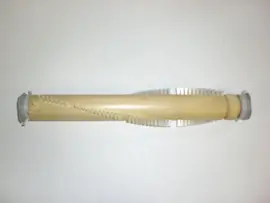
- Lift out the brush roll.
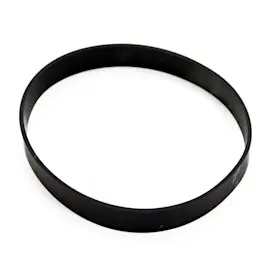
- Slip the old belt off the motor shaft and brush roll.
- Loop the new belt around the motor shaft, then around the brush roll.
- Reinstall the brush roll and bottom plate.
- Spin the brush roll by hand to confirm it turns freely and the belt tracks straight.
| What you see | What it usually means | What to do |
|---|---|---|
| Brush roll does not spin | Belt off-track or jammed brush | Re-seat belt; clear debris |
| Burning rubber smell | Belt slipping from drag | Clean brush roll; verify correct belt |
| Nozzle is hard to push | Brush roll binding or suction too high | Clear brush; adjust suction control if equipped |
The included guide describes a turbine unit with suction control and a clean-out port for clogs. In that setup, loss of brush action is more often caused by debris buildup, restricted airflow, or dirty filters, not a worn belt.
- Clear clogs in the hose/handle and turbine clean-out port.
- Empty the dust bin and clean filters.
- Replace the exhaust filter yearly for best airflow; use Kenmore vacuum exhaust filter KC38KDRDZ000.
A correctly driven brush roll (belt-driven or turbine-driven) improves carpet pickup and prevents overheating from restricted airflow.
Last updated: January 2026