


Which is better, .080 or .095 trimmer line?
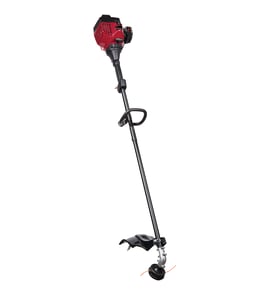
For a Craftsman 944516550 gas line trimmer, .095 trimmer line is better for durability and cutting thicker weeds, while .080 is better for lighter trimming and cleaner edging. The “best” choice is the thickest line your trimmer head is designed to feed reliably.
Quick comparison: .080 vs .095
| Feature | .080 line | .095 line |
|---|---|---|
| Best for | Light grass, routine edging | Heavy grass, weeds, tougher growth |
| Durability | Lower | Higher |
| Cutting aggressiveness | Moderate | Higher |
| Engine load | Lower | Higher |
| Typical tradeoff | More frequent line breaks | Slightly more vibration and fuel use |
How we recommend choosing the right size
- Use .080 if you mainly edge sidewalks and trim normal lawn grass.
- Use .095 if you regularly hit thick weeds or your line keeps snapping.
- If the head struggles to feed line smoothly, step down in thickness.
- If the engine bogs down more than usual, step down in thickness.
- Match the line size to the trimmer head’s design; forcing thicker line can cause feed problems.
Why it matters
Line diameter changes how hard the engine works and how the head feeds. Going thicker can reduce breakage and improve cutting in tough vegetation, but it can also increase drag, which may reduce runtime and make the trimmer feel less nimble.
Related maintenance tip (when performance drops)
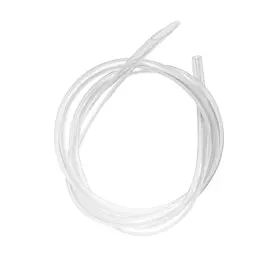
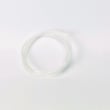
If your trimmer starts cutting poorly or won’t hold RPM even with the right line, fuel delivery issues are common. Checking the fuel lines for cracks or soft spots is a good first step; the parts list for this model includes options like the poulan lawn & garden equipment fuel line, small 530069247 and the ayp lawn & garden equipment fuel line, large 530069216.
Last updated: February 2026
How to replace line on Craftsman gas trimmer?
On the Craftsman 944516550 gas line trimmer, replacing trimmer line is usually a quick job: stop the engine, remove the spool retainer, wind new line evenly onto the spool, then reinstall the retainer and test bump feed. If the head will not feed after reloading, the spool may be worn.
Before you start (safety and setup)
- Shut the trimmer off and let the cutting head stop completely.
- Disconnect the spark plug wire to prevent accidental starting.
- Work on a flat surface so the spring and spool parts do not pop out and get lost.
- Wear gloves and eye protection; cut line ends can be sharp.
How to reload the trimmer line (typical bump-feed head)
- Press the tabs or unscrew the retainer to open the head.
- Remove the spool and note how it sits in the housing.
- Cut two equal lengths of line (many heads use two lines; some use one). Use the size specified for your head.
- Feed the line into the spool holes/slots and wind in the direction of the arrows on the spool.
- Keep the wraps tight and even so the line does not cross over itself.
- Thread the line ends through the eyelets in the head housing.
- Reinstall the spool, spring (if used), and retainer; pull both line ends to confirm they move freely.
If the line will not advance (common causes)
- Line is crossed or wound the wrong direction; rewind neatly.
- Line diameter is too large; switch to the correct size.
- Debris packed in the head; clean the spool cavity and eyelets.
- Retainer is cracked or not locking; replace the retainer clip if it will not hold.
Helpful part to check
| Symptom | What to inspect | Part that may help |
|---|---|---|
| Spool cover will not stay on | Retainer clip tabs worn or broken | Line trimmer spool retainer clip 530401957 |
Why it matters
Correctly wound line feeds smoothly and reduces vibration, stalling, and premature wear on the cutting head and drive components.
Last updated: February 2026
What is the most reliable string trimmer?
The most reliable string trimmer is the one that matches how you actually trim (yard size, weeds vs. edging, run time) and that you can keep maintained with routine fuel and ignition service. For a proven, easy-to-support gas setup similar to Craftsman model 944516550, reliability usually comes down to a clean fuel system, a healthy ignition coil, and a carburetor that meters fuel correctly.
What “reliable” means for string trimmers
Reliability is mostly about consistent starting, steady idle, and strong acceleration under load.
- Starts in a few pulls (cold and hot)
- Idles without stalling when you release the throttle
- Accelerates without bogging or surging
- Runs without fuel leaks or fuel starvation
- Keeps the cutting head secure (no missing retainers/clips)
Most reliable choice by use case (quick guide)
| Your situation | Most reliable type | Why it tends to be reliable |
|---|---|---|
| Small yard, light trimming | Battery trimmer | Fewer fuel-related issues; minimal maintenance |
| Medium yard, mixed weeds | Quality gas trimmer | Strong power; easy to service common wear parts |
| Heavy weeds, long sessions | Pro-grade gas trimmer | Durable clutch/engine components; built for runtime |
| Noise-sensitive areas | Battery trimmer | Quiet operation; no carburetor tuning |
How to keep a gas trimmer reliable (applies to 944516550)
Most “unreliable trimmer” complaints trace back to fuel delivery or spark. We recommend these checks first:
- Replace cracked or soft fuel lines; use the correct sizes like poulan lawn & garden equipment fuel line, small 530069247 and ayp lawn & garden equipment fuel line, large 530069216
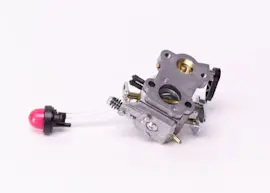
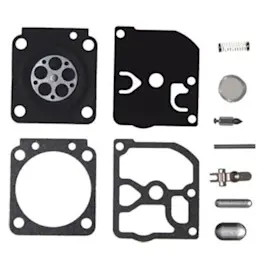
- If it surges, won’t idle, or only runs on choke, inspect the carburetor and intake; a damaged adapter can cause air leaks (see line trimmer carburetor adapter 530057547)
- If there’s no spark or it dies when hot, test/replace the ignition module (see line trimmer ignition coil 578287001)
- Keep the recoil starter working smoothly; worn pulleys can cause hard starting (see line trimmer recoil starter pulley kit 530071786)
- Use fresh, properly mixed fuel and empty the tank for long storage
Why it matters
A “reliable” trimmer saves time because it starts predictably and holds RPM under load. On gas models like the Craftsman 944516550, small fuel or ignition issues quickly turn into no-start, stalling, or bogging problems, so staying ahead of those wear items makes the biggest difference.
Last updated: February 2026