Owner’s manual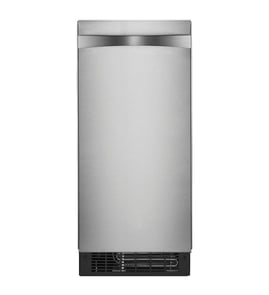





Is it worth replacing the ice maker on a refrigerator?
If your Kenmore 10689593100 freestanding ice maker is otherwise in good condition (no major leaks, consistent cooling, normal operation), replacing a failed component is usually worth it because it restores ice production without the cost and hassle of replacing the whole unit.
Quick way to decide
We use the same practical checklist our techs use: fix the ice maker when the problem is isolated to a serviceable part; replace the unit when multiple major systems are failing.
- Replace a part when the issue is limited to water flow, draining, or controls
- Replace the unit when you have repeated breakdowns across different systems
- Repair makes the most sense when the cabinet, door seal, and cooling performance are solid
- If you see frequent water in the bin area, address draining first (it can mimic other failures)
- Use the troubleshooting and shutdown steps in the 10689593100 owner's manual to confirm symptoms before ordering parts
Common “worth it” repairs on this model
These are high-impact parts that often solve no-ice, small cubes, or poor harvest issues on the 10689593100.
| Symptom | Likely area | Example part for this model |
|---|---|---|
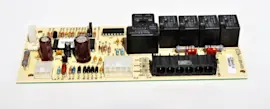
| No ice or erratic operation | Controls/sensors | Ice maker electronic control board W11034363 |
| Slow production, hollow cubes | Water supply/filtration | Water filter F2WC9I1 |
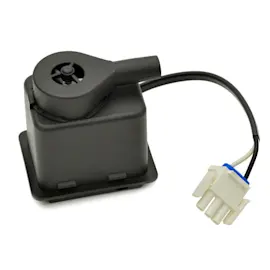
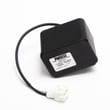
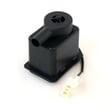
| Water not draining, water backing up | Drain system | Ice maker drain pump W11542868 |
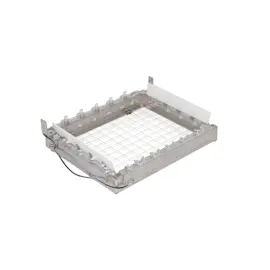
| Slab not cutting cleanly | Cutting system | Cutter grid W10919199 |
When replacement is the better value
Replacement is the better call when the repair cost stacks up quickly or the failure points to sealed-system issues.
- Compressor problems or poor cooling performance
- Multiple expensive parts needed at once (for example, control plus pump plus sensor)
- Ongoing leaks after correcting drain and water line connections
- Heavy corrosion or physical cabinet damage
Why it matters
A freestanding ice maker depends on stable water fill, proper recirculation, clean cutting, and reliable draining. Fixing the correct subsystem first prevents repeat failures and avoids replacing good parts.
Last updated: January 2026
Where is the reset button on an icemaker?
On the Kenmore 10689593100 freestanding ice maker, there typically is not a dedicated “reset” button like you may see on some refrigerator ice makers. To restart operation, we use the control panel to turn the unit off and back on, then allow time for the next ice-making cycle to begin (up to 24 hours for first ice after startup).
What to do instead of a reset button
Use these control-based steps to “reset” normal operation:
- Press ON/OFF to stop the ice maker.
- Wait 30 to 60 seconds.
- Press ON/OFF again to restart ice production.
- If you just powered it on for the first time, allow 24 hours for the first batch.
- Discard the first 2 batches of ice after startup.
- If the bin is full, the unit will shut off automatically and restart when ice is needed.
For the exact control locations and indicator lights, follow the 10689593100 owner's manual.
If it still will not run after cycling ON/OFF
These checks solve most “won’t start” complaints on freestanding ice makers:
- Confirm the unit is plugged into a grounded 3-prong outlet.
- Check the home fuse/circuit breaker.
- Make sure the room temperature is above 55°F (13°C).
- If you added a lot of water or see standing water, wait a few minutes for the drain system to clear.
- Inspect the drain hose for kinks or pinches (especially if your unit uses a drain pump).
Quick symptom guide
| Symptom | Most common cause | What we do first |
|---|---|---|
| No lights, no sound | No power | Check outlet, breaker, cord |
| Lights on, no ice | Unit is off or warm room/water conditions | Press ON/OFF; allow time |
| Water left in bin | Drain restriction | Check drain hose routing |
| Stops with bin not full | Room too cold | Raise room temp above 55°F |
Why it matters
Freestanding ice makers like the 10689593100 manage production automatically (shut off when the bin is full and restart when needed). Cycling the ON/OFF control is the correct way to restart the control logic without interrupting power at the outlet.
Last updated: January 2026
Why is my free standing ice maker not making ice?
If your Kenmore 10689593100 freestanding ice maker runs but produces no ice, the most common causes are the control being off, the water supply being shut off or kinked, or the water filter not being fully locked into the housing. A loose drain cap can also empty the water pan and prevent normal ice production.
Quick checks we recommend first
- Confirm the control is turned On and no control indicators are flashing.
- Verify the water supply valve is fully open and the supply line is not kinked.
- Make sure the drain cap is tight; a loose cap can drain the water pan and lead to thin ice or no ice.
- Check the drain tube and drain line for clogs or kinks.
- Reseat the filter and lock it fully; if the filter is not locked, the unit will not make ice.
Water filter and “no ice” (model-specific)
On model 10689593100, the filter must be inserted and turned clockwise until the alignment arrow lines up with the locked symbol. If it is not correctly locked, the ice maker will not produce ice. Use the steps and diagrams in the 10689593100 owner's manual.
If you need the replacement filter used on this model, match it to the water filter F2WC9I1.
What the symptoms usually point to
| What you observe | What it usually means | What to do next |
|---|---|---|
| Unit runs, reservoir stays empty | Water supply issue | Check shutoff valve, line kinks, inlet flow |
| Reservoir full, evaporator plate stays dry | Water not circulating | Check the recirculation pump and related tubing |
| Water present but drains away | Drain cap or drain restriction | Tighten drain cap, clean drain tube/line |
| “Replace filter” light stays on | Filter missing or not seated | Install or lock filter fully |
Why it matters
An ice maker that runs without making ice is often missing water at the right point in the cycle. Fixing a simple water supply, drain, or filter seating issue prevents wasted run time and helps protect components like the recirculation pump and electronic control.
Last updated: January 2026
Can I run vinegar through my icemaker to clean it?
Yes. For the Kenmore 10689593100 freestanding ice maker, we use a regular cleaning routine to remove mineral scale and odors; vinegar can be used as a descaling cleaner, followed by thorough rinsing so no taste carries into the ice. For model-specific cleaning steps, follow the 10689593100 owner's manual.
How we recommend cleaning (safe, effective steps)
- Turn the ice maker off and empty the ice bin.
- If your unit has a drain setup, make sure the drain cap is tight so water does not empty from the water pan during cleaning.
- Clean interior surfaces with a mild solution; avoid harsh or abrasive cleaners.
- Run one or more rinse cycles with clean water until odor is gone.
- Clean the condenser area regularly; blocked airflow reduces ice production.
- If ice has off taste, odor, gray color, or you see white scale buildup, clean the ice making system.
What to avoid (important for this model)
The manual guidance for this Kenmore ice maker is clear about avoiding chemicals and abrasives that can damage finishes.
- Do not use abrasive or harsh cleaners on exterior surfaces.
- Do not use chlorine bleach on stainless steel surfaces.
- Do not use sharp instruments to scrape residue.
When a water filter matters
If your ice tastes off or you have mineral issues, filtration and correct installation help.
| Symptom | Likely cause | What we do next |
|---|---|---|
| Off taste or odor | Minerals, stagnant water, dirty system | Clean the ice maker system; rinse thoroughly |
| Thin/soft ice or low production | Scale buildup, airflow restriction | Clean system; clean condenser; verify ventilation |
| Poor water quality | Sediment/minerals | Check and replace the water filter F2WC9I1 if equipped |
Why it matters
Minerals removed during freezing build up over time and can reduce efficiency, cause odors, and lead to low ice production. Regular cleaning protects key components like the recirculation pump, drain pump, and cutter grid.
Last updated: January 2026