Owner’s manual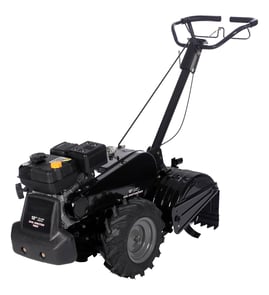


Where is the model number on a Craftsman rear tine tiller?
On the Craftsman rear-tine tiller model 917293203, the model number is printed on the product identification label (decal). On most units, you will find that label on the tine shield/guard area or on the engine area near the fuel tank; some versions place it toward the front of the frame. See the 917293203 owner's manual for the model identification and decal locations.
Common places to check on a rear-tine tiller
Look for a sticker or metal tag that includes “Model No.” and a number like 917.293203.
- Tine shield or tine guard (near the rotating tines)
- Frame rail near the engine mount
- Engine area near the fuel tank
- Front of the tiller frame (near the handle support)
- Handle/control panel area (less common)
Tips to find it fast
If the label is dirty or worn, these steps usually help.
- Wipe the area with a damp rag first; then dry it
- Use a flashlight and look at a low angle to read faded print
- Check both left and right sides of the tine shield
- Look for a decal cluster; the model label is often near safety/operation decals
- Write down the full model number exactly as shown (including dots if present)
What the label typically looks like
| What you see on the label | What it means | Why we need it |
|---|---|---|
| “Model No. 917.293203” | The tiller model identifier | Ensures diagrams and parts match your exact unit |
| Brand name (Craftsman) | Manufacturer/brand family | Helps narrow compatible parts |
| Safety/operation decals nearby | Decal group location | A clue you are in the right area |
Why it matters
We use the model number to match the correct rear-tine tiller parts list, including drive and tine components such as the tiller clutch cable 532110675 and the husqvarna rear-tine tiller drive belt 591372401. Using the exact model number prevents ordering a belt, cable, or tine assembly that will not fit.
Last updated: January 2026
What tiller is made in the USA?
For a Craftsman rear-tine tiller like model 917293203, the country of manufacture is not a reliable way to choose parts or service; what matters is the exact model number and the correct replacement parts and maintenance steps in the 917293203 owner's manual.
How to identify a tiller that’s made in the USA
Manufacturing location varies by brand, model, and production run, so use the tiller’s identification labels and documentation.
- Check the product ID plate or decal on the frame for “Made in …” or “Assembled in …”
- Look for the engine label separately (engine origin can differ from the tiller’s origin)
- Confirm the exact model number and any serial number range
- Use the manual and parts diagrams to match components (tines, belts, cables, chains)
- Compare features that often change by production run (gear case, tine hub style, controls)
Why model number matters more than where it’s made
Even if two rear-tine tillers are made in the same country, they can use different wear items and driveline parts. For Craftsman 917293203, common service parts include the drive belt and clutch cable.
| What you’re trying to do | Best identifier to use | Example for this model |
|---|---|---|
| Buy the correct replacement part | Model number + part ID | 917293203 + 591372401 |
| Fix “tines won’t turn” symptoms | Symptom + driveline parts | Belt, clutch cable, chain |
| Routine maintenance | Manual specs and intervals | Oil type, spark plug gap |
Parts that commonly affect tilling performance
If your question is really about choosing a dependable, serviceable tiller, focus on parts support and maintenance.
- Drive system wear: husqvarna rear-tine tiller drive belt 591372401
- Engagement issues: tiller clutch cable 532110675
- Driveline transfer: tiller chain, #25-50 532102134
- Tine hub wear: rear-tine tiller left hub and plate assembly 532132727
Why it matters
A “Made in USA” label does not guarantee parts compatibility. Using the correct Craftsman 917293203 parts and following the maintenance specs (fuel, oil viscosity, spark plug gap) prevents poor tilling, slipping, and premature belt or tine wear.
Last updated: January 2026
What are the common problems with lawn tillers?
Common problems on the Craftsman 917293203 rear-tine tiller include hard starting or rough running, overheating, excessive bouncing in hard soil, soil clumping when it is too wet, and drive or tine issues such as the tiller not moving or tines skipping. Many fixes are basic maintenance and correct tilling technique from the owner's manual.
Most common symptoms and what they usually mean
- Engine will not start or runs poorly: stale fuel, dirty spark plug, dirty air screen, or carburetor mixture needing adjustment (especially in cold weather or at higher altitude).
- Engine overheats: low or dirty oil, dirty engine air screen, debris around the muffler area, or a partially plugged muffler.
- Excessive bounce or difficult handling: ground is too dry and hard; moisten soil before tilling and avoid trying to till too deep too fast.
- Soil balls up or clumps: ground is too wet; wait until soil dries to a workable condition.
- Engine runs but tiller will not move: tine/drive control not engaged, belt out of adjustment, or belt off pulleys.
- Tines skip over ground: broken shear pin(s) (common when tines hit rocks or roots).
Quick checks we recommend before replacing parts
- Verify oil level and change oil if it is dirty.
- Drain old gasoline and refill with fresh fuel if the tiller has been sitting.
- Clean and regap (or replace) the spark plug.
- Check the air screen and cooling areas for dirt and debris.
- Confirm the drive/tine control is fully engaged and the linkage moves freely.
- Inspect the belt path and tension; replace a worn belt if it slips.
Parts that commonly solve “won’t move” or “tines won’t turn” complaints
| Symptom | Likely area | Example part for this model |
|---|---|---|
| Engine runs but unit will not drive/till | Belt drive | Husqvarna rear-tine tiller drive belt 591372401 |
| Drive engages inconsistently | Control cable/linkage | Tiller clutch cable 532110675 |
| Jerky motion, binding, or noise in drivetrain | Chain/gearcase components | Tiller chain, #25-50 532102134 |
Why it matters
Most tiller problems start as small issues (old fuel, low oil, incorrect depth, loose belt tension) that quickly turn into hard starting, overheating, poor tilling performance, or premature wear on belts, cables, and drivetrain parts.
Last updated: January 2026
How often should I change the oil in my tiller?
For Craftsman tiller model 917293203, change the engine oil after every 50 hours of operation or at least once a year. Also check the crankcase oil level before starting and after each 5 hours of continuous use. See the 917293203 owner's manual.
Oil-change interval for model 917293203
Use this schedule to keep the engine protected during heavy tilling and hot weather:
- Check oil level before each use
- Re-check oil level after each 5 hours of continuous operation
- Change engine oil every 50 operating hours
- Change engine oil at least once per year (even if under 50 hours)
- Change oil more often when operating under heavy load or high ambient temperatures
- Service maintenance items more often in dirty or dusty conditions
Quick schedule table
| Situation | What to do | Interval |
|---|---|---|
| Routine use | Change engine oil | Every 50 hours or yearly |
| Long work sessions | Check oil level | Every 5 hours of continuous use |
| Heavy load or high heat | Change oil more often | Shorter than 50 hours |
| Dusty conditions | Increase service frequency | More often than normal |
High-level oil change steps
Follow the detailed procedure in the manual; these steps match the standard process for this model:
- Park the tiller on a level surface
- Warm the engine briefly so oil drains more freely (avoid hot surfaces)
- Catch oil in a suitable container
- Remove the drain plug and drain completely
- Reinstall and tighten the drain plug securely
- Refill with the correct oil and re-check the level
Why it matters
Fresh oil reduces engine wear, controls heat, and helps prevent sludge. On a rear-tine tiller like the Craftsman 917293203, long tilling sessions can lower oil level, so the 5-hour re-check helps prevent running low.
Last updated: January 2026