Owner’s manual
 Error Codes



Can I use dryer sheets in my LG dryer?
Yes, you can use dryer sheets in your LG DLE1101W dryer. Use them sparingly and follow the sheet maker’s directions; overuse can leave a waxy residue that reduces airflow and can affect sensor-dry performance over time. For cycle and fabric guidance, see the DLE1101W user manual.
Best practices for using dryer sheets
- Use one sheet per load (two only for very large loads).
- Place the sheet on top of the load at the start of the cycle.
- Avoid using dryer sheets on towels, microfiber, athletic wear, and flame-resistant items; residue can reduce absorbency or performance.
- If your dryer uses sensor drying, keep the drum area clean so the dryer can “read” moisture correctly.
- If you notice longer dry times, reduce sheet use and check lint and venting.
If you notice residue or longer dry times
Dryer-sheet buildup can contribute to restricted airflow and inconsistent drying. Start with these quick checks:
- Clean the lint screen after every load; replace it if it’s damaged or won’t come clean (see dryer lint screen by LG 5231EL1001C).
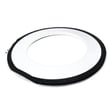
- Make sure the lint screen housing is not blocked; inspect the grille area (see dryer lint screen grille 3550EL1005C).
- Confirm the exhaust vent is not crushed, kinked, or clogged.
Quick comparison: dryer sheets vs alternatives
| Option | Helps with static | Residue risk | Notes |
|---|---|---|---|
| Dryer sheets | High | Medium | Use sparingly; can coat sensors and screens |
| Liquid fabric softener (washer) | Medium | Low to medium | Can also affect towel absorbency |
| Wool dryer balls | Medium | Low | Can reduce dry time by improving tumbling |
Why it matters
Good airflow is the difference between normal dry times and “takes forever to dry.” Keeping the lint screen and venting clean helps your LG DLE1101W dry efficiently and reduces overheating stress on heating and temperature-sensing components.
Last updated: January 2026
How do I do a hard reset on my LG dryer?
To hard reset an LG DLE1101W dryer, we recommend turning the dryer off, unplugging it (or switching the breaker off) for about 1 minute, then restoring power and starting a new cycle. This clears many temporary control glitches without replacing parts.
Hard reset steps (LG DLE1101W)
- Press Power to turn the dryer off.
- Unplug the dryer from the outlet (preferred). If you cannot access the plug, switch the dryer’s circuit breaker OFF.
- Wait 60 seconds.
- Plug the dryer back in (or switch the breaker ON).
- Press Power, select a cycle, and press Start/Pause.
For control-panel and cycle details specific to this model, use the DLE1101W manual.
If the dryer still will not respond
A “hard reset” will not fix a failed switch, wiring issue, or control board problem. After resetting, check these common causes:
- Control lock/child lock is enabled (look for a lock indicator)
- The door is not fully closed or the door switch is not clicking
- The outlet has power but the dryer is missing one leg of power (common on electric dryers)
- The cycle is paused; press Start/Pause again
- The user interface is blank or erratic (possible control issue)
If the dryer acts like the door is open even when it is shut, the dryer door switch EBF61496102 is a common part to inspect.
Quick comparison: reset vs. power problem
| What you see | Most likely cause | What to do next |
|---|---|---|
| Display works but buttons act “stuck” | Temporary control glitch | Do the hard reset steps above |
| Dryer is totally dead | Power supply issue | Check breaker, outlet, cord, terminal block |
| “Door” behavior (won’t start) | Door not closed or door switch issue | Check latch, test/replace door switch |
Why it matters
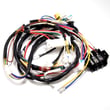
Resetting safely rules out a simple electronic hiccup before you spend time troubleshooting deeper issues like a failed door switch, wiring harness, or electronic control board.
Last updated: January 2026
What is the average lifespan of an LG dryer?
An LG dryer such as model DLE1101W typically lasts 13 years with normal household use and basic maintenance. Lifespan depends most on airflow, load size, and heat stress; our DLE1101W dryer manual outlines routine care that helps the dryer reach that range.
What affects dryer lifespan the most
- Restricted venting (crushed duct, long run, clogged exterior hood) that overheats the dryer
- Lint buildup in the lint housing, blower area, or exhaust ducting
- Frequent overloading that strains the drum support system and motor
- Constant high-heat cycles that accelerate wear on heating and safety components
- Poor moisture sensing (residue on sensor bars) that causes longer run times
Maintenance that helps you reach the full lifespan
- Clean the lint screen every load; replace a damaged screen such as the dryer lint screen by LG 5231EL1001C
- Check airflow at the outside vent while the dryer runs; weak flow usually means a vent restriction
- Clean the vent duct periodically (more often with pets or heavy use)
- Avoid overloading; the drum should rotate smoothly without thumping
- Wipe moisture sensor bars occasionally to prevent residue buildup
Common wear items you may replace over time
| What you notice | What it often points to | Example compatible part for DLE1101W |
|---|---|---|
| Rumbling, thumping, squealing | Drum support or belt path wear | Dryer drum support roller 4581EL2002L, dryer idler pulley (varies by version) |
| No heat or weak heat | Heating circuit issue | LG dryer heating element 5301EL1001H, dryer high-limit thermostat (varies) |
| Long dry times | Airflow restriction or sensing issue | Dryer exhaust duct (varies), dryer moisture sensor (varies) |
Why it matters
When airflow is restricted, the dryer runs hotter and longer than designed. That extra heat and run time shortens the life of the motor, heater, thermostats, and drum support components.
Last updated: January 2026
What is the most common problem with LG dryers?
For LG electric dryers like model DLE1101W, the most common repair we see is a no-heat or weak-heat complaint caused by a failed heating circuit; the heating element is the single most frequent culprit, followed by heat-safety parts (thermal fuse/thermostats) and drum support wear.
Most common issues (and what they look like)
- Heating element failure: dryer runs but clothes stay damp or cold air blows.
- Overheating protection trips: dryer stops heating after a short time, or won’t run if a safety fuse opens.
- Airflow restriction: long dry times, hot cabinet, burning smell (often vent or lint buildup).
- Drum support wear: thumping, squealing, or rumbling as the drum turns.
- Control or sensor issues: cycles end early, inconsistent dryness, or error codes.
Quick checks before replacing parts
- Clean the lint screen and confirm strong airflow at the outside vent hood.
- Verify the dryer is on the correct power supply (electric dryers need full 240V to heat).
- If the drum turns but there’s no heat, inspect the heater circuit components.
- Use the wiring diagram and access steps in the DLE1101W dryer manual.
Common “no heat” parts for DLE1101W
If your DLE1101W tumbles but won’t heat, these are the most likely components to test first.
| Symptom | Most likely area | Example compatible part for this model |
|---|---|---|
| Runs, no heat | Heater circuit | LG dryer heating element 5301EL1001H |
| Overheats or shuts heat off | High-limit safety | Dryer high-limit thermostat (varies by symptom) |
| Long dry times | Airflow or blower | Lint screen, ducting, blower wheel |
Why it matters
A dryer that “won’t heat” is often a simple heater-circuit failure, but the root cause can be restricted airflow. Fixing the airflow issue helps prevent repeat failures of the heating element and thermostats.
Last updated: January 2026
What parts might cause an LG dryer to not heat?
On the LG DLE1101W dryer, a no-heat problem is most often caused by a failed heating circuit component (heating element or temperature sensors/thermostats) or by restricted airflow from lint buildup or a blocked vent. Start with airflow checks, then test heat components.
Parts on the DLE1101W that commonly affect heat
These model-compatible parts are frequent causes when the dryer runs but does not heat:
- LG dryer heating element 5301EL1001H (open/broken coil means no heat)
- Dryer high-limit thermostat 6931EL3003D (can open if the dryer overheats)
- Dryer blower thermostat 6931EL3002M (regulates temperature; failure can stop heat)
- Dryer thermistor AGM30045804 (temperature sensor; bad readings can prevent heating)
For safe access steps and panel removal guidance, follow the DLE1101W manual.
Quick checks before replacing parts
Many “no heat” calls are airflow or power related, not a bad part.
- Clean the lint screen and confirm it is seated correctly
- Check the vent hose for kinks, crushing, or heavy lint buildup
- Verify strong airflow at the outside vent hood
- Confirm the cycle and temperature settings are not “Air dry” or “No heat”
- For electric dryers, confirm the outlet and breaker supply full power (a partial power loss can let the motor run but stop heat)
Symptom-to-part guide (fast triage)
| What you notice | Most likely direction | What to check next |
|---|---|---|
| Drum tumbles, no heat on any heated cycle | Heating circuit issue | Heating element, thermostats, thermistor |
| Heat starts then stops, long dry times | Overheating or airflow restriction | Venting, lint buildup, high-limit thermostat |
| Clothes take too long to dry, heat seems weak | Airflow problem first | Lint screen, exhaust ducting, blower path |
Why it matters
A restricted vent can overheat the heater housing and repeatedly trip safety thermostats, which can lead to repeated no-heat failures and longer dry times. Fixing airflow first helps protect the heating element and temperature controls.
Last updated: January 2026