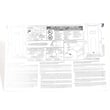
Installation guide
 Owner’s manual
 Error Codes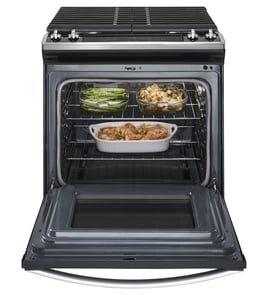




Where to find Kenmore gas range model number?
On Kenmore gas range model 79071513405, the model and serial number are printed on the identification plate located on the right side of the oven front frame, typically inside the storage drawer or warmer drawer area (or the lower panel compartment). See the owner's manual for the exact label location illustration.
Where to look on model 79071513405
Check these spots in this order (most common first):
- Open the storage drawer and look at the right-hand front frame
- If your range has a warmer drawer, open it and check the right-hand front frame
- Look in the lower panel compartment area near the drawer opening
- Use a flashlight and look for a metal or white sticker labeled Model and Serial
What to write down (and why it matters)
We recommend recording everything shown on the identification plate:
- Model number (for this page: 79071513405)
- Serial number
- Any lot number or letter listed
- Fuel and rating details (often shown on the same plate)
This matters because the model and serial information helps match the correct Kenmore range parts, diagrams, and service procedures, especially for items like an igniter, oven burner, or control board.
Quick checklist if you still cannot spot the label
Try these practical steps before you stop searching:
- Pull the drawer fully out and look along the right vertical frame rail
- Wipe grease or dust off the frame edge; labels can blend in
- Check for a label on a rear-facing lip of the front frame (visible only at an angle)
- Take a photo with your phone and zoom in to read small print
Common locations at a glance
| Location | What you do | What you will see |
|---|---|---|
| Storage drawer opening | Open drawer, look right front frame | Model and serial plate |
| Warmer drawer opening | Open drawer, look right front frame | Model and serial plate |
| Lower panel compartment | Look near the drawer area | Model and serial plate |
Last updated: February 2026
How to change Kenmore spark electrode igniter?
To change a surface-burner spark electrode (igniter) on your Kenmore 79071513405 gas range, we replace the electrode at the burner head, route the wire exactly as it was, and make sure the electrode tip sits correctly in the burner head slot so the burner lights within a few seconds.
Before you start (safety and setup)
- Turn all burner knobs to OFF.
- Shut off gas at the supply valve.
- Unplug the range (spark ignition uses household power).
- Let the cooktop cool completely.
- Remove the burner grate, burner cap, and burner head for the burner you are servicing.
Replace the electrode (typical steps)
- Access the electrode: With the burner cap and burner head removed, locate the electrode at the edge of the burner head area.
- Disconnect the wire: Carefully pull the electrode wire connector straight off (do not yank the wire).
- Remove the electrode: Take out the retaining screw and lift the electrode out.
- Install the new electrode: Set the electrode into position and secure it with the screw.
- Reconnect the wire: Push the connector fully onto the electrode terminal so it fits snugly.
- Reassemble the burner:
- Match the burner head and cap correctly.
- Make sure the electrode is seated properly in the burner head slot.
Critical alignment checks (prevents no-spark and delayed ignition)
- Keep the burner head and cap fully seated; misalignment can stop ignition.
- Do not let spills, food, or cleaners enter the gas orifice holder opening.
- When reinstalling the burner cap, avoid bumping the electrode tip.
What “normal” ignition looks like
| What you see/hear | What it usually means | What to do |
|---|---|---|
| Rapid clicking, burner lights quickly | Normal spark ignition | Turn knob out of LITE once lit |
| Clicking, no flame | Air in gas line or misaligned parts | Leave in LITE briefly; re-seat cap/head |
| Flame lights but goes out on LOW | Low flame setting needs adjustment | Follow the adjustment steps in the guide |
Why it matters
A correctly positioned electrode and properly seated burner head/cap help the burner ignite within about 4 seconds after air is purged from the gas line, reducing delayed ignition and uneven lighting.
For diagrams and burner head/electrode positioning details, use the installation guide.
Last updated: February 2026
Why is my Kenmore oven not igniting?
If your Kenmore gas range model 79071513405 isn’t igniting, the most common causes are loss of electrical power to the igniter system, a weak or cracked oven igniter, or a gas supply/valve issue. This model uses an electric igniter and typically lights within 30 to 60 seconds. See the owner's manual for control and operation checks.
Quick checks we recommend first
- Confirm the range is plugged in and the outlet has power (electric ignition needs power).
- Make sure the gas supply shutoff valve is fully ON.
- Verify the clock/time of day is set; some models require this before the oven will operate.
- Set BAKE and wait a full 60 seconds; a normal ignition delay is 30 to 60 seconds.
- If you smell gas but get no flame, turn the oven OFF and ventilate the area before continuing.
What to look for during an ignition attempt
When you start BAKE, current flows to the igniter; it should glow like a light bulb. Once hot enough, the oven gas valve opens and the burner lights.
| What you observe | Most likely cause | What to do next |
|---|---|---|
| No glow from igniter | No power, wiring issue, or failed igniter | Check power and connections; test igniter circuit if qualified |
| Igniter glows but no flame after 60 seconds | Weak igniter or gas valve not opening | Replace igniter first; if still no change, check gas valve |
| Flame lights, then cycles off and on | Normal temperature cycling | No repair needed |
Parts that commonly fix “won’t ignite” on this model
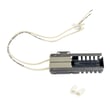
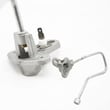
- Frigidaire range oven burner igniter 5303935066 (most common)
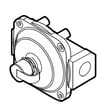
- Frigidaire range oven gas valve 3203459 (if igniter is proven good)
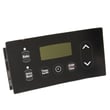
- Range main control board with digital clock 316455430 (if controls are not sending power)
Why it matters
On model 79071513405, the oven burner will not light until the igniter reaches the right temperature to open the gas valve. A weak igniter can glow but still fail to draw enough current to open the valve, so you get no flame even though the igniter looks “on.”
Last updated: February 2026
What are the parts of a gas oven?
A gas oven in your Kenmore 79071513405 range is built around a gas burner system (burner, igniter, and gas valve) plus temperature sensing and basic oven hardware like racks, light, and door seal. These parts work together to ignite gas safely and hold a steady baking temperature; see the owner's manual for your model’s feature layout.
Main gas oven components (what they do)
- Oven burner: mixes gas and air to create the bake flame (example: range oven burner 316114300).
- Oven burner igniter: glows to ignite gas and signals the valve to open (example: frigidaire range oven burner igniter 5303935066).
- Oven gas valve: opens to feed gas to the burner when the igniter is hot enough.
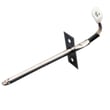
- Temperature sensor (oven probe): tells the control how hot the oven is (example: oven probe 316233903).
- Oven control: sets bake/broil and manages timing and temperature.
- Oven rack(s): support cookware (example: range oven rack 316067902).
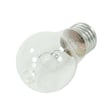
- Oven light system: bulb and socket to illuminate the cavity (example: range oven light bulb 316538904).
How ignition and temperature control work (simple overview)
When you set the oven to bake, current flows to the igniter and it glows. After about 30 to 60 seconds, the gas valve opens and the burner lights. The igniter and burner then cycle on and off to maintain the set temperature.
| Part | What you notice when it fails | Common symptom |
|---|---|---|
| Igniter | No reliable ignition | Oven won’t heat or heats slowly |
| Gas valve | No gas flow to burner | Igniter glows but no flame |
| Oven probe | Incorrect temperature feedback | Overbakes or underbakes |
| Door seal | Heat leaks | Long preheat, uneven baking |
Why it matters
Knowing the major parts helps you troubleshoot faster. For example, an igniter problem often looks like “no heat” even though the control seems to work, while a bad probe usually shows up as temperature inaccuracy.
Last updated: February 2026
How long should a Kenmore gas stove last?
A Kenmore gas range like model 79071513405 typically lasts 15 years with normal household use. Consistent cleaning, proper burner flame (steady blue), and keeping vents clear help reduce wear on key parts such as igniters, burner heads, and controls.
Typical lifespan and what affects it
Most gas ranges reach the 15-year mark when these conditions are in place:
- Burners light quickly and flames stay mostly blue (not lazy or yellow-orange)
- The oven vent is kept clear (blocking it can hurt baking performance and heat management)
- Spills are cleaned before they bake onto burner heads and igniter areas
- Knobs and control panel are used gently (no forcing stuck knobs)
- The range is installed level and has proper gas supply pressure (per the installation guide)
Quick maintenance checklist (high impact)
- Clean burner heads and caps regularly so ports do not clog.
- Watch the flame color; clean/adjust if flames turn yellow-orange.
- Do not block the oven vent (it is below the backguard on this model).
- Use the right cookware; flat-bottom pans help burners run efficiently.
- Replace wear items early when symptoms start (igniters and light bulbs are common).
Common “end-of-life” symptoms vs. fixable issues
| Symptom | Most common cause | Typical fix |
|---|---|---|
| Oven won’t heat or heats slowly | Weak igniter | Replace frigidaire range oven burner igniter 5303935066 |
| Surface burner clicks but won’t light | Dirty burner head or ignition issue | Clean ports; inspect range surface burner head 316212400 |
| Oven temperature is inconsistent | Sensor/probe drifting | Replace oven probe 316233903 |
| Oven light out | Burned-out bulb | Replace range oven light bulb 316538904 |
Why it matters
A gas range can run for years past minor failures, but small issues (like a weak igniter or clogged burner ports) increase cooking time, cause uneven baking, and put extra strain on the gas valve and controls. Staying ahead of those wear items is the easiest way to reach the full expected lifespan.
For model-specific use and care details (including vent location and safe operation reminders), follow the owner's manual.
Last updated: February 2026