 Owner’s manual


Can a clogged drain cause the F9E1 error?
Yes. On a Whirlpool WFW9200SQ01 washer, a clogged or restricted drain path can trigger a long-drain condition that stops the cycle because the washer cannot pump water out fast enough. Start by checking the drain hose routing and clearing common blockages; then confirm the drain system requirements in the owner's manual.
- Cancel the cycle and run Drain/Spin to try clearing standing water.
- Inspect the drain hose for kinks, crushing, or freezing.
- Check for a clog in the drain hose or at the standpipe/sink connection.
- Verify the drain hose height is not more than 96 in. (2.4 m) above the floor.
- Reduce suds: use HE detergent and avoid over-dosing (excess suds can slow draining).
A drain that is installed incorrectly can act like a clog. Use this quick checklist and compare it to the owner's manual.
| Item to verify | What “good” looks like | What can cause a long drain |
|---|---|---|
| Drain hose condition | No kinks, no pinches | Restricted flow, slow drain |
| Standpipe/house drain | Accepts water quickly | Backup or slow household drain |
| Drain hose height | 96 in. (2.4 m) max | Pump cannot overcome head pressure |
| Suds level | Low, controlled | Suds routine extends drain time |
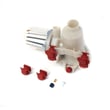
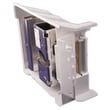
If the hose and household drain are clear and the washer still drains slowly, the drain pump area is the next common restriction point (lint, coins, small items). If you determine the pump is failing or jammed, the replacement part for this model is the pump 280187.
A restricted drain can leave water in the tub, prevent high-speed spin, and repeatedly interrupt cycles. Fixing the drain path first avoids unnecessary electrical parts replacement and helps protect the motor control system.
Last updated: February 2026
What is the life expectancy of a Whirlpool washing machine?
A Whirlpool washing machine typically lasts 10 to 14 years. For your Whirlpool WFW9200SQ01 front-load washer, lifespan depends most on proper HE detergent use, avoiding overloads, and fixing leaks or vibration issues early; see the care and maintenance guidance in the owner's manual.
Most residential washers fall into a predictable range when they’re installed correctly and used normally.
| Washer type | Typical life expectancy | What shortens life fastest |
|---|---|---|
| Front-load (like WFW9200SQ01) | 10 to 14 years | Door boot leaks, chronic overloading, poor draining |
| Top-load | 10 to 14 years | Overloading, suspension wear, water inlet issues |
- Use HE (High Efficiency) detergent only and avoid overdosing.
- Leave the door slightly open between loads to reduce moisture and odor.
- Run periodic cleaning cycles (hot cycle with washer cleaner as directed).
- Keep loads balanced; avoid washing single heavy items by themselves.
- Check pockets and remove debris that can damage the tub, pump, or hoses.
Catching these early often prevents bigger failures.
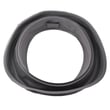
- Water at the front of the washer (often a worn door boot such as the washer door boot WP8182119)
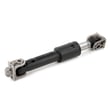
- Excessive shaking or banging (can point to worn shocks such as the washer shock absorber W10822553)
- Door won’t lock or cycle won’t start (possible door lock issue such as the washer door lock WP8183270)
- Slow drain or standing water (drain path restriction, hose issue, or pump problem)
A front-load washer can run for years with minor maintenance, but small issues like a door boot seep or repeated out-of-balance spinning can lead to bearing, tub, or control problems that cost far more than routine upkeep.
Last updated: February 2026
What is the most common problem with Whirlpool washers?
The most common Whirlpool washer problems are water-related issues (not filling, not draining, or leaking) and spin complaints (vibration, walking, or clothes left too wet). On the Whirlpool WFW9200SQ01, the owner's manual highlights inlet and drain error codes (F20 and F21) plus load-balance and suds conditions that commonly trigger these symptoms.
- Not filling or filling slowly: closed faucets, clogged inlet screens, kinked or frozen fill hoses (often shows F20).
- Not draining or not spinning: kinked/frozen/clogged drain hose, drain height too high (often shows F21).
- Leaks at the door: torn or dirty door seal, or a clamp that is loose or damaged.
- Door won’t lock or won’t start: door not fully latched, overloaded basket, or a door lock problem (often shows F22).
- Vibration or walking: washer not level, load not balanced, or worn suspension components.
- Confirm both water faucets are fully open.
- Inspect fill hoses for kinks; clean inlet screens if they are clogged.
- Check the drain hose for kinks/clogs and confirm the standpipe height is 96 inches (2.4 m) or less.
- If you see SUD or heavy suds, switch to HE detergent and reduce the amount.
- If the washer shakes, level the cabinet and redistribute the load.
| Symptom | What it usually points to | Best next step |
|---|---|---|
| F20 (water inlet) | Supply or restriction | Check faucets, screens, hose kinks |
| F21 (drain) | Drain restriction or drain height | Clear drain path; verify 96 in max |
| F22 (door lock) | Door not latched or overload | Re-close door firmly; reduce load |
| Leak at door | Door boot or clamp issue | Inspect seal and clamps for damage |
If you find physical damage during inspection, these model-matched parts are common fixes:
- Washer door boot WP8182119 (torn seal, persistent door-area leaks)
- Washer door lock WP8183270 (door won’t lock, won’t start, F22-type symptoms)
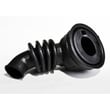
- Washer tub-to-pump hose WPW10467168 (leaks underneath, drain flow issues)
Water inlet, drain, and door-lock problems can stop the cycle to prevent overflow or unsafe operation. Catching a kinked hose, excess suds, or a failing door seal early helps prevent repeat error codes, odors, and floor damage.
Last updated: February 2026






