

How to remove front panel of Whirlpool stackable washer?
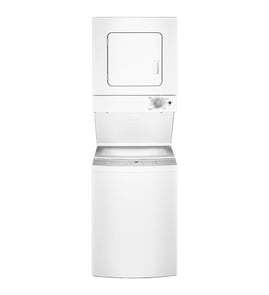
On the Whirlpool stacked laundry center model 7MWET4027HW0, the washer front panel typically comes off after you remove the lower support/bracket hardware and then take out the perimeter screws that fasten the panel to the cabinet sides. Always unplug the laundry center before starting.
- Unplug the power cord (or switch off the breaker).
- Turn off both water supply valves.
- Pull the unit forward enough to work comfortably.
- Keep a shallow pan and towel ready in case a hose gets bumped.
- Use a magnetic tray for screws so nothing drops into the cabinet.
- Remove the lower support/bracket fasteners. Many Whirlpool laundry centers use a small support bar or bracket at the bottom front; remove the screw(s) holding it to the front panel.
- Remove the front panel mounting screws. Take out the screws along the left and right edges of the washer front panel (and any along the bottom lip, if present).
- Lift and pull the panel free. Support the panel with one hand, then lift slightly to unhook it (if it uses tabs) and pull it forward.
- Disconnect anything attached to the panel (if applicable). If your unit has wiring clipped to the panel, release the harness clips rather than pulling on wires.
If you are removing the panel to diagnose noise, no-spin, or draining issues, these are common quick checks:
- Belt condition and alignment (cracks, glazing, slack)
- Pulley wear or wobble
- Signs of water leaks near the pump area
- Loose mounting screws or broken plastic mounts
| Symptom | Common area to inspect | Example part for this model |
|---|---|---|
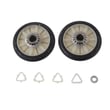
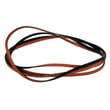
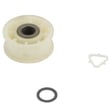
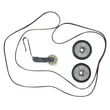
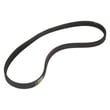
| Squealing, burning rubber smell | Belt and pulley | Washer drive belt WPW10006384, Whirlpool washer drive pulley W10721967 |
| Won’t drain, humming during drain | Drain pump and hoses | Washer drain pump W10919003 |
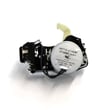
| Won’t agitate or spin | Actuator, drive system | Washer actuator W10913953 |
Removing the front panel gives you direct access to the drive belt, drive pulley, actuator, and drain pump. That access helps you confirm whether the problem is a worn mechanical part, a loose fastener, or a leak before ordering parts.
For model-specific troubleshooting paths (especially if an error code is showing), use our Whirlpool wet and ywet error codes guide.
Last updated: February 2026
What is the most common problem with Whirlpool washers?
The most common Whirlpool washer problem is a no-start condition where the control panel lights up but the washer will not begin a cycle. On Whirlpool stacked laundry centers like model 7MWET4027HW0, this is usually tied to a lid lock, control input, or a drive system issue that prevents the unit from engaging.
- Confirm the washer lid is fully closed and not flexing or bouncing.
- Unplug the laundry center for 2 minutes, then restore power and try a normal cycle.
- Make sure the cycle is actually started (some cycles require holding Start).
- Reduce the load size; an overloaded basket can prevent proper sensing and spin.
- Check for standing water; a drain problem can stop the cycle before it starts.
| What you notice | Likely area to check | Parts that often relate |
|---|---|---|
| Lights on, won’t start or won’t advance | Lid lock or control not seeing “safe to run” | Control and lid lock circuit (varies by symptom) |
| Hums, tries to move, then stops | Drive system not engaging | Washer actuator W10913953, washer drive belt WPW10006384 |
| Fills but won’t drain or won’t continue | Drain system restriction or pump issue | Washer drain pump W10919003 |
| Agitates weakly or won’t agitate/spin | Drive and transmission components | Gear case assembly W11454741, washer drive pulley W10721967 |
A “lights on but won’t start” complaint is often the washer protecting itself. If the lid is not detected as locked, the load is out of balance, or the drive system cannot engage, the control can pause or prevent the cycle to avoid damage and unsafe operation.
If your 7MWET4027HW0 is showing a code or flashing pattern, use our model-family code guide first: Whirlpool wet and ywet error codes.
Last updated: February 2026
What is the average lifespan of 7MWET4027HW0?
A Whirlpool stacked laundry center like model 7MWET4027HW0 typically lasts 13 years with normal household use and basic maintenance (good airflow for the dryer, correct loading, and prompt repairs when symptoms start). Keeping wear parts in good shape helps you reach that average.
- Load size and balance: chronic overloading and out-of-balance loads strain the drive system and suspension.
- Vent restriction: poor dryer airflow overheats components and shortens heater and safety-fuse life.
- Water quality: hard water increases detergent buildup and can contribute to odors and poor draining.
- Maintenance habits: cleaning lint, leveling the unit, and checking hoses prevents avoidable failures.
- Repair timing: replacing a worn belt, pulley, or pump early prevents secondary damage.
If you notice squealing, burning rubber smell, slow drain, or poor agitation/spin, these are frequent suspects:
- Washer drive belt WPW10006384
- Whirlpool washer drive pulley W10721967
- Washer drain pump W10919003
- Washer actuator W10913953
| Subsystem | Typical service life | Early warning signs |
|---|---|---|
| Washer drive (belt/pulley) | 5 to 10 years | squeal, slipping, weak spin |
| Drain system (pump/hose) | 7 to 12 years | standing water, slow drain |
| Dryer heat safety parts | 5 to 10 years | no heat, heat cuts out |
| Controls and motor | 10+ years | intermittent operation, error behavior |
Knowing the 13-year average helps you decide whether to maintain, repair, or refresh the unit. A relatively low-cost fix (like a belt or pump) often restores performance and prevents bigger failures in the washer gearcase, motor, or dryer heating system.
Last updated: March 2026