Owner’s manual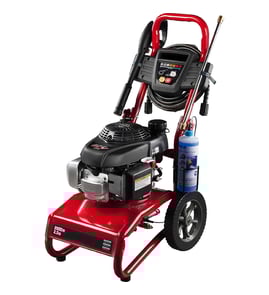


Are Craftsman gas pressure washers any good?
Yes. Craftsman gas pressure washers like model 580754952 are a solid choice for typical home cleaning because they deliver strong cleaning power and are generally straightforward to set up and use; long-term durability depends heavily on maintenance, water supply, and how hard they’re run. See the 580754952 owner's manual for the operating and maintenance routine that keeps performance consistent.
What “good” usually means for a gas pressure washer
Most owners judge a gas pressure washer on these practical points:
- Cleaning power for driveways, siding, decks, and equipment
- Ease of starting and steady engine operation
- Pump reliability (no surging, no loss of pressure)
- Leak-free connections at the hose, wand, and pump outlet
- Reasonable vibration and stable handling
Common strengths and common complaints (what we see most often)
Even without model-specific performance data in the manual excerpts, Craftsman gas units are typically praised for strong pressure and fast cleaning, while the most frequent complaints across gas pressure washers involve pump wear, hose issues, and leaks.
| Area | What’s typically good | What typically causes frustration |
|---|---|---|
| Cleaning performance | Strong spray for heavy grime | Pressure surging from air leaks or clogged inlet screen |
| Usability | Quick setup, simple controls | Hard starting from old fuel or dirty spark plug |
| Durability | Holds up with routine care | Pump damage from running dry or freezing water in the pump |
How to get the best results (and avoid early failures)
These steps make the biggest difference in real-world reliability:
- Never run the pump without water flowing; it overheats fast.
- Purge air: connect water, squeeze the trigger, then start the engine.
- Use clean, fresh fuel; don’t store old gas in the tank.
- Check for leaks at quick-connects and O-rings before each use.
- Don’t leave detergent sitting in the system; flush with clean water after soaping.
- Winterize if temperatures can drop below freezing (pump damage is common).
Why it matters
A gas pressure washer’s “goodness” is mostly about consistent pressure and pump life. The same machine can feel excellent for years with proper water flow and storage, or fail early if it’s run dry, stored with water inside, or operated with clogged inlets.
Last updated: February 2026
Can you put 87 gas in a pressure washer?
Yes. For the Craftsman gas pressure washer model 580754952, regular unleaded gasoline (87 octane) is the correct everyday fuel choice for normal operation. Use fresh fuel and follow the fuel and storage guidance in the 580754952 owner's manual.
What fuel to use (and what to avoid)
Use these rules to protect the engine, carburetor, and fuel system:
- Use fresh, clean unleaded gasoline (87 octane is standard).
- Higher octane (89 to 93) is fine, but it does not increase cleaning power.
- Avoid old gas (more than about 30 days in the tank or can) because it can cause hard starting and surging.
- Avoid E85 (high-ethanol fuel) because it can damage fuel system components.
- If your area sells E15 (88), use it only if the manual explicitly allows it.
Quick comparison: common pump options
| Fuel at the pump | Typical ethanol content | Good choice for a pressure washer? |
|---|---|---|
| 87 (regular) | Often E10 | Yes, standard choice |
| 88 (often labeled “E15”) | 15% | Only if manual allows |
| 89 to 93 (mid/premium) | Often E10 | Yes, but usually unnecessary |
| E85 | Up to 85% | No |
Why it matters
Pressure washer engines run hot and sit unused between jobs. The wrong fuel, or stale fuel, is the most common reason we see for no-start, rough running, and carburetor clogging on gas pressure washers.
Best practices for fewer fuel problems
- Buy gas in small quantities so it stays fresh.
- Shut the unit off and let it cool before refueling.
- Don’t store the washer long-term with untreated fuel in the tank.
- If it will sit, run the engine briefly after adding fuel stabilizer (per the 580754952 owner's manual).
Last updated: February 2026
Is it worth it to repair a pressure washer?
Yes, it’s usually worth repairing a Craftsman gas pressure washer like model 580754952 when the problem is a low-cost, high-impact fix (clogged nozzle, leaking hose, worn seals, dirty carburetor). Replacement makes more sense when the pump or engine has major internal damage and the repair total approaches about half the cost of a comparable new unit.
Quick decision checklist
- Repair if the washer ran well recently and the issue started suddenly (loss of pressure, surging, small leak).
- Repair if the fix is a common wear item (O-rings, unloader valve service, spray gun, hose, nozzle).
- Repair if you can complete the work with basic tools and a short test run.
- Replace if the pump crankcase or engine is damaged (metal in oil, seized shaft, broken connecting rod).
- Replace if it has repeated failures and you’re chasing multiple symptoms at once.
- Replace if the frame, fittings, or key assemblies are heavily corroded or cracked.
Typical repair cost vs. replacement value
These ranges are typical for homeowner gas pressure washers; use them to decide where your repair falls.
| Issue type | Common symptoms | Typical effort | Usually worth it? |
|---|---|---|---|
| Flow restriction | Low pressure, pulsing | Low | Yes |
| External leak | Drips at hose, gun, pump outlet | Low to medium | Yes |
| Fuel/carb issue | Surging, won’t stay running | Medium | Often |
| Pump internal wear | Low pressure even with good flow | Medium to high | Sometimes |
| Engine internal failure | No compression, seized, loud knock | High | Usually no |
Why it matters
A pressure washer’s “big ticket” items are the pump and engine. If those are healthy, most performance problems come from water supply, restrictions, or serviceable valves and seals, so repairing restores pressure and prevents premature pump damage.
What we recommend before you decide
Use the model-specific procedures and specs in the 580754952 owner's manual to do a fast evaluation:
- Confirm strong water supply and a clean inlet screen.
- Test with a known-good nozzle and fully open spray gun.
- Check for obvious leaks at fittings and the pump head.
- Verify the engine runs smoothly at steady throttle.
Last updated: February 2026
What is the PSI of a gas-powered pressure washer?
Most gas-powered pressure washers are rated around 2,000 to 4,000 PSI, and many homeowner Craftsman units land near 3,000 PSI. For your Craftsman 580754952 pressure washer, use the rating printed on the pump/frame label and the specifications section in the 580754952 owner's manual.
Typical PSI ranges by type
PSI is the spray force; higher PSI cleans faster but can etch wood, strip paint, or damage siding if you use the wrong nozzle.
- Electric pressure washers: typically 1,200 to 2,300 PSI
- Gas pressure washers (homeowner): typically 2,000 to 3,500 PSI
- Gas pressure washers (heavy-duty): typically 3,500 to 4,000 PSI
- Commercial gas units: typically 4,000 to 5,000 PSI
How to confirm the PSI on Craftsman 580754952
Use these checks so you know the correct pressure for your surfaces and accessories.
- Look for a PSI and GPM decal on the pump, engine shroud, or frame
- Check the specifications and nozzle guidance in the 580754952 owner's manual
- If you use a replacement spray gun, hose, or tips, match them to the washer’s rated PSI
| Where you check | What you’re looking for | Why it matters |
|---|---|---|
| Pump/frame label | Rated PSI and GPM | Confirms the as-built performance |
| Owner’s manual | Specs, nozzle selection, safety limits | Helps you use the rating correctly |
| Accessory packaging | Max PSI rating | Prevents hose or gun failure |
Why PSI and GPM both matter
Cleaning speed comes from PSI (impact) plus GPM (rinse power). A slightly lower-PSI washer with higher GPM often cleans faster than a high-PSI, low-flow unit.
Last updated: February 2026