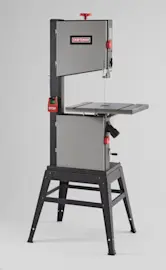
Owner’s manual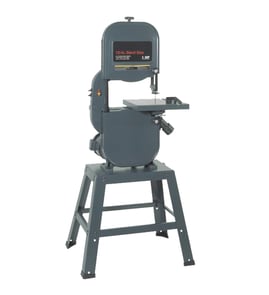

What is the 4 inch rule for bandsaw?
The 4-inch rule for a band saw means we keep our hands and fingers at least 4 inches away from the moving blade during a cut. On the Craftsman 137224240 band saw, use push sticks, jigs, or clamps anytime the cut would bring your hands closer than that.
How to follow the 4-inch rule in real cuts
- Use a push stick or push block for narrow rips and small offcuts.
- Clamp small workpieces to a carrier board or use a simple sled.
- Keep the upper guide assembly set close to the work; we set it about 1/8 inch above the workpiece for better control.
- Feed the stock with light, steady pressure; do not force the workpiece into the blade.
- Plan the cut path before turning the saw on; test settings on scrap first.
- Keep the blade guard and guides properly adjusted before operating.
Quick safety checklist (before you cut)
| Item to check | What we do | Why it helps |
|---|---|---|
| Upper guide height | Set about 1/8 inch above the workpiece | Reduces exposed blade and improves stability |
| Blade condition | Use a sharp blade suited to the cut | Lowers the chance of binding and sudden movement |
| Hand position | Stay 4 inches away; use push tools | Prevents contact injuries |
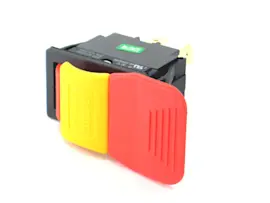
| Power control | Use the keyed ON/OFF switch; remove key when not in use | Helps prevent unauthorized or accidental starts |
Why it matters
The band saw blade is continuously moving, and a slip, twist, or bind can pull your hand toward the cut line fast. The 4-inch rule builds a consistent buffer zone so you rely on push tools and workholding instead of your fingers.
Where to confirm model-specific operating guidance
We recommend reviewing the safety and operation sections in the 137224240 owner's manual for the Craftsman 137224240, including guide height, switch key use, and general cutting practices.
Last updated: February 2026
Does Craftsman make a band saw?
Yes. Craftsman makes band saws, and model 137224240 is a Craftsman band saw with standard features like blade guides, blade tension and tracking adjustments, a tilting table, and a child-safety switch key (details in the owner's manual).
What this Craftsman band saw includes (model 137224240)
From the documentation for Craftsman 137224240, you will see common band saw components and adjustments used for accurate cutting:
- Blade guides to support the blade and reduce twisting
- Blade tension knob and blade tension gauge
- Blade tracking knob to keep the blade centered on the wheels
- Table lock knob and tilt (bevel) scale for bevel cuts
- Sawdust port for dust collection (works well with a wet/dry vacuum)
Power and electrical basics (what to plan for)
This model is factory-wired for typical home shop power.
| Item | What to use | Why it matters |
|---|---|---|
| Supply voltage | 120V | Matches standard household circuits |
| Circuit rating | 15 amp dedicated circuit | Helps prevent nuisance trips and overheating |
| Protection | 15 amp time-delay fuse or circuit breaker | Protects the motor and wiring |
Safety features and operating habits that matter
Band saws are versatile, but safe setup is what makes them useful day to day.
- Remove the switch key when the saw is not in use (child-safety lock)
- Keep the upper guide assembly about 1/8 inch above the workpiece
- Do not force the workpiece; use steady, light feed pressure
- Unplug the saw before assembly, adjustments, or clearing a jam
- Wait for all moving parts to stop before leaving the work area
Why it matters
Knowing Craftsman makes band saws is helpful, but confirming the exact model matters more for parts and setup. With 137224240, the manual-backed details (power requirements, guide height, and safety key use) help you cut more accurately and reduce blade drift, binding, and kickback risk.
Last updated: February 2026
What are the parts of a bandsaw?
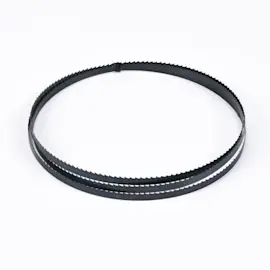
On the Craftsman 137224240 band saw, the main parts include the blade and wheel system that drives it, the table and trunnions that support and tilt the work surface, and the guide assemblies that keep the blade cutting straight. Our owner's manual shows the exact component names used for this model.
Core parts you will see on this band saw
- Upper and lower wheels: support the blade and keep it moving in a continuous loop
- Blade tension knob and spring: tighten the blade so it stays stable on the wheels
- Blade tracking adjustment: centers the blade on the wheels
- Upper and lower blade guides and bearings: keep the blade aligned during cutting
- Table with insert and alignment pin: supports the workpiece and provides the blade slot
- Table trunnions and lock knobs: allow table tilt and secure the angle
- Miter gauge: rides in the table slot for angled cuts
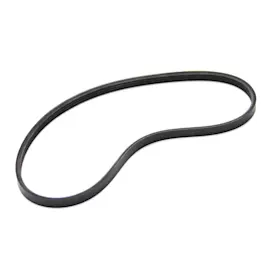
- Motor and drive system: powers the saw (motor, pulley, belt)
- Switch with removable key: helps prevent unintended use when the saw is unattended
- Sawdust port: helps direct dust collection
How these parts work together (quick map)
| System | What it includes | What it does |
|---|---|---|
| Blade drive | Motor, pulley/belt, upper and lower wheels | Moves the blade at cutting speed |
| Blade control | Tension knob/spring, tracking adjustment | Keeps the blade tight and centered |
| Cut accuracy | Upper/lower guides and bearings, table insert | Reduces blade drift and vibration |
| Work support | Table, trunnions, lock knobs, miter gauge | Supports stock and sets angles |
Why it matters
Knowing the part groups helps you troubleshoot common band saw issues. For example, if the blade wanders or rubs, the fix is usually in the tension, tracking, or guide adjustments, not the motor.
Helpful tips when identifying parts
- Unplug the saw before inspecting or adjusting anything.
- Confirm the blade is centered in the table insert slot before cutting.
- Set the guide assembly about 1/8 inch above the workpiece for safer, straighter cuts.
- Use the correct blade width and length range listed for this model.
Last updated: February 2026