Installation guide
 Owner’s manual
 Error Codes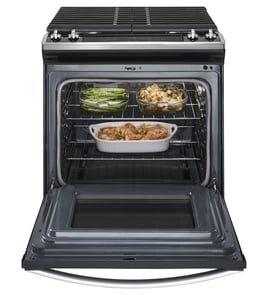




What kind of gas is used for a gas stove?
GE gas ranges like model JGB690SEF1SS are designed to run on natural gas from the factory, and they can be converted to LP (propane) using the included conversion orifices and instructions. Use the gas type your home is supplied with and set up the range accordingly.
Most homes with a utility gas line use natural gas; homes with a tank typically use LP (propane). This model leaves the factory set for natural gas, and LP conversion is a separate setup step.
Key points from the installation requirements
- Factory setting: Natural gas
- Convertible fuel: LP (propane)
- Conversion must be done by a qualified LP gas installer
- The conversion orifices and instructions are stored on the back of the range
- Always use a new flexible connector when installing a gas appliance
For the exact conversion procedure and hookup requirements, use the JGB690SEF1SS installation guide.
Your installer verifies the inlet pressure to the range’s regulator is in the correct range.
| Gas type | Minimum inlet pressure | Maximum inlet pressure |
|---|---|---|
| Natural gas | 6" water column | 15" water column |
| LP (propane) | 11" water column | 15" water column |
After installation, flame appearance helps confirm proper setup.
- Soft blue flames: normal for natural gas
- Yellow tips on outer cones: normal for LP gas
- Large yellow flames: service is needed (air-fuel mix or conversion issue)
Using the wrong gas type or an incorrect conversion setup can cause poor burner performance, delayed ignition, soot, or unsafe operation. Correct fuel setup also helps your bake and broil burners light reliably and heat evenly.
Last updated: January 2026
How do I know if my gas stove igniter is bad?
On a GE JGB690SEF1SS gas range, a bad oven igniter usually shows up as an oven that will not heat, heats very slowly, or takes longer than about 30 to 90 seconds to light after you start Bake or Broil. A continuity test with a multimeter also confirms an igniter failure.
- Oven burner does not light at all, but you may smell gas briefly
- Burner lights, but only after repeated clicking or long delays
- Oven temperature is low or inconsistent (food takes much longer to cook)
- You see the igniter glow, but the burner still does not light (weak igniter)
- Broil works but Bake does not (or the reverse), pointing to one igniter circuit
- Turn off power to the range at the breaker; the igniter circuit is electrical.
- Shut off the gas supply valve before accessing burner components.
- Access the bake or broil burner area (the installation instructions describe removing the oven bottom and note that Bake should light in 30 to 90 seconds during checks).
- Disconnect the igniter wiring connector.
- Use a multimeter on continuity or resistance; if there is no continuity, the igniter is defective.
If you need model-specific access steps and safety notes, use the installation guide.
In many cases, replacing the igniter restores normal ignition and heat.
| Symptom | Most likely cause | Typical fix |
|---|---|---|
| No glow from igniter | Open igniter or wiring issue | Test wiring, replace igniter if open |
| Igniter glows but no flame | Weak igniter not drawing enough current | Replace igniter |
| Bake fails, broil works | Failed bake igniter | Replace bake igniter |
| Broil fails, bake works | Failed broil igniter | Replace broil igniter |
Model-matched igniter options for this range include the oven igniter WB13K21 and the range oven burner igniter WB13X25261.
A weak igniter can allow delayed ignition, poor flame establishment, and long preheat times. Fixing ignition problems quickly helps your GE gas range heat safely and cook at the temperatures you set.
Last updated: January 2026
What are common problems with GE gas ranges?
Common problems on a GE gas range like model JGB690SEF1SS include surface burners that will not light, weak or uneven flames, an oven that will not heat or heats unevenly, and ignition clicking issues. Many of these come down to burner parts being out of position, dirty ports, or a failing igniter.
- Surface burner will not light or keeps clicking: burner cap/head not seated correctly, moisture, dirty burner ports, or an ignition/spark issue
- Weak, yellow, or uneven flame: clogged ports, wrong cap placement, or gas pressure/supply issue
- Oven will not heat (bake): weak bake igniter is a top cause on gas ovens
- Broil not working: broil igniter or related ignition circuit issue
- Oven temperature seems off: preheat habits, airflow, or sensor/control calibration issues (varies by model)
- Confirm burner parts are fully installed: do not operate a burner without all burner parts in place; the burner head notch must sit over the electrode.
- Re-seat the cap and head: lift off, wipe dry, and reinstall so everything sits flat.
- Clean burner ports: use a soft brush and a pin for ports (no toothpicks that can break off).
- Listen for spark: if you hear clicking but no ignition, suspect alignment, moisture, or gas flow.
- If the oven will not heat: watch for the igniter glow; a dim or slow glow often indicates a weak igniter.
| Symptom | Common part involved | Example part for this model |
|---|---|---|
| Oven will not heat (bake) | Oven igniter | Oven igniter WB13K21 |
| Burner flame uneven | Burner cap/head | Range surface burner cap WB28K10222 |
| No spark on cooktop | Spark module | Range spark module WB13X26360 |
Gas ignition and flame quality affect cooking performance and safety. Correct burner assembly and proper grounding help the igniters spark reliably, and a strong oven igniter is critical for consistent bake temperatures.
Use the JGB690SEF1SS installation guide for burner placement, grounding requirements, and gas supply guidance (including shut-off valve access and leak-testing practices).
Last updated: January 2026
How long should a GE gas oven last?
A GE gas oven typically lasts 13 to 15 years with normal household use. For your GE gas range model JGB690SEF1SS, consistent cleaning, correct flame adjustment, and prompt repair of ignition or burner issues help you reach that lifespan; see the JGB690SEF1SS installation guide for safe setup and burner flame checks.
Most gas ranges reach the 13 to 15 year range because the heating system is simple and durable, but these factors make the biggest difference:
- How often you bake/broil (daily use shortens life)
- Keeping burner ports and caps clean so flames stay even
- Avoiding repeated “clicking” ignition cycles that strain ignition parts
- Fixing weak ignition early (slow lighting can overheat components)
- Proper installation and gas supply setup (pressure, shutoff valve, connector)
The installation instructions for this GE range include practical checks that also help long-term reliability:
- Surface burners should light quickly after air is purged from the gas line
- Bake burner should light in about 30 to 90 seconds
- Natural gas flames should be steady blue with little to no yellow
- LP gas can show slight yellow tipping on outer cones
- If flames lift off the burner or look very yellow, the air shutter may need adjustment
If the oven takes too long to ignite, won’t heat consistently, or you smell unburned gas during ignition attempts, these parts are often involved:
| Symptom | Common cause | Example part for this model |
|---|---|---|
| Slow bake ignition, no heat | Weak bake igniter | Oven igniter WB13K21 |
| Clicking but poor burner lighting | Ignition system issue | Range spark module WB13X26360 |
| Uneven cooktop flame | Dirty/misaligned cap or head | Range surface burner cap WB28K10222 |
A gas oven that lights slowly or burns with poor flame quality wastes fuel, cooks unevenly, and can overheat nearby components. Keeping ignition and flame quality in spec is one of the simplest ways to get the full 13 to 15 years from your GE JGB690SEF1SS.
Last updated: January 2026