Installation guide
 Owner’s manual
 Error Codes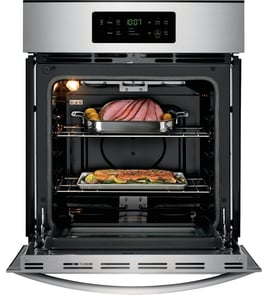


How to find wall oven model number?
For a Kenmore wall oven, including model 79040279410, the model number is typically printed on a rating label around the oven door frame. Check the front frame first; if you do not see it, check the door rim area and then the inside side panels.
- Open the oven door and inspect the front frame (left and right sides).
- Check along the top front frame just above the door opening.
- Look around the rim/edge of the oven door (the area that meets the frame).
- Inspect the inside side walls of the oven cavity near the front.
- If it is a double wall oven, check both cavities and the center divider area.
Most wall ovens use a small sticker or metal tag that includes:
- Model number (for example, 79040279410)
- Serial number
- Electrical ratings (volts/amps)
- Brand name (Kenmore)
- Wipe grease off gently with a damp cloth; avoid harsh abrasives that can remove printing.
- Use a flashlight and take a close-up photo, then zoom in.
- Write down the full model number exactly as shown (all digits matter).
| Location | What to do | Most common? |
|---|---|---|
| Front oven frame | Open door, scan the frame perimeter | Yes |
| Door rim/edge | Check the door’s inner edge | Sometimes |
| Inside side panel | Look near the front of the oven cavity | Sometimes |
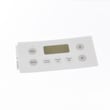
We use the exact model number to match the correct Kenmore wall oven parts and diagrams. Even one digit off can lead to ordering the wrong bake element, control overlay, or temperature sensor.
For model-specific documentation and diagrams, use the 79040279410 owner's manual.
Last updated: January 2026
Are all 30 inch wall ovens the same size?
No. “30-inch” wall ovens like the Kenmore 79040279410 are grouped by nominal width, but the exact cabinet cutout width, overall width, height, and depth vary by brand and model. Always measure your existing cutout and confirm the required cutout specs in the 79040279410 installation guide.
A 30-inch wall oven is designed to fit a 30-inch class opening, but manufacturers allow small differences for trim, insulation, and airflow.
- The overall width is often close to 30 inches, but not identical across models.
- The cutout width can differ slightly even when both ovens are “30-inch.”
- Height varies a lot between single ovens, double ovens, and combo units.
- Depth varies based on door design, handle style, and required rear clearance.
- Electrical requirements (voltage, breaker size, junction box location) can differ.
Use a tape measure and record all three cutout dimensions, then compare to the installation specs.
- Cutout width (left to right)
- Cutout height (top to bottom)
- Cutout depth (front to back)
- Front frame clearance (trim overlap)
- Door swing clearance (especially near islands or adjacent cabinets)
| Item to match | Why it matters | What to use for the match |
|---|---|---|
| Cutout width/height/depth | Prevents gaps or a no-fit install | 79040279410 installation guide |
| Electrical hookup location | Avoids rewiring surprises | Junction box specs in the guide |
| Trim/overlay coverage | Hides cutout edges and gaps | Model-specific drawings |
A wall oven that is “30-inch” but has different cutout requirements can be impossible to mount safely or can leave visible gaps. Confirming cutout and clearance specs first prevents cabinet modifications and installation delays.
Last updated: January 2026
Are electric wall ovens 110 or 220?
Most Kenmore electric wall ovens like model 79040279410 are designed to run on a 240-volt (often called 220-volt) dedicated circuit, not a standard 120-volt (110-volt) outlet. For the exact electrical requirements and wiring method for your installation, follow the 79040279410 installation guide.
In U.S. homes, electric wall ovens typically use a 2-pole breaker and hardwired connection (or a proper junction box connection) rather than a regular plug.
Common requirements you will see:
- 240 VAC supply (sometimes listed as 208/240 VAC)
- Dedicated circuit (no other appliances on the same breaker)
- 2-pole breaker in the electrical panel
- Copper wiring sized for the circuit rating
- Proper grounding per the installation instructions
| Item | 120V (110V) circuit | 240V (220V) circuit |
|---|---|---|
| Typical use | Lights, small appliances | Electric ovens, dryers, ranges |
| Breaker type | Single-pole | Double-pole |
| Heating performance | Not sufficient for full-size electric oven heating | Designed for high-wattage heating elements |
A wall oven needs higher voltage to power the bake and broil heating elements efficiently. Using the wrong supply (or incorrect wiring) can cause no-heat symptoms, nuisance breaker trips, or control problems.
Before assuming a part has failed, we recommend these checks:
- Confirm the breaker is ON and not tripped (reset fully OFF then ON)
- Verify the home supply is delivering the correct voltage at the junction box
- Look for signs of overheating at the connection point (discolored wires, burnt smell)
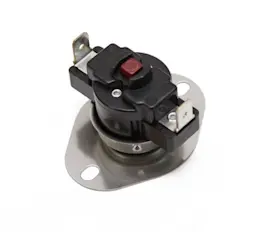
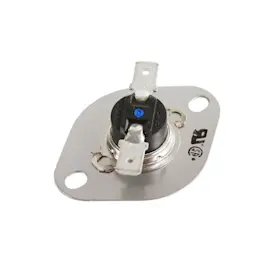
- If the oven powers on but will not heat, check common heat-related components like the range oven temperature sensor 5304504897 and the frigidaire range high-limit thermostat 318578506
Last updated: January 2026