Installation guide
 Owner’s manual
 Error Codes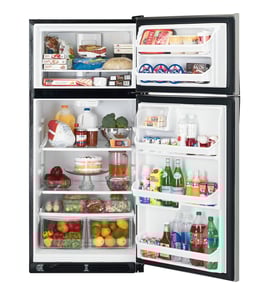



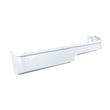
What is a top mount refrigerator?
A top-mount refrigerator is a classic fridge layout where the freezer compartment is on top and the fresh-food (refrigerator) compartment is below. Your Frigidaire FRT18L4JB3 uses this design, which keeps frozen items at eye level and fresh foods in the lower section.
- Freezer on top: Frozen food storage and (on many models) the ice maker area.
- Fresh-food section below: Main refrigerated storage for everyday groceries.
- Shared cooling system: Cold air is produced at the evaporator and circulated to maintain both sections.
- Simple access: You reach the freezer without bending; you bend more often for crisper drawers.
Your installation instructions focus on setup items that matter for top-mount performance, including door sealing, leveling, and airflow clearances. For the exact setup steps and control locations, use the FRT18L4JB3 installation guide.
Most top-mount refrigerators need space around the cabinet for proper air circulation. Here is the clearance guidance shown for this model’s installation setup:
| Location | Clearance |
|---|---|
| Sides and top | 3/8 in |
| Back | 1 in |
Top-mount refrigerators depend heavily on good door sealing and correct leveling. If the cabinet is not level or the doors do not seal, you can see temperature swings, frost buildup, or longer run times.
- Confirm the refrigerator is level and slightly tilted back
- Make sure both door gaskets seal to the cabinet on all sides
- Keep vents inside the compartments unblocked by food packages
- Allow the recommended clearances for airflow
- Set fresh-food and freezer controls to a mid setting first, then fine-tune
Last updated: January 2026
What is the upper part of a fridge called?
On the Frigidaire FRT18L4JB3 top-mount refrigerator, the upper section is the freezer compartment. It’s the colder area designed to keep foods frozen, and on some setups it can also support ice making (manual ice trays or an automatic ice maker, if equipped). See the FRT18L4JB3 owner's manual for your exact compartment features.
- Maintains temperatures cold enough to keep food frozen long-term
- Helps protect food quality by slowing spoilage and bacterial growth
- Often contains shelves, bins, and a door gasket to hold cold air in
- May include ice-making components on models equipped with an automatic ice maker
| Term | What it usually means | Where you’ll see it |
|---|---|---|
| Freezer compartment | The upper frozen-food section on a top-mount | Manuals, parts diagrams |
| Freezer section | Same as freezer compartment | Customer support, DIY guides |
| Freezer door | The door that seals the freezer area | Parts listings |
If the upper section is not staying cold, these are common areas to check:
- Door seal condition (air leaks cause frost and warm temps)
- Frost buildup on the back wall (defrost issue)
- Airflow from the evaporator area (fan or blockage)
- Temperature control settings and door closing alignment
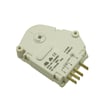
If you’re troubleshooting frost or temperature swings, the refrigerator defrost bi-metal thermostat 5303918202 is one of the defrost-system parts that can affect freezer cooling.
Knowing the correct name helps you match the right Frigidaire refrigerator parts and follow the correct troubleshooting steps in the manual, especially for cooling, frost, and door-seal issues.
Last updated: January 2026
What is the most common problem with a Frigidaire refrigerator?
The most common problem we see with Frigidaire refrigerators like model FRT18L4JB3 is a cooling complaint (fresh food too warm, freezer not cold enough, or temperatures that swing). In many cases, the root cause is airflow restriction, dirty condenser area, or a door that is not sealing tightly.
- Condenser area needs attention: Some models have a “Never Clean” condenser, but dusty or greasy homes can still need periodic cleaning for efficiency.
- Door not sealing: A warped or dirty gasket lets warm air in and forces longer run times.
- Airflow blocked inside: Overpacked shelves or blocked vents reduce circulation.
- Defrost-related icing: Frost buildup can restrict airflow and cause warm temperatures.
- Power or control settings: A loose plug, tripped breaker, or controls set incorrectly can mimic a cooling failure.
- Confirm the temperature controls are set to a normal cooling position and allow 24 hours for temperatures to stabilize after changes.
- Check that the refrigerator is plugged in firmly and the circuit is stable (the manual notes performance can be affected by voltage variation).
- Inspect the door seal for gaps, tears, or areas that do not grip paper when the door is closed.
- Make sure interior vents are not blocked by food containers.
- If you suspect a dirty condenser area, unplug the refrigerator before cleaning and follow the cleaning guidance in the FRT18L4JB3 owner's manual.
| Symptom | What it often points to | Example part for this model |
|---|---|---|
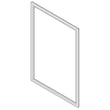
| Warm fridge, runs a lot | Door leak, airflow issue | Refrigerator gasket 242193213 |
| Frost buildup, weak airflow | Defrost issue | Refrigerator defrost bi-metal thermostat 5303918202 |
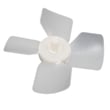
| Noisy airflow, poor cooling | Fan/blade issue | Refrigerator evaporator fan blade 5308000010 |
Cooling problems can lead to food spoilage and can also make the compressor run longer than normal. Addressing airflow, cleaning, and door sealing early is one of the best ways to restore performance and reduce wear.
Last updated: January 2026
Why is my Frigidaire top mount freezer not freezing?
If your Frigidaire FRT18L4JB3 top-mount freezer is not freezing, the most common causes are incorrect control settings, blocked airflow, dirty condenser coils, or a failed evaporator fan. Start by adjusting temperatures in small steps and giving the unit time to stabilize, as outlined in the FRT18L4JB3 owner's manual.
- Confirm the refrigerator is running and not in a defrost cycle; wait about 20 minutes and recheck.
- Make sure the temperature control is not set to 0 (Off).
- Do not block cold air vents with food; airflow is required to cool both compartments.
- Allow time after changes; temperature adjustments should be gradual and then allowed to stabilize.
- If the refrigerator was just started or recently unplugged, allow 8 to 12 hours of cool-down time with doors closed.
On this model family, the refrigerator control can affect both compartments, while the freezer control (on some versions) affects the freezer only.
| Symptom | What to adjust first | What to do next |
|---|---|---|
| Freezer too warm | Freezer control slightly toward Colder | Recheck after stabilizing time |
| Fresh food too warm too | Refrigerator control slightly toward Colder | Keep vents clear; recheck |
| Freezer too cold | Freezer control slightly toward Cold | Allow 24 hours to stabilize |
If settings and airflow are correct, we focus on the cooling and circulation system.
- Evaporator fan not running (no cold air movement inside freezer)
- Frost buildup from a defrost problem (ice blocks airflow)
- Dirty condenser coils (poor heat release)
- Door not sealing (warm, moist air leaks in and overwhelms cooling)
If you suspect a defrost issue, the refrigerator defrost bi-metal thermostat 5303918202 is one of the components commonly involved in the defrost circuit on many Frigidaire top-mount designs.
A freezer that cannot hold temperature can lead to unsafe food storage and can also force the compressor to run longer than normal. Correct control settings, clear vents, and a good door seal are the fastest ways to restore normal freezing.
Last updated: January 2026