Owner’s manual
 Error Codes


What water filter for Samsung RF28HDEDBSR?
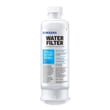
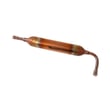
For the Samsung RF28HDEDBSR refrigerator, the correct replacement water filter is the refrigerator water filter DA29-00019A. This is the filter designed to fit the housing and maintain proper water flow and filtration for your dispenser and ice maker.
How to confirm you have the right filter
We match filters by model fit and the filter’s mounting style. For RF28HDEDBSR, use these quick checks:
- Confirm your model number is RF28HDEDBSR on the rating label inside the fresh food section.
- Match the filter part number to DA29-00019A.
- Make sure the old filter’s shape and locking tabs match the replacement.
- If your water flow is slow, replace the filter first before troubleshooting the inlet valve.
Replacement basics (what to expect)
Most Samsung refrigerator water filters are replaced about every 6 months, or sooner if water flow drops or the filter indicator turns on.
| Item | Typical guidance |
|---|---|
| Replacement interval | About every 6 months |
| After install | Flush several gallons of water to clear air and carbon fines |
| If dispenser sputters | Keep dispensing until air is purged |
Why it matters
Using the correct filter for RF28HDEDBSR helps prevent leaks at the filter head, protects the water inlet valve from sediment buildup, and keeps ice cubes clear and better tasting.
Helpful related DIY guidance
If you want step-by-step help for swapping the cartridge and flushing the system, follow how to replace the water filter in a Samsung refrigerator. For model-specific details such as filter location and indicator behavior, use the owner's manual.
Last updated: February 2026
What are the dimensions of the Samsung RF28HDEDBSR?
The Samsung RF28HDEDBSR is approximately 35 3/4 inches wide and about 70 inches tall with hinges installed; depth varies based on whether handles and doors are included. For the exact configuration measurements used for your installation, confirm the spec chart in the owner's manual.
RF28HDEDBSR dimension configurations (typical spec formats)
Refrigerator dimensions are usually listed in a few common ways. Here are the configurations you will see most often:
- With hinges, handles, and doors (largest depth)
- Without hinges and door (smallest depth)
- With hinge and door, no handle (common for cabinet fit checks)
- Width is usually the same across configurations, but depth changes the most
Commonly listed measurements
| Measurement style | Width | Height | Depth |
|---|---|---|---|
| With hinges, handles, and doors | 35 3/4 in. | 70 in. | 36 1/2 in. |
| Without hinges and door | 35 3/4 in. | 68 7/8 in. | 29 3/8 in. |
| With hinge and door, no handle | 35 3/4 in. | 70 in. | 34 in. |
How to use these dimensions for a proper fit
To avoid clearance problems with doors, drawers, and airflow, we recommend checking these items before installation:
- Cabinet opening width: allow a little side clearance so doors do not rub
- Height clearance: include hinge height and any leveling leg adjustment
- Depth clearance: account for handles and door swing into walkways
- Rear clearance: leave space for the water line and ventilation
- Floor clearance: make sure the freezer drawer can fully extend
Why it matters
Depth differences of several inches are normal on French door and bottom-mount refrigerators like the RF28HDEDBSR. Using the wrong configuration can cause the refrigerator to stick out too far, bind the doors, or reduce airflow around the condenser area.
Last updated: February 2026
Why is the bottom of my Samsung fridge not cooling?
If the bottom (freezer section) of your Samsung RF28HDEDBSR isn’t cooling, the most common causes are restricted airflow from frost or blocked vents, a failed evaporator fan, or a defrost problem. Start with airflow and door sealing checks, then move to fan and defrost components using the owner's manual.
Quick checks we recommend first
- Confirm the freezer temperature is set correctly (typical target is 0°F).
- Make sure food packages are not blocking return vents or the evaporator cover.
- Check for heavy frost on the rear freezer panel (a strong clue of a defrost issue).
- Inspect door gaskets for dirt, gaps, or ice buildup; clean and recheck the seal.
- Verify the condenser area is not packed with dust; poor heat rejection can reduce overall cooling.
What usually causes “bottom not cooling” on this style of refrigerator
In a bottom-mount refrigerator, the freezer evaporator and fan drive cold airflow. When that airflow stops, the freezer warms first.
| Symptom | Most likely cause | What to do next |
|---|---|---|
| Freezer warm, fridge section also warming | Airflow problem or fan not running | Listen for fan; check for frost/ice blockage |
| Heavy frost on freezer back wall | Defrost system problem | Plan to inspect heater and sensors |
| Intermittent cooling, odd temps | Temperature sensor issue | Check sensor connections; consider replacement |
| Ice maker area issues plus weak cooling | Fan/ice room airflow issue | Inspect fan operation and ice room for ice buildup |
Parts that commonly fix the problem
If your checks point to a failed component, these model-compatible parts are commonly involved:
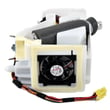
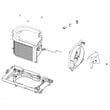
- Refrigerator freezer evaporator cover and fan assembly DA97-08541A (fan and cover assembly that moves air across the evaporator)
- Refrigerator defrost heater DA47-00244U (melts frost so airflow stays open)
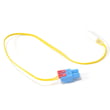
- Refrigerator temperature sensor DA32-10104N (helps control cooling and defrost timing)
Why it matters
When the freezer can’t move air or can’t defrost, temperatures rise and frost can build up quickly. Fixing airflow and defrost issues early helps prevent food spoilage and reduces strain on the compressor.
Helpful DIY guidance
For step-by-step troubleshooting focused on Samsung ice and airflow problems, use why your Samsung fridge stopped making ice and how to fix it. Many of the same airflow and icing causes also affect freezer cooling.
Last updated: February 2026