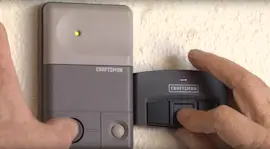
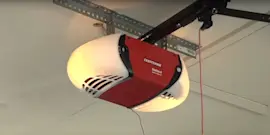
Owner’s manual
 Error Codes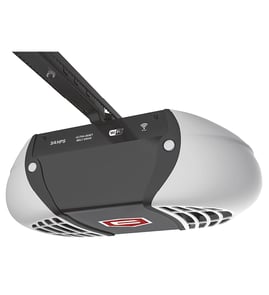


How do I know what garage door opener is compatible?
Compatibility comes down to matching the accessory (remote, keypad, wall control, or smart controller) to your Craftsman garage door opener’s radio system and programming method. For model 13953964SRT, start by using the model number and the programming steps in the owner's manual, then confirm the accessory supports the same learn-button system or dip-switch style used by your opener.
What to match for compatibility
Use these checks to avoid buying an accessory that will not pair:
- Brand and model family: Craftsman accessories are often cross-compatible within certain generations.
- Programming method: Learn-button programming vs. dip switches (older style).
- Radio frequency and code type: Rolling-code systems require a compatible receiver logic.
- Accessory type: Remote, wireless keypad, wall control, or smart hub can have different requirements.
- Door setup: A heavy or binding door can look like an “opener problem” even when the accessory is correct.
Quick identification checklist (what to look at)
Most openers have the key details on the motor head label and near the learn/program button.
| What you check | What it tells you | Why it matters |
|---|---|---|
| Model number (13953964SRT) | Exact opener platform | Best way to match remotes and controls |
| Learn/program button area | Programming style | Determines pairing steps and compatible accessories |
| Existing working remote | Known-good reference | Helps you match the same technology |
If you are adding an 8-foot door setup
If you are converting to an 8-foot door using an extension kit, the opener must be re-adjusted afterward. The manual guidance for rail changes and limit readjustment is critical because UP and DOWN travel limits often need resetting after the rail/opener assembly is modified.
- Disconnect trolley using the emergency release
- Reinstall rail components per instructions
- Restore power and run the door
- Readjust UP travel limit and DOWN limit as needed
Why it matters
A “compatible” remote that uses the wrong programming method will not learn to the opener, and incorrect travel/force settings can cause the door to reverse, stop short, or fail to close. Using the correct pairing steps and confirming the opener’s control type prevents wasted time and repeat troubleshooting.
For broader accessory and replacement-part searching by model number, use Sears PartsDirect.
Last updated: February 2026
Why is my garage door not responding to remotes and/or keypad?
If your Craftsman 13953964SRT garage door opener won’t respond to remotes and/or the keypad, the fastest way to narrow it down is to test the wall control. If the wall control works, the issue is usually power to the remote/keypad, lock settings, interference, or lost programming; use the owner's manual steps to reprogram and reset.
Quick checks (in order)
- Test the wall control button; if it opens/closes the door, the opener and travel system are basically working.
- Replace the batteries in every remote and the keypad.
- Make sure the wall control “Lock” feature is not enabled (it disables remotes/keypad on many Craftsman units).
- Check that the opener’s hanging antenna wire is intact and hanging straight down.
- Remove common interference sources near the opener (some LED bulbs, battery chargers, Wi-Fi devices) and retest.
- Power-cycle the opener: unplug for 30 to 60 seconds, then plug back in.
If the wall control works but remotes/keypad do not
Reprogram and confirm the opener is accepting codes
Use the programming steps in the owner's manual. If programming won’t “take,” focus on these common causes:
- Lock feature enabled on the wall control
- Weak battery or corroded battery contacts in the remote/keypad
- Interference or a damaged antenna/receiver path
What to try next
| Symptom | Most likely cause | What we do |
|---|---|---|
| All remotes and keypad stopped at once | Lock feature, interference, or memory glitch | Unlock, remove interference, power-cycle, then reprogram |
| One remote fails, others work | Remote battery or remote failure | Replace battery, then reprogram that remote |
| Keypad lights but won’t open | Wrong PIN/programming or lock feature | Re-enter PIN, reprogram keypad, confirm lock is off |
If the wall control also does not work
That points to a power, control, or safety issue rather than the remotes. Check these items before adjusting anything:
- Confirm the opener has power (outlet, cord, ceiling plug connection)
- Inspect safety sensor alignment and obstructions at the door tracks
- Watch the opener lights for blink patterns and match them to Craftsman error codes
Why it matters
Remotes and keypads are “wireless inputs.” When the wall control works, we know the motor, belt/rail travel, and limits are generally functional, so we can focus on programming, lockout, and interference. When the wall control fails too, we shift to power, sensors, and control diagnostics.
You can search diagrams and replacement items by model number on the parts list for Craftsman 13953964SRT, or broaden your search on Sears PartsDirect.
Last updated: February 2026
What is the most common garage door repair?
The most common garage door repair is replacing broken torsion or extension springs. For a Craftsman garage door opener like model 13953964SRT, the next most common fixes are safety sensor alignment, force or travel limit adjustments, and worn opener drive components that keep the door from opening or closing smoothly. For model-specific adjustment steps, use the owner's manual.
Most common repairs we see (and what they look like)
- Broken springs: loud bang, door feels very heavy, opener strains or stops.
- Safety sensor issues: door starts down then reverses, lights blink, door will not close.
- Force or travel limit out of adjustment: door reverses at the floor, stops short, or hits the stop bolt.
- Worn rollers or track misalignment: noisy operation, jerky travel, door binds.
- Remote or wall control problems: intermittent operation, short range, no response.
Quick triage: what you can check safely
- Test the door by hand: pull the emergency release and lift the door manually. It should move smoothly and stay about halfway open.
- Check photo eyes: confirm both sensors face each other, lenses are clean, and indicator lights are steady.
- Look for obvious door hardware issues: loose hinges, bent track, frayed cables (do not touch cables under tension).
- Review opener settings: confirm UP/DOWN travel limits and force settings are not overdriving the door.
Repair type vs. DIY level
| Repair area | Typical symptom | DIY level |
|---|---|---|
| Springs | Door is heavy or will not lift | Pro-only (high tension) |
| Safety sensors | Door will not close, reverses | DIY checks and alignment |
| Force/travel limits | Reverses, stops short, slams | DIY with manual guidance |
| Rollers/track | Noise, binding, uneven travel | DIY to moderate |
| Opener drive components | Motor runs but door does not move | Moderate to advanced |
Why it matters
A garage door is a heavy moving system. Fixing the root cause (springs, door balance, sensors, or opener adjustments) prevents repeated reversals, stripped gears, and premature motor wear.
Helpful model-specific resources
- Use Craftsman error codes to interpret blinking lights and diagnostic patterns.
- If you need to order parts by model number, search on Sears PartsDirect.
Last updated: February 2026
Is it worth repairing a 20 year old garage door opener?
Repairing a 20-year-old garage door opener is usually not worth it because garage door openers typically last 10 to 15 years; replacement delivers better reliability, updated safety and security features, and fewer repeat breakdowns. For a Craftsman 13953964SRT, a small, low-cost adjustment or minor fix can still be worthwhile.
When repair makes sense
Repair is the right call when the opener and door system are still in good shape.
- The door is balanced and moves smoothly by hand
- The issue is an adjustment (travel limits, force settings, sensor alignment)
- The problem is intermittent (loose wall control wiring, dirty sensor lenses)
- The opener runs consistently (no grinding, slipping, or repeated reversals)
When replacement is the better investment
Replacement is the better choice when age-related wear is driving the problem.
- The motor runs but the door barely moves or stalls mid-travel
- You have repeated failures (new issue every few months)
- The opener is loud, jerky, or inconsistent
- You want modern features (quieter operation, improved security, smart control options)
Quick checks before you spend money
These steps help separate a door problem from an opener problem.
- Pull the emergency release and lift the door by hand; it should move smoothly and stay about halfway open
- Confirm safety sensor LEDs are steady and lenses are clean
- Review travel limits and force settings in the owner's manual
- Check diagnostic light patterns using Craftsman error codes
Repair vs. replace comparison
| Factor | Repair (typical) | Replace (typical) |
|---|---|---|
| Upfront cost | Lower for adjustments | Higher, but resets service life |
| Reliability | Depends on overall wear | High when installed correctly |
| Features | Older tech | Modern safety and security |
Why it matters
On older openers, the most common money-waster is fixing the opener when the real issue is door balance, worn rollers, or binding tracks. If you decide to replace, we recommend searching by model number on Sears PartsDirect.
Last updated: February 2026
How do I know what model my garage door opener is?
Your Craftsman garage door opener’s model number is printed on a label on the powerhead (the motor unit on the ceiling). On many Craftsman units like model 13953964SRT, you’ll find it under a front light lens or under the left light lens when you’re facing the opener.
Where to look on the opener head
Check these common label locations on the powerhead:
- Under the front light lens cover
- Under the left light lens cover (when facing the garage door)
- On the side opposite the antenna wire
- On the back or side panel near the wiring terminals
- Near the learn/program button area (often close to the logic board cover)
If you see a long number with dots (example: 139.53964), write it down exactly as shown.
Quick steps to find it safely
- Close the garage door.
- Turn off the opener (unplug it or switch off the breaker) before removing any light lens cover.
- Remove the light lens cover and look for the rating/model label.
- Record the model number and any additional identifiers (manufacturing date, logic board number, etc.).
What the model number helps you do
Once you have the model number, you can match the correct documentation and troubleshooting info for your exact opener.
| What you’re trying to do | What you need | Why it matters |
|---|---|---|
| Find parts diagrams | Exact model number | Prevents ordering the wrong part |
| Program remotes/keypad | Model number or learn button type | Programming steps vary by series |
| Diagnose flashing lights | Error code pattern | Points to sensors, travel, or logic board issues |
Why it matters
Craftsman openers often look similar across multiple series, but parts (logic board, safety sensors, wall control, remote compatibility) can differ. Using the exact model number keeps repairs and troubleshooting accurate.
For model-specific details and diagrams, use the 13953964SRT owner's manual. For broader parts lookup by model number, use Sears PartsDirect.
Last updated: February 2026