Owner’s manual
 Error Codes



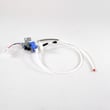
Why is my LG refrigerator icemaker not making ice?
If your LG LFC24770SW refrigerator ice maker is not making ice, the most common causes are a freezer temperature above 0°F, the refrigerator not being fully cooled yet (up to 24 hours after install), a blocked ice-detecting sensor, or a water supply issue such as a closed valve, low pressure, or a restricted filter.
Quick checks that fix most no-ice problems
- Confirm the freezer is set to 0°F (-18°C) for normal ice production.
- If the refrigerator or ice maker was just installed or reconnected, allow up to 24 hours to start making ice.
- Make sure the ice maker is turned ON (I).
- Check that the ice-detecting sensor area is clean and not frosted over.
- Verify the house water shutoff valve is fully open and the supply line is not kinked.
- If you use reverse osmosis, make sure water pressure stays within the refrigerator’s required range.
Water supply and pressure: what to look for
The ice maker needs steady water flow. Low pressure or a partially closed valve can stop ice production.
| What you check | What “good” looks like | What it points to if not OK |
|---|---|---|
| Freezer temperature | 0°F (-18°C) | Warm freezer reduces or stops ice |
| Water pressure | 20 to 120 psi (typical for this model type) | Low pressure, slow fill, small cubes |
| Shutoff valve | Fully open | Restricted water to inlet valve |
| Sensor area | Clear of frost/debris | Sensor “thinks” bin is full |
When a part is likely involved
If temperature and water supply are correct but the ice maker still will not cycle or fill, these parts are common suspects on this LG bottom-mount design:
- LG refrigerator water inlet valve AJU73753101 (no fill or weak fill)
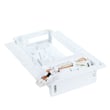
- LG refrigerator ice maker assembly model AEQ72909603 (won’t harvest, won’t cycle)
For model-specific control settings and troubleshooting steps, use the LFC24770SW owner’s manual.
Why it matters
Ice production depends on three things working together: cold enough freezer air, an ice maker that can cycle and sense the bin correctly, and proper water flow and pressure. Fixing the root cause prevents repeat clogs, small cubes, and intermittent no-ice issues.
Last updated: February 2026
What is the lifespan of an LG inverter refrigerator?
Most LG inverter (linear compressor) refrigerators typically last 10 to 15 years with normal home use and basic maintenance. For the LG LFC24770SW, the compressor is covered by a 10-year limited warranty, which is a good indicator of expected long-term durability (details are in the LFC24770SW owner's manual).
What affects lifespan the most
- Condenser cleanliness (dust buildup makes the sealed system work harder)
- Door seal condition (warm air leaks increase run time and frost)
- Airflow and loading (blocked vents reduce cooling efficiency)
- Water and ice system health (valves and ice makers that seep can create icing and extra cycling)
- Ambient temperature (hot garages and tight cabinets shorten component life)
Quick maintenance checklist (best return for the effort)
- Vacuum the condenser area and keep rear/bottom airflow clear.
- Keep doors closing fully; avoid overloading door bins.
- Set temps to typical targets: 37°F fresh food, 0°F freezer.
- Replace worn gaskets; a leaking freezer gasket can cause heavy frost.
- If you have ice maker issues, address them early to prevent icing and airflow problems.
Common “life-extending” repairs on this model family
| Symptom | Often involved system | Example part for LFC24770SW |
|---|---|---|
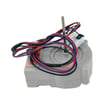
| Warm fridge, freezer OK | Evaporator airflow | LG refrigerator evaporator fan motor 4681JB1027C |
| No ice or slow ice | Ice maker or water supply | LG refrigerator ice maker assembly model AEQ72909603 AEQ72909603 |
| No water to ice maker/dispenser | Water inlet valve | LG refrigerator water inlet valve AJU73753101 |
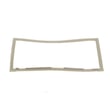
| Frost buildup, temp swings | Door sealing | Refrigerator freezer door gasket ADX73350955 |
Why it matters
A refrigerator can “run” longer than its useful life, but efficiency and temperature stability usually drop first. Keeping airflow clear and seals tight reduces compressor run time, which is the biggest driver of long-term reliability.
Last updated: February 2026
What is the most common problem with an LG refrigerator?
The most common LG refrigerator problem is a cooling issue: the fresh food section gets warm, the freezer temperature drifts, or temperatures swing. On LG model LFC24770SW, the most frequent root causes are airflow problems (fan or frost buildup), dirty condenser area, or a defrost/temperature sensing issue; we use the troubleshooting steps in the LFC24770SW owner’s manual to narrow it down.
Quick checks we recommend first (10 minutes)
- Confirm the controls are set correctly and the doors close fully.
- Listen for the evaporator fan; a failed fan often causes warm temps and uneven cooling.
- Check for heavy frost on the back freezer panel (points to a defrost problem).
- Clean dust from the condenser area (restricted heat release reduces cooling).
- Make sure vents inside the refrigerator are not blocked by food packages.
- If you smell burning plastic or see smoke, unplug the refrigerator immediately and contact service (safety guidance is in the manual).
Most common causes and what they look like
| Symptom | Likely cause | What to check next |
|---|---|---|
| Fridge warm, freezer OK | Airflow issue | Fan running, vents blocked, ice buildup |
| Freezer warm too | Heat not being removed | Condenser dirty, fan/compressor not running |
| Loud buzzing or no airflow sound | Fan motor issue | Inspect fan area for ice or obstruction |
| Frost blanket on freezer panel | Defrost system issue | Sensor/heater circuit checks |
Parts that commonly fix cooling and airflow complaints
If your diagnosis points to a failed component, these model-matched parts are common solutions:
- LG refrigerator evaporator fan motor 4681JB1027C (restores airflow across the evaporator)
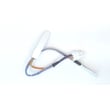
- Refrigerator defrost sensor assembly 6615JB2005N (helps control defrost and prevent frost buildup)
- Refrigerator temperature sensor 6500JB2002X (thermistor-type sensor that can cause temp swings)
Why it matters
Cooling problems can spoil food quickly and also force the compressor to run longer than normal. Catching airflow restrictions, frost buildup, or a weak sensor early usually prevents bigger, more expensive failures.
Last updated: February 2026