Installation guide
 Owner’s manual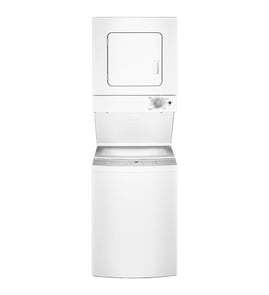



Is Maytag LSE7804ACE gas or electric?
The Maytag LSE7804ACE stacked laundry center was sold in both gas and electric dryer versions. The installation information for this platform lists a gas inlet for gas models and a 240V terminal block for electric models, so the correct answer depends on the exact configuration shown on your unit’s rating label and hookups (gas line vs 240V cord).
How to tell which one you have (fast checks)
- Look behind the dryer section: a 3/8-inch gas line connection indicates a gas dryer.
- Check the power cord: a large 240V 3-wire cord/terminal block indicates an electric dryer.
- Find the rating label (usually inside the dryer door opening or on the cabinet): it will state gas or list 240V / wattage.
- Check your home hookup: gas shutoff valve nearby usually means gas; a 240V receptacle usually means electric.
- Confirm venting: both versions vent, so venting alone does not identify fuel type.
What the installation guide says (what to look for)
The installation instructions for this stacked washer and dryer platform reference both:
- Terminal block (electric dryer)
- Gas inlet (gas dryer)
- Heat source specs: electric (240V heating coil) vs gas (burner with BTU rating)
Use the diagrams and connection callouts in the LSE7804ACE installation guide to match what you see on your unit.
Quick comparison
| Dryer type | What you will see | Typical home hookup |
|---|---|---|
| Gas | Gas inlet fitting and shutoff valve | 120V outlet + gas supply line |
| Electric | 240V terminal block/cord | 240V outlet (often 30A) |
Why it matters
Gas vs electric determines the correct installation requirements, replacement parts, and safety checks (gas supply and conversion vs 240V electrical connections). Identifying the fuel type first prevents ordering the wrong Maytag laundry center parts.
Last updated: February 2026
What is the average lifespan of a Maytag washer?
Most Maytag washers average 10 to 13 years of service life with normal household use and basic maintenance. For the Maytag LSE7804ACE stacked laundry center, keeping the unit level, avoiding overloads, and fixing wear items early helps you reach (and often exceed) that typical range; see the LSE7804ACE owner's manual for model-specific care guidance.
What affects washer lifespan the most
- Load size and balance: chronic overloading strains the drive system and tub bearings.
- Leveling: an out-of-level unit increases vibration and wear; the front is typically set just slightly higher than the back.
- Water quality: hard water speeds up mineral buildup in valves and hoses.
- Drain and spin health: slow draining or repeated off-balance spins shorten component life.
- Timely repairs: replacing small wear parts early prevents bigger failures.
Quick maintenance checklist (high impact)
- Keep loads within the basket capacity and distribute items evenly.
- Periodically inspect fill and drain hoses for bulges, cracking, or seepage.
- Clean lint and debris around the unit so airflow and service access stay clear.
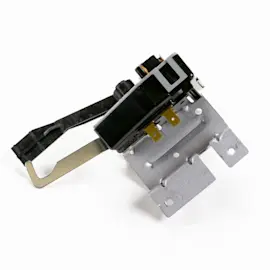
- If the washer will not start or stops mid-cycle, test the lid switch circuit; the washer lid switch WP207166 is a common wear item on many top-load designs.
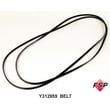
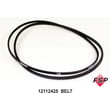
- If the washer will not agitate or spin and you smell rubber or see belt dust, inspect the washer drive belt 12112425.
Typical lifespan ranges (what to expect)
| Usage pattern | Typical lifespan | What usually wears first |
|---|---|---|
| Light (1 to 3 loads/week) | 12 to 15 years | Hoses, lid switch, belt |
| Average (4 to 7 loads/week) | 10 to 13 years | Belt, bearings, pump-related issues |
| Heavy (8+ loads/week) | 7 to 10 years | Bearings, drive components, suspension |
Why it matters
Washer failures often start as vibration, slow draining, or intermittent starting. Catching those symptoms early helps protect high-cost components (like bearings and the drive system) and extends the life of your Maytag laundry center.
Last updated: February 2026
What is the most common problem with a Maytag washer?
The most common Maytag washer problem is a no-spin or no-drain condition. On the Maytag LSE7804ACE stacked laundry center, this is most often tied to a failed lid switch, a worn drive belt, or a drain restriction that prevents the cycle from completing.
Quick checks we recommend first
- Make sure the lid closes firmly and the lid strike lines up with the switch
- Redistribute the load; heavy items on one side can stop or slow spin
- Verify the drain hose is not kinked or shoved too far down the standpipe
- Confirm both hot and cold water valves are fully open
- Unplug the unit for 2 minutes, then retry a spin or drain portion of the cycle
Parts that commonly cause no-spin or no-drain
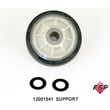
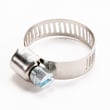
If the washer fills but will not agitate or spin, these model-matched parts are common suspects:
If the washer drains slowly or leaves water behind, check for a clogged hose, a blocked pump inlet, or a pinched internal hose clamp (especially after moving the unit).
Symptom-to-cause guide
| Symptom | Most likely cause | What to do next |
|---|---|---|
| Won’t spin, motor runs or hums | Belt slipping or broken | Inspect belt condition and tension; replace if glazed/cracked |
| Won’t spin, nothing happens when it should | Lid switch not closing | Test lid switch for continuity; confirm lid alignment |
| Won’t drain or drains slowly | Drain path restriction | Check hose for clogs/kinks; clear pump inlet if accessible |
| Loud banging during spin | Out-of-balance load or leveling issue | Level the washer, reduce load size, redistribute items |
Why it matters
A washer that cannot spin or drain leaves clothes soaking wet and can overwork the drive system. Catching a worn belt or a failing lid switch early helps prevent bigger issues like motor strain and repeated cycle failures.
Model-specific notes for LSE7804ACE
This is a stacked washer/dryer; installation and leveling directly affect washer performance. We follow the clearances, make-up air, and leveling guidance in the LSE7804ACE installation guide to reduce vibration, improve spin stability, and avoid drain hose routing problems.
Last updated: February 2026