 Installation guide
 Owner’s manual


What is the average life expectancy of a Bosch dishwasher?
A Bosch dishwasher typically lasts 10 to 15 years with normal home use and basic upkeep. For your Bosch SHE44C05UC, routine maintenance like cleaning the filter system, spray arms, and door gasket helps you reach the high end of that range (details are in the SHE44C05UC owner’s manual).
What affects lifespan the most
- Water quality (hard water can leave mineral buildup in the sump and spray arms)
- How often you run it (daily use wears pumps, seals, and racks faster)
- Maintenance habits (filter cleaning and periodic interior cleaning)
- Proper installation (leveling, correct drain routing, secure mounting)
- Small leaks caught early (protects the motor, wiring, and flooring)
Maintenance checklist we recommend for SHE44C05UC
Your manual calls out several easy tasks that protect performance over time. Use this as a practical schedule:
| Task | What to do | How often |
|---|---|---|
| Filter system | Remove and rinse debris from the filter area | Weekly to monthly |
| Spray arms | Check and clear clogged nozzles | Monthly |
| Door gasket | Wipe the seal to prevent leaks and odors | Monthly |
| Stainless steel tub and inner door | Wipe down to reduce film and spotting | Monthly |
| Winterizing | If stored where it can freeze, have it winterized | Before extended freezing exposure |
If you are chasing poor wash results while doing maintenance, our dishwasher not cleaning dishes video helps you pinpoint common causes like clogged filtration, spray arm blockage, and low water fill.
Why it matters
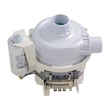
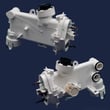
Most “dishwasher failures” start as restricted water flow, drainage issues, or small seal leaks. Keeping the filter system and spray arms clean reduces strain on the wash motor and helps protect key components like the dishwasher recirculation pump assembly 00442548 and seals.
Last updated: February 2026
What is the most common problem with a Bosch dishwasher?
On the Bosch SHE44C05UC dishwasher, the most common issues we see are poor cleaning and draining problems caused by a clogged filter system, blocked spray arm nozzles, or a restricted drain path. Many “performance” complaints also trace back to low rinse aid or cold incoming water (long cycles). See the SHE44C05UC owner’s manual for the model’s self-help checks.
Most common symptoms and what usually causes them
- Not cleaning well: clogged filter system, obstructed spray arm holes, heavy soil buildup
- Not draining: kinked or clogged drain hose, clogged filters, clogged sink drain or air gap
- Runs a long time: cold incoming water; hot water not purged at the sink before starting
- Spots or film on dishes: rinse agent low; incorrect rinse agent setting
- Leaks or water on the floor: door gasket debris, splash-out from opening mid-cycle
Quick checks we recommend first (in order)
- Clean the filter system and remove any debris in the sump area.
- Remove and rinse spray arms; confirm the nozzles are unobstructed.
- Verify the drain hose is not kinked and is routed correctly (including the required high loop).
- Run the hot water at the nearest sink until it is hot, then start the cycle.
- Fill the rinse agent reservoir and adjust the rinse agent setting if spotting continues.
Parts that commonly solve these problems
| Problem you notice | Part to inspect on SHE44C05UC | What it affects |
|---|---|---|
| Poor wash, weak spray | Dishwasher recirculation pump assembly 00442548 | Wash pressure and water circulation |
| Not filling or fills slowly | Dishwasher water inlet valve 00425458 | Water entering the dishwasher |
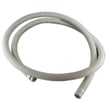
| Not draining | Drain hose 00263099 | Water leaving the dishwasher |
| Leaks at the door | Door seal 00432490 | Seals the door opening |
| Cloudy water, debris recirculating | Sump filter 00441905 | Traps soil before recirculation |
Why it matters
A clogged filter or restricted drain forces dirty water to recirculate and can make cycles run longer. Fixing the root cause (filters, spray arms, drain routing, rinse aid) restores cleaning and helps prevent odors and splash-out.
Last updated: February 2026
Can you buy replacement parts for a dishwasher?
Yes. You can buy replacement parts for a dishwasher, including model-specific parts for the Bosch SHE44C05UC such as pumps, inlet valves, door seals, filters, racks, and drain hoses. Using the correct OEM part helps restore proper washing, draining, and leak protection.
Common dishwasher parts you can replace
These are some of the most frequently replaced items on Bosch dishwashers like the SHE44C05UC:
- Water inlet valve (fills the tub)
- Recirculation pump assembly (drives wash water through spray arms)
- Sump filter (catches debris to protect the pump)
- Door seal and gaskets (helps prevent leaks)
- Drain hose (routes water to the sink drain or disposer)
- Door latch or door lock switch (helps the unit start and run safely)
Parts on this model that customers replace often
Here are examples of OEM parts available for the Bosch SHE44C05UC:
| Symptom | Likely part to check | Example part for this model |
|---|---|---|
| Not filling or fills slowly | Inlet valve, float switch | Dishwasher water inlet valve 00425458 |
| Not cleaning well | Filter, recirculation pump | Sump filter 00441905 |
| Leaking at the door | Door seal | Door seal 00432490 |
| Not draining | Drain hose, filter | Drain hose 00263099 |
How we recommend choosing the right replacement part
Use these steps to avoid ordering the wrong item:
- Match the part to your exact model: Bosch SHE44C05UC
- Compare the part name and part ID, not just a photo
- Confirm the symptom first (fill, drain, leak, or wash performance)
- Check for related wear items (seals, gaskets, clamps) during the same repair
- Follow the safety and service guidance in the SHE44C05UC owner’s manual
Why it matters
Dishwashers are sensitive to fit and sealing. A correct Bosch OEM part helps maintain proper water flow, prevents leaks at the door seal, and protects components like the wash pump and control unit from damage.
Last updated: February 2026
Can I still use my appliance with an E22 error?
On a Bosch dishwasher like model SHE44C05UC, we do not recommend running cycles with an E22 error because it commonly points to a drainage or filter restriction that can leave dirty water in the sump and reduce cleaning performance. Clear the blockage first, then test a full cycle using the steps in the SHE44C05UC owner’s manual.
What E22 usually means on this Bosch dishwasher
E22 is most often tied to water not moving through the filter and sump area the way it should.
Common causes to check first:
- Food debris clogging the filter area and sump
- A restriction in the drain path (hose routing, air gap, disposer inlet)
- A drain pump area obstruction
- Heavy soil load causing rapid filter blockage
Quick checks you can do safely
Before any hands-on checks, turn off power at the breaker and avoid working around energized wiring; grounding and electrical safety matter for safe operation (see the SHE44C05UC installation guide).
Steps that solve many E22 situations:
- Remove and rinse the filter components; clean the sump area beneath them
- Inspect the drain hose for kinks, crushing, or a sag that traps water
- If connected to a garbage disposer, confirm the disposer inlet plug was removed
- Run hot water at the sink before starting a cycle to improve wash and drain performance
- After cleaning, run one complete cycle and recheck for standing water
Parts that are commonly involved
If cleaning and hose checks do not clear E22, these model-matched parts are often involved in drainage and water movement:
| Symptom you see | What to inspect | Model-matched part example |
|---|---|---|
| Standing water in bottom | Drain path and pump area | Drain hose 00263099 |
| Poor circulation, weak spray | Wash system flow | Dishwasher recirculation pump assembly 00442548 |
| Filter area repeatedly clogs | Filter condition and fit | Sump filter 00441905 |
Why it matters
Running with an E22 condition can keep dirty water in the dishwasher, reduce cleaning, and increase the chance of leaks around the door and base as water levels and flow become abnormal. Fixing the restriction first protects the pump, seals, and overall wash performance.
Last updated: February 2026
Is it worth repairing a Bosch dishwasher?
Yes, repairing a Bosch dishwasher like model SHE44C05UC is usually worth it when the unit is in otherwise good condition and the fix is limited to a common wear part or a single failed component. We compare the repair total to replacement cost and prioritize repairs that restore reliable washing, draining, and leak-free operation.
Quick decision checklist
- Age: Under about 10 years typically favors repair; over 10 years depends on overall condition.
- Repair cost target: Keep the total repair (parts + labor) at 50% or less of the cost of a comparable new dishwasher.
- Failure type: One clear issue (leak, no fill, no drain) favors repair; multiple unrelated symptoms can raise cost.
- Safety and access: Pulling the dishwasher can expose electrical power and hot water connections; follow the SHE44C05UC owner’s manual.
- Warranty considerations: Unauthorized repairs can affect warranty coverage; Bosch guidance in the manual emphasizes using authorized service when needed.
Common repairs that are often worth it
These are typical, high-impact fixes that can restore performance without replacing the whole dishwasher:
- Fixing a fill problem by replacing the dishwasher water inlet valve 00425458
- Stopping leaks at the door with a door seal 00432490
- Improving wash performance by cleaning or replacing the sump filter 00441905
- Addressing drain issues by inspecting or replacing the drain hose 00263099
Cost-to-benefit guide
| Scenario | Typical outcome | Usually worth it? |
|---|---|---|
| Leak at door or tub edge | Seal or gasket replacement | Yes |
| Not filling or filling slowly | Valve or supply issue | Yes |
| Not cleaning well | Filter, spray arm cleaning, circulation issues | Often |
| Major electrical or multiple failures | Higher parts and labor | Sometimes |
Why it matters
A targeted repair can extend the life of a quality Bosch dishwasher, reduce waste, and restore key functions like proper water heating, circulation, and draining. Regular maintenance (filter system, spray arm nozzles, door gasket) also helps prevent repeat failures.
Last updated: February 2026





