Owner’s manual
 Error Codes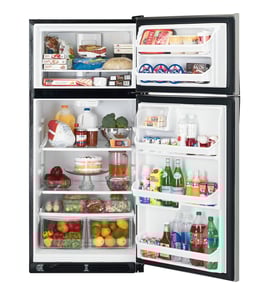






What is a top mount refrigerator?
A top-mount refrigerator is a classic fridge layout where the freezer is on top and the fresh-food (refrigerator) section is below. Your Kenmore 10664234402 uses this design, which helps cold air circulate from the freezer down into the refrigerator section.
How a top-mount design cools your food
In a top-mount refrigerator like Kenmore 10664234402, cool air is produced in the freezer area and then moves into the refrigerator compartment through vents. Keeping those vents clear helps both sections hold steady temperatures.
- Cool air enters and circulates through the freezer first
- Some air moves into the refrigerator section through an upper vent
- Blocking vents with food packages can cause warm spots and moisture issues
- Odors can transfer between sections because air circulates between compartments
For the airflow diagram and control basics, use the 10664234402 owner's manual.
What you get with a top-mount refrigerator (quick comparison)
| Feature | Top-mount refrigerator | Bottom-freezer refrigerator |
|---|---|---|
| Freezer access | At eye level | Lower, usually a pull-out drawer |
| Fresh-food access | Lower shelves require bending | More items at eye level |
| Cooling airflow | Freezer-driven airflow into fridge | Varies by design |
| Typical value | Simple, proven layout | Convenience-focused layout |
Tips to get the best performance from this layout
These habits matter more on top-mount units because airflow between compartments is essential:
- Leave space around interior vents; do not pack food tightly against vent openings
- Wrap or cover foods to reduce odor transfer between freezer and refrigerator
- Set controls to the factory mid-setting after installation, then adjust gradually
- Allow installation clearance for ventilation (typically about 1/2 inch at sides and top)
- If equipped with an ice maker, leave extra space behind for the water line
Why it matters
Knowing you have a top-mount design helps you troubleshoot common symptoms faster. For example, a blocked freezer vent can make the refrigerator section warm even when the freezer still feels cold.
Last updated: January 2026
What is the cubic foot of my Kenmore refrigerator model 10664234402?
The exact cubic-foot capacity for Kenmore top-mount refrigerator model 10664234402 is typically listed on the model and serial number label inside the fresh food compartment and in the 10664234402 owner's manual. Use that label to match the correct capacity for your specific unit.
Where to find the capacity information
Look in these common places on a Kenmore 106 top-mount refrigerator:
- The model and serial number label on the inside wall of the refrigerator compartment
- The specifications section of the 10664234402 owner's manual
- The product label area near the crisper or side wall (varies by production run)
How to estimate capacity if you need a quick ballpark
If you need a rough estimate before you locate the label, most Kenmore 106 top-mount refrigerators are commonly in the 18 to 22 cu. ft. range, depending on width and feature set (ice maker, door bins, shelf layout).
Quick comparison (typical ranges)
| Refrigerator type | Typical capacity range | What changes it most |
|---|---|---|
| Top-mount (top freezer) | 18 to 22 cu. ft. | Cabinet width and interior layout |
| Larger top-mount models | 22 to 25 cu. ft. | Deeper cabinet, more door storage |
Why it matters
Capacity affects how you plan food storage and airflow. For example, the manual’s storage guidance references loading limits per cubic foot of freezer space, which helps prevent warm spots and poor freezing performance.
Related tip for this model
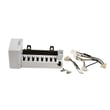
If your refrigerator has an ice maker installed, the added hardware can slightly reduce usable freezer space. If you are troubleshooting ice production, the ice maker assembly 4317943 is a common replacement for this model family.
Last updated: January 2026
How to find model number on Kenmore?
On Kenmore top-mount refrigerator model 10664234402, the model number is printed on the model and serial number label inside the fresh food (refrigerator) compartment. We use that exact model number to match the correct parts list, diagrams, and service information in the 10664234402 owner's manual.
Where to look first (fastest)
Check these common label locations on Kenmore refrigerators:
- Inside the refrigerator compartment on an interior side wall (most common)
- On the ceiling of the refrigerator compartment near the light
- On the side wall behind the crisper drawers (you may need to slide drawers out)
- Along the door frame area (hinge side) when the door is open
What to write down (and why)
Record these items from the label so we can identify the exact configuration:
- Model number (example: 10664234402)
- Serial number
- Purchase date (if available)
Why it matters
Kenmore model numbers that start with 106 are built to specific design families; small differences in serial range can change which door gasket, ice maker, or control parts fit. Using the full model number prevents ordering the wrong replacement part.
Quick checklist if you still cannot find the label
Try these steps in order:
- Use a flashlight and look along the inside walls of the refrigerator compartment
- Remove the crisper drawers and look at the wall behind them
- Check the door frame area with the door fully open
- Wipe the area with a damp cloth; labels can be hard to read under residue
Common label locations by area
| Area you check | What you will usually see | Typical effort |
|---|---|---|
| Fresh food compartment side wall | Model and serial label | Low |
| Behind crisper drawers | Model and serial label | Medium |
| Door frame (hinge side) | Model/serial sticker or rating label | Low |
Last updated: January 2026
What's the average lifespan of a Kenmore refrigerator?
Most Kenmore refrigerators last 12 to 15 years. For the Kenmore 10664234402 top-mount refrigerator, consistent care (cleaning, good door sealing, and proper airflow) is what most often determines whether you land near 12 years or push well beyond it; see the 10664234402 owner's manual for the maintenance routines.
Typical lifespan and what changes it
A refrigerator’s life is mainly driven by compressor run time, heat removal, and how hard the sealed system has to work.
- 12 to 15 years is the typical refrigerator lifespan
- Heavy use, hot kitchens, and poor ventilation shorten life
- Strong door sealing and stable temperatures extend life
- Ice maker and water system issues are common “mid-life” repairs
- Preventive cleaning reduces strain on the compressor
Maintenance that helps you reach the full lifespan
The manual for this model includes cleaning guidance, door adjustment, and troubleshooting sections that support long-term reliability.
- Keep the cabinet level so doors close consistently
- Clean and condition door gaskets if they stick (a tight seal prevents warm air leaks)
- Maintain proper air circulation around the refrigerator
- Replace failed small parts early (light switch, bulbs) to avoid secondary issues
- Address water leaks quickly to prevent corrosion and ice buildup
| What you notice | What it usually means | What to do next |
|---|---|---|
| Door not sealing, moisture, frost | Gasket not sealing or door alignment issue | Clean gasket, check leveling, adjust doors per manual |
| Warm fridge, freezer OK | Airflow or evaporator fan issue | Check vents, listen for fan, inspect fan area |
| No ice or slow ice | Water supply or ice maker issue | Check supply line, valve function, ice maker operation |
Parts that commonly affect “how long it lasts”
These are frequent wear or failure items on many top-mount refrigerators, including this model.
- Gasket panel (white) 2159061 (helps maintain a tight door seal)
- Refrigerator inlet valve WP2315576 (controls water flow to ice maker)
- Evaporator motor WPW10189703 (moves cold air through the compartments)
Why it matters
A refrigerator that runs warmer or leaks air runs longer cycles, which increases wear on the compressor and sealed system. Simple upkeep (seals, airflow, cleaning) is the most reliable way to hit the 12 to 15 year average and avoid early replacement.
Last updated: January 2026