 Installation guide
 Owner’s manual



How long does an eco 50 dishwasher take Bosch?
On the Bosch SHE58C02UC dishwasher, the Eco 50°C cycle is designed to run longer to reduce energy use; most loads take roughly 3 to 4 hours. Actual time can change during the wash because Bosch “Smart Control” adjusts the cycle based on soil level and incoming water temperature (see the SHE58C02UC owner’s manual).
What changes the Eco cycle time
Bosch cycle times are not fixed. Eco can speed up or slow down depending on conditions.
- Incoming water temperature (120°F water typically matches published runtimes best)
- How dirty the dishes are (heavier soil usually adds time)
- Load size and how tightly items are packed
- Options selected (heated dry, sanitize, extra dry, etc.)
- Water heating during the cycle (if the unit needs to raise temp, time increases)
Typical cycle-time comparison (what to expect)
These are common ranges for Bosch dishwashers; your display may show a changing countdown.
| Cycle type | Typical runtime | What it’s best for |
|---|---|---|
| Eco 50°C | 3 to 4 hours | Lowest energy use, everyday loads |
| Auto/Smart | 2 to 3.5 hours | Mixed soils, adjusts automatically |
| Express/Quick | 1 to 1.5 hours | Light soil, faster turnaround |
How to tell when the cycle is actually done
Depending on the exact configuration, completion can be indicated by one or more of these:
- Countdown display reaches “0”
- Clean light illuminates
- End-of-cycle signal sounds (tone may be adjustable)
- Floor indicator light turns off (on models that project a light)
Why it matters
Eco saves energy by using lower temperatures and longer wash time, and by letting the control system optimize water use. That longer runtime is normal and usually improves cleaning on everyday loads without the higher energy draw of faster cycles.
Last updated: February 2026
What makes Bosch Silence Plus so quiet?
Bosch Silence Plus dishwashers are quiet because the wash system is engineered to reduce vibration and airborne noise. On the Bosch SHE58C02UC, correct installation also plays a big role; when the unit is leveled and fitted snugly to the cabinet, it transmits less sound.
What specifically reduces noise
- A high-efficiency motor and pump design that runs smoothly with less vibration
- Insulation and sound-damping materials around the tub and base
- Spray and water-flow design that minimizes harsh water impact sounds
- A stable, level cabinet fit that prevents rattles and panel buzz
- Proper side-strip contact with the cabinet for better noise reduction (installation detail)
Installation checks that keep it quiet
The installation guide for this model calls out a few items that directly affect noise.
- Make sure the dishwasher is positioned so the door sits flush with cabinet fronts
- Ensure the side strips contact the cabinet walls for optimal noise reduction
- Level the dishwasher front-to-back and side-to-side; then tighten the leg leveler locking screws
- Route the drain hose and water line so they do not rub the frame or cabinet
| What you notice | Common cause | What to do |
|---|---|---|
| Buzzing or vibrating during wash | Unit not level or touching cabinet unevenly | Level and secure per the SHE58C02UC installation guide |
| Rattling/clanking | Dishes or spray arm contacting items | Re-load and confirm spray arm spins freely |
| Louder than normal “whoosh” | Restricted circulation or debris in filter area | Clean filters and check for obstructions |
Why it matters
A Bosch dishwasher can be designed for low decibels, but if it is not leveled, secured, and cushioned by proper cabinet contact, vibration transfers into the countertop and cabinets and the whole kitchen sounds louder.
Last updated: February 2026
Do I need a technician for the E24 error?
For the Bosch SHE58C02UC dishwasher, you usually do not need a technician right away for an E24 error; it most often points to a drain restriction you can correct by cleaning the filter area and making sure the drain path is clear. If the unit still will not drain after basic checks, service is the next step.
What to do first (safe DIY checks)
- Turn off power at the breaker before reaching into the sump area.
- Remove and clean the filter(s) and any debris in the sump.
- Check the drain hose routing for kinks, crushing, or a low loop problem.
- If your drain connects to a garbage disposal, make sure the disposal inlet is clear.
- If you have an air gap, clear any blockage in the air gap cap and hose.
- Run a Cancel/Drain to force a drain and see if the error returns (follow the button sequence in the SHE58C02UC manual).
When a technician (or part replacement) makes sense
If the drain path is clear and E24 keeps coming back, the issue is typically a failing pump or a restriction you cannot access easily.
Common next suspects:
- Drain pump not running or jammed
- Drain hose internally restricted
- Control or wiring issue to the pump
Parts that commonly relate to draining
| Symptom | Most likely area | Example part for this model |
|---|---|---|
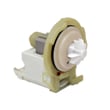
| Hums but won’t drain | Drain pump jammed or failed | Drain pump 00642239 |
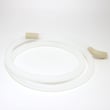
| Drains slowly or backs up | Hose kinked or restricted | Dishwasher drain hose 00668108 |
Why it matters
An E24 condition means water is not leaving the dishwasher as designed. Clearing the restriction quickly helps prevent standing water, odors, and poor wash results, and it reduces strain on the drain pump.
Last updated: February 2026
What's the most common problem with a Bosch dishwasher?
The most common Bosch dishwasher issues are poor cleaning and draining problems, and they are usually caused by maintenance items (filters, spray arms, drain path) rather than a major failure. On the Bosch SHE58C02UC, start with the cleaning and self-help steps in the SHE58C02UC owner’s manual.
Most common symptoms and what they usually mean
- Not cleaning well: clogged filter, blocked spray arm holes, low water temperature, or low fill
- Not draining: food debris in the sump/filter area, kinked/blocked drain hose, or a weak drain pump
- Overfilling or leak into base: float/float switch issue, inlet valve not closing, or door seal leak
- Long cycle times: normal “Smart Control” adjusting for soil load and incoming water temperature
- Door won’t latch or starts then stops: door latch not engaging consistently
Quick checks we recommend first (fast, no parts)
- Clean the filter area and remove any debris.
- Spin the spray arms by hand and clear clogged holes.
- Confirm hot water is reaching the dishwasher; Bosch cycles are designed around 120°F incoming water.
- Check the drain hose routing for kinks and make sure the drain loop is raised (a high loop helps prevent backflow).
- If you see standing water after the cycle, run a drain-only function and listen for the drain pump.
Common part-related fixes (when symptoms persist)
| Symptom | Most likely part area | Example model-matched part |
|---|---|---|
| Won’t drain, hums during drain | Drain pump or drain path | Drain pump 00642239 |
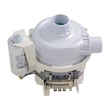
| Poor wash pressure, weak spray | Recirculation pump or pump seal | Dishwasher recirculation pump assembly 00442548 |
| Overfills or won’t fill correctly | Water inlet valve or float switch | Dishwasher water inlet valve 00607335 |
| Leaks at the bottom of the door | Door seal | Door seal 00432490 |
Why it matters
Most “common problems” on Bosch dishwashers come from restricted water flow (filters, spray arms, hoses) or a single failing component (pump, inlet valve). Fixing the root cause restores cleaning performance, prevents repeat clogs, and avoids unnecessary part replacement.
Helpful Bosch-specific troubleshooting
Use Bosch dishwasher error codes to match any displayed code to the most likely cause and the right next check.
Last updated: February 2026
Is it worth repairing a Bosch dishwasher?
Yes, repairing a Bosch dishwasher like model SHE58C02UC is usually worth it when the unit is under about 10 years old and the problem is limited to a single failure (leak, drain issue, fill issue, or a worn seal). If multiple major components are failing, replacement often makes more sense.
Quick way to decide (cost, age, and what failed)
Use these practical checkpoints before you buy parts or schedule service:
- Age: Under ~10 years old typically favors repair.
- Repair cost: Aim to keep the total repair under about 50% of the cost of a comparable new dishwasher.
- Type of failure: One clear issue is a good repair candidate; multiple symptoms usually means higher total cost.
- DIY vs. service: Labor can exceed the part cost on pumps, heating, and electrical troubleshooting.
- Water damage risk: Active leaks should be addressed immediately (often a seal or hose).
For model-specific troubleshooting steps and care guidance, follow the SHE58C02UC owner’s manual.
Common repairs on this model and what they usually mean
Here is a simple “repair vs. replace” guide based on the part category.
| Symptom | Common part area | Repair value | Notes |
|---|---|---|---|
| Not draining | Drain pump, drain hose | High | Often a single-part fix plus cleaning filters. |
| Leaking at door | Door seal | High | Low-to-moderate cost; prevents cabinet and floor damage. |
| Not filling | Water inlet valve | High | Also check shutoff valve and inlet screen. |
| Poor cleaning | Filters, spray arm, recirculation pump | Medium to high | Start with cleaning and inspection before replacing pumps. |
| No heat or poor drying | Heating circuit | Medium | Can be more involved; confirm symptoms first. |
If you’re chasing a drain problem, the drain pump 00642239 is a common component involved.
Why it matters
A dishwasher repair decision is really about total cost and risk. Fixing one failed component (like a drain pump, inlet valve, or door seal) restores performance for far less than replacement. Replacing multiple high-cost parts in the same visit can quickly approach the price of a new unit.
Helpful next steps
- Check for stored fault indicators using Bosch dishwasher error codes.
- Review the “Self Help” and maintenance guidance in the manual.
- If the issue involves wiring, heating, or repeated leaks, use a qualified technician.
Last updated: February 2026
What's the average lifespan of a Bosch dishwasher?
Most Bosch dishwashers, including model SHE58C02UC, typically last 10 to 15 years with normal household use. Consistent care (especially keeping the filter and spray system clean) and correct installation have the biggest impact on reaching the high end of that range; see the SHE58C02UC owner's manual for the recommended maintenance routine.
What affects lifespan the most
- Filter and sump cleanliness: a clogged filter makes the wash system work harder.
- Water quality: hard water speeds up mineral buildup on the heating and wash system.
- Loading habits: overloading can strain racks, spray arms, and the circulation system.
- Detergent and rinse aid use: correct amounts reduce residue and improve drying.
- Leak prevention: keeping seals clean helps prevent water damage to components.
Maintenance that extends life (high impact)
Use these habits to reduce wear on the pump, heater, and drain system:
- Clean the filter regularly and remove debris from the sump area.
- Check that spray arms spin freely and rinse out any blocked holes.
- Run hot water at the sink before starting a cycle so the dishwasher fills with hotter water.
- Use rinse aid and the correct detergent type for your water conditions.
- Inspect the door seal for food residue and wipe it clean.
Common wear items and what they do
| Part | What it affects | Typical symptom when failing |
|---|---|---|
| Micro filter 17008311 | Wash performance and pump protection | Grit, odor, poor cleaning |
| Door seal 00432490 | Leak prevention | Water at the front or corners |
| Drain pump 00642239 | Draining | Standing water, drain errors |
| Dishwasher heating element 00219639 | Drying and water heating | Poor drying, cool wash water |
Why it matters
A dishwasher that is cleaned and installed correctly runs with less strain on the recirculation and drain systems, which helps you avoid early failures and keeps cycle performance consistent over the years.
Last updated: February 2026
Can you buy replacement parts for a dishwasher?
Yes. For your Bosch dishwasher model SHE58C02UC, you can buy replacement parts to fix common problems like not draining, leaking, poor cleaning, or not heating and drying. Use the parts diagram and procedures in the SHE58C02UC owner's manual to match the correct part to your symptom.
Common dishwasher parts people replace
These are some of the most frequently replaced items for Bosch dishwashers like SHE58C02UC:
- Pumps (wash/recirculation and drain) when the unit won’t circulate water or won’t drain
- Door sealing parts when you see water leaking at the bottom or sides of the door
- Water inlet valve when the dishwasher won’t fill or fills slowly
- Filters and screens when cleaning performance drops or debris keeps recirculating
- Racks and baskets when wheels break, rust spreads, or loading becomes difficult
Model-specific examples of parts available for SHE58C02UC
Here are a few examples of replacement parts that fit this model:
| Symptom | Part to check | What it does |
|---|---|---|
| Not draining, standing water | Drain pump 00642239 | Pumps water out through the drain hose |
| Leaking at the door | Door seal 00432490 | Seals the door opening to prevent leaks |
| Not filling or fills slowly | Dishwasher water inlet valve 00607335 | Controls water entering the dishwasher |
| Poor wash action | Dishwasher recirculation pump assembly 00442548 | Circulates wash water through the spray system |
How we recommend choosing the right replacement part
Use this quick process to avoid ordering the wrong item:
- Confirm the full model number on the dishwasher label (SHE58C02UC)
- Match the symptom to the system involved (fill, wash, drain, heat, door)
- Compare the part name and ID to your parts list (example: drain pump vs. recirculation pump)
- Check for related items that often get replaced together (gaskets, hoses, clamps)
- Follow the safety and service guidance in the SHE58C02UC installation guide before attempting any repair
Why it matters
Dishwashers are built from serviceable components, so replacing a failed pump, valve, seal, or filter is often the fastest way to restore normal cleaning and drying without replacing the entire unit.
Last updated: February 2026





