Owner’s manual
 Error Codes


What is the most common problem with a GE refrigerator?
The most common problem we see with GE refrigerators like model PSC23NSWCSS is a cooling complaint (fresh food too warm, freezer not holding temperature). In many cases, the root cause is restricted airflow or a failed fan/defrost component, not the compressor itself; start with basic airflow and coil checks, then test key cooling parts.
- Make sure air vents inside the fresh food and freezer sections are not blocked by food packages.
- Confirm the doors close and seal fully; a poor seal causes long run times and temperature swings.
- Clean dust from the condenser area (dirty coils reduce heat removal and cooling performance).
- Listen for normal operating sounds; newer high-efficiency compressors can run longer and sound different during normal operation.
- After frequent door openings, allow several hours for temperatures to stabilize.
If the basics look good, these model-matched parts are common suspects:
| Symptom you notice | Likely system involved | Example part for this model |
|---|---|---|
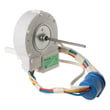
| Warm fresh food, freezer OK or borderline | Air circulation | Refrigerator evaporator motor WR60X10307 |
| Frost buildup on evaporator cover, airflow weak | Defrost system | Refrigerator defrost heater WR51X10055 and refrigerator defrost bi-metal thermostat WR50X10069 |
| Temps fluctuate, unit runs too long | Temperature sensing/control | Refrigerator temperature sensor WR55X10025 |
A refrigerator that cannot move air across the evaporator coil or cannot defrost correctly often looks like a “cooling failure,” but the fix is frequently a fan motor, defrost heater, or thermostat. Catching it early helps prevent food spoilage and reduces strain on the sealed system.
We recommend checking the owner's manual for your PSC23NSWCSS for control settings, normal operating sound descriptions, and model-specific guidance.
Last updated: February 2026
How do you reset a GE side by side refrigerator?
To reset your GE PSC23NSWCSS side-by-side refrigerator, we recommend doing a power reset (unplugging the unit briefly) or cycling the cooling system OFF then back ON using the temperature controls. Either method clears minor control glitches and restores normal operation.
- Power reset: Unplug the refrigerator, wait about 5 minutes, then plug it back in.
- Cooling system reset (control OFF then ON): Turn cooling OFF, then turn it back ON using the control panel steps in the owner's manual.
- After turning cooling back on, allow up to 24 hours for temperatures to stabilize.
Your model may have an LCD or non-LCD control style. Use the method that matches your control panel.
| Control type | Turn cooling OFF | Turn cooling back ON |
|---|---|---|
| LCD models | Home, then Options/Settings, then Cooling System Off (activate per prompts) | Touch screen, then press ON |
| Non-LCD models | Press the WARMER pad for refrigerator or freezer until display shows OFF | Press the COLDER pad to return to preset temps |
- Make sure the refrigerator is fully plugged into the outlet.
- Check the home breaker or fuse (reset or replace if needed).
- Confirm the temperature controls are not set to OFF.
- If the refrigerator is in a defrost cycle, wait about 30 minutes and recheck.
- If it is in showroom mode, unplug and plug it back in to exit that mode.
A reset is a fast first step for issues like a non-responsive display, odd beeping, or cooling that seems “stuck.” Cycling power or cycling cooling OFF and ON can restore normal control operation without replacing parts.
Last updated: February 2026
What does upside down f and f mean on GE refrigerator?
On the GE PSC23NSWCSS side-by-side refrigerator, an upside-down “f” with an “F” on the display indicates a fast-freeze style feature (QuickFreeze or TurboFreeze) is turned on. It is a normal mode that temporarily boosts freezer cooling, not a failure code; you can turn it off in the settings.
On LCD control models, GE uses special mode indicators for quick-cooling features. Your freezer can run colder than normal while the feature is enabled; this is expected behavior.
- QuickFreeze/TurboFreeze ON: freezer cooling is boosted for faster freezing
- QuickCool/TurboCool ON (if shown for fresh food): refrigerator section cooling is boosted
- The mode typically turns off when you manually deactivate it, or after the programmed cycle ends
For the exact menu path and what your control panel calls the feature, use the PSC23NSWCSS owner's manual.
Most PSC23NSWCSS-STYLE LCD controls let you disable the quick-freeze feature from the freezer options menu.
- Press Home
- Go to Options
- Choose Freezer Options
- Select QuickFreeze (or similar)
- Choose OFF
If the display is hard to read, remove any protective film that may still be covering the temperature controls.
Quick-freeze modes can make the refrigerator run longer and sound different than usual. That is normal, especially when the compressor and fans are working harder to pull temperatures down quickly.
| Display behavior | What it usually means | What to do |
|---|---|---|
| Upside-down “f” with “F” | QuickFreeze/TurboFreeze is active | Turn QuickFreeze OFF in Freezer Options |
| Cooling seems stronger than normal | Feature is temporarily lowering temps | Wait for cycle to end or turn it off |
| Longer run time or different sounds | System is working harder | Normal during quick-freeze |
Last updated: February 2026
Are GE side by side refrigerators good?
Yes. GE side-by-side refrigerators like model PSC23NSWCSS are a solid choice for everyday reliability and convenience; they typically offer easy access to fresh and frozen food, strong organization, and built-in ice and water features. Expect some normal operating sounds as the compressor and airflow system run.
We judge side-by-side refrigerators on consistent temperatures, usable storage, and how well the dispenser and icemaker perform.
- Steady cooling in both compartments when doors seal and airflow is clear
- Convenient freezer access without bending (compared to bottom-freezer styles)
- Adjustable shelving and door bins for flexible organization
- Ice and water on the door (common on this style)
- Normal modern sounds like humming, whooshing, and occasional clicks
Your PSC23NSWCSS can sound different than older refrigerators. These are typically normal:
| Sound | What it usually indicates | When to investigate |
|---|---|---|
| Humming or high-pitched run sound | High-efficiency compressor running | If it gets dramatically louder or changes suddenly |
| Whoosh when doors close | Pressure equalizing | If doors are hard to open repeatedly |
| Pops/cracks | Materials expanding and contracting as it cools | If paired with warming or heavy frost |
If cooling becomes uneven, ice production slows, or temperatures swing, these model-matched parts are common suspects:
- Refrigerator temperature sensor WR55X10025 (controls temperature feedback)
- Refrigerator evaporator motor WR60X10307 (moves cold air through the compartments)
- Refrigerator defrost heater WR51X10055 (prevents frost buildup on the evaporator)
- Refrigerator defrost bi-metal thermostat WR50X10069 (helps regulate defrost cycling)
- Refrigerator water filter MSWF (helps maintain dispenser flow and water quality)
A “good” refrigerator is one that holds safe food temperatures and delivers consistent airflow. When airflow or defrost performance slips, you can see frost buildup, warm spots, or noisy operation even if the compressor is still running.
For model-specific features, settings, and operating guidance, use the owner's manual.
Last updated: February 2026