Owner’s manual
 Error Codes




How many watts does a GE side by side refrigerator use?
A GE side-by-side refrigerator like model GSS25TSWASS typically draws about 150 to 800 watts while running, with brief higher peaks during compressor start-up and defrost. For the most accurate electrical rating for your exact unit, check the GSS25TSWASS owner's manual and the model data plate inside the fresh food section.
What affects wattage on GSS25TSWASS?
Your refrigerator’s wattage is not a single fixed number because loads cycle on and off. These items change the running watts and daily energy use:
- Compressor run time (more run time in hot rooms or with frequent door openings)
- Defrost heater operation (short periods of higher wattage)
- Evaporator and condenser fan motors running
- Ice maker cycling and filling (after installation it can take 12 to 24 hours to begin making ice)
- Dispenser use (ice chute door and solenoid activity)
- Interior lighting (use the correct bulb wattage listed in the manual)
Typical wattage ranges (what you’ll see on a meter)
| Refrigerator function | Typical watts (approx.) | Notes |
|---|---|---|
| Compressor + fans running | 150 to 300 | Most common steady draw |
| Defrost cycle active | 400 to 800 | Heater adds load for a limited time |
| Start-up surge | 800 to 1,200+ | Very brief spike at compressor start |
How to estimate your daily cost
We recommend measuring with a plug-in energy meter for a full 24 hours. If you want a quick estimate:
- kWh/day = (average watts ÷ 1000) × 24
- Cost/day = kWh/day × your electric rate
Example: If your average is 200 watts, that is 0.2 kW × 24 = 4.8 kWh/day.
Why it matters
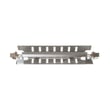
Knowing the typical wattage helps you size a generator or inverter correctly, compare energy use after a repair, and spot problems like excessive run time from airflow issues or a defrost system problem (for example, a failed refrigerator defrost heater WR51X10055 can lead to cooling symptoms that change run patterns).
Last updated: January 2026
Are GE side by side refrigerators good?
GE side-by-side refrigerators like model GSS25TSWASS are a solid choice for everyday use because they typically deliver consistent cooling, easy organization, and convenient dispenser features. Overall quality depends most on proper installation, correct temperature settings, and routine maintenance outlined in the GSS25TSWASS owner’s manual.
What “good” usually means for a side-by-side
A “good” side-by-side refrigerator balances temperature stability, usable storage, and reliable ice and water dispensing.
- Storage and organization: adjustable shelves and door bins help fit tall items and meal prep containers
- Convenience: in-door ice and water reduce door openings and help maintain temperatures
- Cooling performance: steady airflow and correct control settings help prevent warm spots
- Noise expectations: normal sounds can include buzzing or sizzling during defrost and water dripping as ice melts
- Serviceability: common wear parts (like sensors, fans, and dispenser components) are replaceable
Quick checks that improve performance and satisfaction
These steps prevent many “not cooling” and “noisy operation” complaints.
- Confirm both temperature controls are set correctly (not OFF).
- Make sure doors close fully and seal; the doors can have a “stop” position and may auto-close when partially open.
- Allow a full cool-down period after plugging in or moving the unit.
- If you have an icemaker/dispenser, verify a cold water supply is connected and the tubing is not kinked.
Common “good vs not good” symptoms
| What you notice | Most likely category | What to do first |
|---|---|---|
| Warm fridge or freezer | Temperature control, airflow, door sealing | Check settings, door closure, allow cool-down |
| Loud buzzing/sizzling at times | Normal defrost sounds | Monitor; compare to manual sound descriptions |
| Slow ice production | Water supply, icemaker operation | Confirm water line, freezer temp, bin position |
| Frost buildup | Door sealing or defrost issue | Check gasket seal and door alignment |
Parts that often solve real-world complaints
If performance issues show up, these model-compatible parts are commonly involved:
- GE profile refrigerator temperature sensor WR55X10025 for temperature sensing problems
- Refrigerator evaporator motor WR60X10307 if airflow is weak or uneven
- Refrigerator water filter MSWF if water flow or taste is poor (when equipped)
Why it matters
Side-by-side refrigerators rely on steady airflow and tight door sealing to keep both compartments at safe temperatures. When doors do not seal or airflow is restricted, you can see warm food, frost, and longer run times.
Last updated: January 2026
How wide is a GE side by side refrigerator?
Most GE side-by-side refrigerators, including model GSS25TSWASS, are built in the 33-inch class (typically about 33 inches wide). For the exact overall width and the opening size you should plan for, use the dimension and clearance details in the GSS25TSWASS owner’s manual.
What width to plan for (cabinet vs. opening)
The cabinet width is only part of the space you need. You also need room for ventilation, hookups, and door swing.
- Plan for the refrigerator’s cabinet width plus required clearances
- Leave space for the power cord and (if equipped) the water line
- Allow room for doors to open fully so bins and drawers can slide out
- Measure the tightest spot: doorway, hallway turn, and the final cutout
Installation clearances to include
GE’s installation guidance for this platform calls for these clearances for airflow and connections.
| Location | Clearance to allow | What it helps with |
|---|---|---|
| Sides | 1/8 in. | Fit tolerance and minor cabinet variations |
| Top | 1 in. | Ventilation and easier positioning |
| Back | 1 in. | Airflow plus room for cord and water line |
If you are worried about getting it through a doorway
Instead of relying on a single “minimum doorway width” number, measure your refrigerator and your doorway, then compare.
- Measure the refrigerator at its widest point (often the doors or handles)
- Measure the doorway opening at the narrowest point (trim can reduce it)
- If it is tight, plan to remove handles or doors following the steps in the GSS25TSWASS owner’s manual
Why it matters
If the opening is too tight, the refrigerator can run warmer and less efficiently because airflow is restricted. Planning for cabinet width plus clearances also prevents door binding and makes future service easier.
Last updated: January 2026