Owner’s manual
 Error Codes



What is a bottom mount refrigerator?
A bottom-mount refrigerator (like Kenmore model 79578099901) keeps the fresh-food compartment on top and the freezer on the bottom. This puts everyday refrigerated items at eye level while frozen foods stay in a lower pull-out drawer or door.
How a bottom-mount layout is different
- Fresh food up top: shelves and crispers are easier to reach without bending.
- Freezer down low: typically a drawer-style freezer that slides out.
- More convenient for daily use: most people access the refrigerator section more often than the freezer.
- Often better organization: wide refrigerator shelves and bins are easier to see and sort.
What you can expect on Kenmore 79578099901
Your 79578099901 is a bottom-mount design, so the most-used items (milk, produce, leftovers) are stored higher, and frozen items are stored below.
| Feature | Bottom-mount refrigerator | Top-freezer refrigerator |
|---|---|---|
| Most-used section height | Higher (refrigerator) | Lower (refrigerator) |
| Bending for daily items | Less | More |
| Freezer access | Lower drawer/door | Upper door |
Why it matters
Choosing a bottom-mount refrigerator is mainly about ergonomics and daily convenience. If you cook often and use fresh ingredients regularly, keeping refrigerated foods at eye level reduces bending and makes it easier to see what you have.
Helpful next steps
- Use the temperature and feature guidance in the 79578099901 owner's manual.
- If doors do not close cleanly (which can affect cooling), inspect alignment and hinge wear.
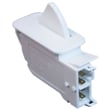
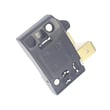
- If the interior light does not respond when opening the door, the door switch is a common check point.
Last updated: January 2026
What size is Kenmore refrigerator model 79578099901?
Kenmore refrigerator model 79578099901 is a bottom-mount style refrigerator; most units in this Kenmore 795 series size class are about 33 inches wide, 30 to 34 inches deep, and 67 to 70 inches tall, with roughly 22 to 23 cubic feet of capacity. For the exact dimensions for your unit, use the 79578099901 owner's manual.
How to confirm the exact size (best method)
- Measure width at the widest point (usually door edges, not the cabinet).
- Measure height from floor to the top hinge cover.
- Measure depth two ways: cabinet only and to the front of the handles.
- Check required clearances for door swing and airflow behind the refrigerator.
- Compare your measurements to the specification section in the 79578099901 owner's manual.
Typical size ranges for this model family
These are the most common ranges customers see for Kenmore 795 bottom-mount refrigerators.
| Measurement | Typical range | What changes it most |
|---|---|---|
| Width | ~33 in. | Door design, trim |
| Height | ~67 to 70 in. | Leveling legs, hinge cover |
| Depth | ~30 to 34 in. | Handles, door thickness |
| Capacity | ~22 to 23 cu. ft. | Interior layout |
Why it matters
Accurate dimensions help us avoid fit issues in a cabinet opening, confirm delivery clearance through doorways, and ensure proper airflow so the compressor and condenser fan can cool efficiently.
Quick tip before you order parts or plan installation
If you are troubleshooting fit or door swing problems, inspect the hinge area and door alignment; worn hinge components can change how the doors sit. A common wear item is the refrigerator door hinge bushing 4984JJ3003A.
Last updated: January 2026
Why is my Kenmore refrigerator leaking underneath?
Water under a Kenmore bottom-mount refrigerator like model 79578099901 is usually caused by a clogged or frozen defrost drain that overflows into the cabinet and down to the floor, or by a drain tube or drain pan issue. We focus first on clearing the drain path and confirming proper drainage per the 79578099901 owner's manual.
Most common causes (and what to check first)
- Clogged defrost drain: Ice, food debris, or sludge blocks the drain hole and water backs up.
- Frozen drain line: Meltwater refreezes in the tube and forces water out elsewhere.
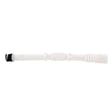
- Loose, split, or misrouted drain tube: Water misses the drain pan; consider the refrigerator drain tube 5251JA3003D.
- Cracked or shifted drain pan: Water reaches the floor instead of evaporating.
- Door not sealing well: Excess frost increases defrost water volume and can overwhelm a partially restricted drain.
Quick fix steps we recommend
- Unplug the refrigerator.
- Remove the freezer drawer/bins as needed to access the rear interior panel area.
- Locate the defrost drain opening (typically at the bottom of the evaporator cover area).
- Flush the drain with hot water (turkey baster works well) until it flows freely to the drain pan.
- Clear debris with a pipe cleaner (do not puncture the tube).
- Pull the unit out and confirm the drain tube is seated and draining into the pan.
What you should see (normal vs. problem)
| Check | Normal | Problem sign |
|---|---|---|
| Drain hole | Water disappears quickly | Water pools or refreezes |
| Drain tube | Steady drip into pan during/after defrost | Drips behind pan or no drip at all |
| Drain pan | Wet but not overflowing | Cracked, tipped, or overflowing |
Why it matters
A restricted defrost drain can keep leaking repeatedly, create ice buildup in the freezer, and lead to temperature swings. Fixing the drain path stops the leak at the source and helps the defrost system work normally.
Last updated: January 2026