Owner’s manual
 Error Codes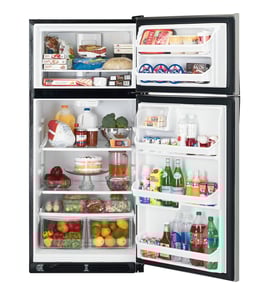


What is the life expectancy of a Samsung refrigerator?
Most Samsung refrigerators, including the Samsung RT18M6215WW top-mount, last 10 to 15 years with normal household use. Lifespan depends most on compressor health, clean airflow, stable temperatures, and keeping door seals and defrost components working correctly (see the RT18M6215WW owner's manual).
Typical lifespan and what affects it most
A refrigerator’s life is usually determined by how hard the sealed system has to work and how well the cabinet holds cold air.
- Door seal condition: air leaks force longer run times
- Condenser airflow: blocked vents and dusty coils raise operating temps
- Defrost performance: ice buildup restricts airflow and reduces cooling
- Temperature settings: overly cold settings increase run time
- Power events: frequent unplugging or outages add stress to electronics
Maintenance that adds years (practical checklist)
These steps reduce compressor run time and prevent common cooling failures.
- Keep interior air vents unblocked so air can circulate
- Clean spills and moisture; wipe excess moisture to reduce odor and mold
- Vacuum dust from the condenser area (as accessible for your layout)
- Confirm the doors close easily and stay aligned
- After unplugging, wait at least 5 minutes before plugging back in
Quick reference: what “normal” looks like
| Item | Normal target | Why it matters |
|---|---|---|
| Refrigerator temp | ~37°F | Food safety and stable cycling |
| Freezer temp | ~0°F | Prevents thawing and refreezing |
| Expected service life | 10 to 15 years | Typical for modern refrigerators |
Why it matters
When a refrigerator runs longer than it should (air leaks, blocked airflow, frost buildup), the compressor and control system work harder. That extra run time is the biggest driver of early failure in any refrigerator.
Last updated: February 2026
How to determine Samsung fridge model?
To determine your Samsung refrigerator model, we look for the model tag (rating label) on the cabinet and read the full model number and version or revision code. For this parts page, the model is RT18M6215WW; matching the tag ensures you get the right parts and instructions.
Where to find the model tag
Most Samsung top-mount refrigerators place the model and serial label in one of these spots:
- Inside the fresh food compartment on a side wall
- Along the ceiling area inside the refrigerator section
- Near the crisper drawer frame
- On the cabinet edge behind the door (hinge side)
- Occasionally on the rear exterior panel
For diagrams and label examples, use the RT18M6215WW owner's manual.
What to write down (so parts match)
Record these items exactly as shown on the label:
- Model number (example: RT18M6215WW)
- Version or revision code (often shown as a two-digit suffix or “ver.”)
- Serial number (useful for service history and production date)
- Electrical ratings (voltage and frequency) if you are troubleshooting power issues
Model number vs. serial number
| Item | What it identifies | Used for |
|---|---|---|
| Model number | The design family and configuration | Choosing correct parts and manuals |
| Version/revision | The exact build variation | Avoiding “looks the same” part mismatches |
| Serial number | Your unit’s unique ID | Service and manufacturing details |
Quick checks if you are unsure you have the right model
If your refrigerator is not cooling or seems to run warm, the manual’s troubleshooting section starts with basics like verifying the power cord is plugged in properly and confirming temperature settings. These checks help confirm you are working from the correct instructions for your exact unit. See the RT18M6215WW owner's manual.
Why it matters
Samsung often changes bins, gaskets, sensors, and control parts between revisions. Using the full model plus version helps prevent ordering the wrong door bin, temperature sensor, or gasket for your RT18M6215WW refrigerator.
Last updated: February 2026
What is the downside to Samsung fridge?
For the Samsung RT18M6215WW top-mount refrigerator, the most common downsides customers run into are ice maker and water system hassles (slow ice, leaks, clogs), temperature inconsistency from airflow or sensor issues, and higher repair costs when sealed-system or electronic parts fail. Use the RT18M6215WW owner's manual to confirm your feature set and troubleshooting steps.
Common downsides we see (and what to watch for)
- Ice maker performance issues: slow production, clumping, or no ice (often tied to water supply, freezing in the fill tube, or temperature settings).
- Water-related leaks: can come from fittings, tubing, or a valve that is not closing fully.
- Cooling complaints: warm fridge, warm freezer, or wide temperature swings.
- Airflow sensitivity: blocking interior vents can cause overcooling or uneven temps.
- Costly repairs when major components fail: compressor, inverter, or control board repairs typically cost more than simple mechanical fixes.
Quick checks that prevent many “Samsung fridge problems”
- Confirm temperatures: aim for about 37°F in the fresh food section and 0°F in the freezer.
- Do not block air vents: keep packages and bags away from vent openings.
- Give it clearance: leave space behind and at the sides for heat to dissipate.
- Power reset correctly: if unplugged, wait at least 5 minutes before plugging back in.
- Inspect door sealing: a poor seal causes long run times, frost, and warm spots.
Parts that commonly relate to these complaints
| Symptom | Likely system | Example part for RT18M6215WW |
|---|---|---|
| No ice or slow ice | Ice maker module or water supply | Refrigerator ice maker module (DA59-00294B) |
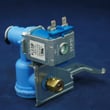
| Water leak or no fill | Water inlet valve or tubing | Refrigerator water inlet valve (DA62-01477A) |
| Temps swing or warm section | Sensor or airflow | Refrigerator temperature sensor (DA32-00070A) |
| Frost buildup, warm fridge | Defrost system | Refrigerator defrost heater (DA47-00460G) |
Why it matters
Most “downsides” show up as food spoilage risk, nuisance leaks, or higher energy use from long run times. Catching airflow, temperature, and water-supply issues early helps avoid bigger failures and expensive repairs.
Last updated: February 2026
What are the models of Samsung refrigerators?
Samsung makes many refrigerator model families (top-mount, side-by-side, French door, and bottom freezer). For your Samsung RT18M6215WW top-mount refrigerator, the most reliable way to identify the exact model and compatible parts is to match the model tag on the cabinet to the RT18M6215WW owner's manual.
Common Samsung refrigerator model types
Samsung model numbers vary by style and feature set. Here are the most common categories you will see:
- Top-mount (freezer on top), like RT-series models
- Side-by-side (vertical fresh food and freezer doors)
- French door (two fresh food doors, freezer drawer)
- Bottom freezer (fresh food on top, freezer below)
- Compact or specialty (apartment-size, beverage centers)
How to find your exact Samsung model number
We recommend confirming the full model number directly from the appliance label, then using that exact number when ordering parts.
- Check the rating label inside the fresh food compartment (often on a side wall)
- Write down the full model number and any revision suffix (letters/numbers after the main model)
- Compare it to the model shown on the RT18M6215WW owner's manual
- Use the exact model to confirm fit for parts like a door gasket, control board, or temperature sensor
Quick comparison: model “type” vs what it tells you
| What you’re looking at | What it usually tells you | Why it helps |
|---|---|---|
| Model family (example: RT…) | Refrigerator style (often top-mount) | Narrows down parts diagrams and features |
| Full model number (RT18M6215WW) | Exact configuration | Ensures correct replacement parts |
| Version/suffix (example: /AA-00) | Production revision | Prevents ordering a similar but incorrect part |
Why it matters
Samsung refrigerators can look similar across model families, but parts like shelves, door bins, sensors, and sealed system components can differ by revision. Matching the exact model number helps avoid returns and ensures proper fit and performance.
Last updated: February 2026