Owner’s manual
 Error Codes




What is the capacity of the LG DLE2301W dryer?
The LG DLE2301W dryer has an IEC drying capacity of 7.3 cu. ft. (also listed as 22.5 lb / 10.2 kg). This capacity is part of the model’s published key dimensions and specifications in the DLE2301W owner's manual.
Where this capacity comes from
In the specifications section, LG lists capacity as an IEC measurement. That is the standard way many manufacturers rate drum volume for an electric dryer like the DLE2301W.
What you can expect in real use
- Handles typical family-size loads (towels, jeans, mixed cottons) without overpacking
- Works best when loads can tumble freely for proper airflow
- Overloading increases dry time and can trigger overheating protection
Quick spec snapshot (helpful for planning)
| Spec item | DLE2301W value |
|---|---|
| Drying capacity | 7.3 cu. ft. (IEC) |
| Approx. max load weight (IEC) | 22.5 lb (10.2 kg) |
| Width | 27 in. |
| Depth | 30 in. |
| Height | 38 11/16 in. |
Why it matters
Capacity affects drying performance. A 7.3 cu. ft. drum gives clothes room to lift and tumble, which improves moisture removal, helps the moisture sensors read accurately, and reduces long dry times caused by restricted airflow.
Tips to get the best results from a 7.3 cu. ft. dryer
- Fill the drum loosely; stop around 3/4 full for bulky items
- Clean the lint screen before every load to keep airflow strong
- Use Sensor Dry cycles for mixed loads; use Manual Dry for timed drying
- If drying is slow, check the vent path for restrictions and crushed ducting
You can also order common wear items for this model (such as a belt or thermostat) from the parts list for DLE2301W, or search by model on Sears PartsDirect.
Last updated: February 2026
What is the average lifespan of an LG dryer?
Most LG dryers last about 10 to 13 years with normal household use and routine vent and lint maintenance. For your LG DLE2301W, following the care, cleaning, and operating guidance in the DLE2301W owner's manual helps you get the full expected service life.
Typical lifespan and what affects it
A dryer’s lifespan is mainly driven by heat stress, airflow restriction, and wear on moving parts (belt, rollers, idler, motor).
Common factors that shorten dryer life:
- Restricted venting (long runs, crushed duct, clogged exterior hood)
- Overloading the drum repeatedly
- Skipping lint screen and cabinet cleaning
- Running high heat cycles for every load
- Worn drum support components causing drag and overheating
Quick maintenance checklist (best ROI)
We recommend these habits to keep your DLE2301W running efficiently:
- Clean the lint screen before every load
- Check airflow at the outside vent hood regularly
- Keep the exhaust duct as short and straight as possible
- Avoid overloading; the drum should tumble freely
- Listen for squealing or thumping and address it early
Parts that commonly wear out over time
If your dryer still runs but gets noisy, stops tumbling, or takes longer to dry, these wear items are common on many LG dryers:
| Symptom | Likely wear area | Example part for DLE2301W |
|---|---|---|
| Drum not turning, motor runs | Belt drive | Dryer drum belt 4400EL2001F |
| Squealing, poor tumbling | Idler pulley | Dryer idler pulley 4560EL3001A |
| No heat or weak heat | Heating circuit | Dryer heating element 5301EL1001J |
Why it matters
A dryer that is struggling to move air runs hotter and longer, which accelerates wear on thermostats, the heating element, and the motor. Keeping airflow strong is the simplest way to protect performance, safety, and lifespan.
For replacement parts specific to LG DLE2301W, order from the parts list for this model or search by model number on Sears PartsDirect.
Last updated: February 2026
Why does an LG sensor dry dryer take so long to dry?
On the LG DLE2301W, Sensor Dry cycles can run longer because the dryer continuously measures moisture in the load and in the air, then adjusts time to reach the selected dryness level. Long dry times are most often caused by restricted venting, a dirty lint filter, heavy or oversized loads, or a higher dry level setting.
What to check first (fast fixes)
- Clean the lint filter before every load; even a thin film can slow airflow.
- Reduce load size, especially for towels, jeans, and mixed heavy fabrics.
- Re-sort loads; dry heavy items separately from lightweight items.
- Confirm the cycle matches the load; Sensor Dry is best for mixed loads, Time Dry is best for small loads.
- Increase airflow by checking the exhaust path for kinks, crushed ducting, or lint buildup.
Sensor Dry settings that extend cycle time
Sensor Dry automatically adjusts time; choosing a higher dryness level increases run time.
| Setting choice | What it does | Typical result |
|---|---|---|
| Very dry / More dry | Targets lower remaining moisture | Longer cycle time |
| Less dry / Damp dry | Stops with more moisture remaining | Shorter cycle time |
| Heavy fabrics, large loads | Holds moisture longer | Longer cycle time |
For cycle and dry level details specific to your dryer, follow the cycle guide in the DLE2301W owner's manual.
Venting and FlowSense restrictions (most common cause)
Your dryer uses FlowSense to detect restrictions in the exhaust duct. When airflow is restricted, clothes dry slower and the dryer may extend the cycle to try to reach the target dryness.
If you suspect venting issues, focus on these areas:
- Lint buildup in the wall duct or exterior vent hood
- Long duct runs with multiple elbows
- Crushed or kinked flexible duct behind the dryer
- A stuck exterior vent flap
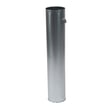
If you need a venting part for this model, the dryer exhaust duct 5209EL1006A is one of the model-matched options listed for the DLE2301W.
Why it matters
Long dry times waste energy, increase wear on fabrics, and can overwork heating and airflow components (like the heating element, thermostats, and blower wheel). Restoring strong airflow and using the right Sensor Dry level usually brings cycle times back to normal.
For replacement parts for your LG DLE2301W, order from the parts list for this model or search by model number on Sears PartsDirect.
Last updated: February 2026
What is the most common problem with LG dryers?
The most common LG dryer problem is long dry times or “no heat,” and it’s usually caused by restricted airflow (lint buildup or a crushed/too-long vent) rather than a failed heater. For LG DLE2301W, start with the lint filter and the entire exhaust duct run, then move to heating and sensor parts.
Most common causes (in order)
- Lint filter clogged or installed incorrectly (never run without it)
- Exhaust duct restricted, too long, or has too many elbows (airflow drops fast)
- Outside vent hood stuck closed or packed with lint
- Dryer overheats and trips a safety thermostat due to poor venting
- Heating circuit issue (electric models) such as a failed heater or temperature sensor
Quick checks we recommend first
- Clean the lint filter and wash it with warm, soapy water if it has residue; let it dry fully before reinstalling.
- Inspect the vent path: use 4-inch rigid or semi-rigid metal duct, keep the run short, and minimize elbows.
- Check airflow at the outside vent while the dryer runs; weak airflow points to a restriction.
- If drying performance suddenly drops, clean the ductwork immediately.
Parts that commonly relate to “no heat” or long dry times
If airflow is good and the dryer still will not heat or dries slowly, these model-matched parts are common suspects:
| Symptom | What it often points to | Example part for DLE2301W |
|---|---|---|
| Runs but no heat | Failed heater or safety thermostat | Dryer heating element 5301EL1001J |
| Heats then stops, cycles oddly | Temperature sensing issue | Dryer thermistor AGM30045804 |
| Overheats, shuts heat off | High-limit protection opening | Dryer high-limit thermostat 6931EL3001F |
Why it matters
Restricted venting does more than slow drying; it can cause overheating, nuisance shutdowns, and repeated thermostat failures. Keeping airflow strong protects key components and helps the dryer run efficiently.
For model-specific troubleshooting steps, error displays, and maintenance intervals, use the owner's manual. For a broader overview of LG fault codes, see LG dryer error codes. If you need to order replacement parts for LG DLE2301W, use the parts list for this model or search by model on Sears PartsDirect.
Last updated: February 2026
What are the main parts of a dryer?
For an LG DLE2301W dryer, the main parts include the rotating drum system (drum, belt, idler, motor), the heating and temperature-sensing system (heater and thermostats/thermistor), and the airflow system (lint filter and exhaust ducting). For diagrams and locations, use the DLE2301W owner's manual.
Main dryer systems (and what they do)
- Drum and drive system: tumbles clothes using the drum, belt, idler pulley, and motor.
- Heating system (electric models): creates heat using a heating element.
- Temperature control and safety: monitors and limits temperature using a thermistor and thermostats.
- Airflow and venting: moves moist air out through the lint filter, blower housing/wheel, and exhaust duct.
- Door and cabinet parts: door catch, hinges, and panels keep the drum sealed and the dryer safe to operate.
Common parts you may replace on the DLE2301W
These are some of the most frequently serviced components for this model:
- Dryer drum belt 4400EL2001F (drives the drum)
- Dryer idler pulley 4560EL3001A (keeps belt tension)
- LG dryer motor assembly 4681EL1008A (turns the drum and blower)
- Dryer heating element 5301EL1001J (electric heat source)
- Dryer thermistor AGM30045804 (senses temperature)
- Dryer high-limit thermostat 6931EL3001F (overheat safety)
Quick “system to part” map
| Dryer system | What you notice when it fails | Example part on this model |
|---|---|---|
| Drum drive | Drum will not turn, squealing, thumping | Dryer drum belt, idler pulley |
| Heat | Runs but no heat, long dry times | Dryer heating element |
| Temperature control | Overheats, shuts off, inconsistent heat | Dryer thermistor, high-limit thermostat |
| Airflow | Long dry times, hot cabinet, burning smell | Dryer exhaust duct, blower wheel |
Why it matters
Most drying problems come down to one of two things: the drum is not tumbling correctly (belt, idler, motor) or airflow is restricted (lint filter area, blower, vent). Knowing which system is involved helps you choose the right repair and the right LG dryer parts.
If you are ordering replacement parts for the LG DLE2301W, start with the parts list for this model, or search by model number on Sears PartsDirect.
Last updated: February 2026