Owner’s manual
 Error Codes



What is the average lifespan of a GE refrigerator?
Most GE refrigerators, including the GE GNS23GSHBFSS bottom-mount refrigerator, typically last 10 to 20 years with normal household use and basic maintenance (clean coils, good door seals, correct temperatures). For model-specific care and operating guidance, use the GNS23GSHBFSS owner’s manual.
A refrigerator’s life depends more on usage and maintenance than brand alone. These factors have the biggest impact:
- Condenser coil cleanliness (dust buildup makes the compressor work harder)
- Door gasket condition (air leaks cause longer run times)
- Proper temperature settings (fresh food about 37°F, freezer about 0°F)
- Ice maker and water dispenser upkeep (clogs and leaks add stress)
- Power quality (surges can damage the control board)
Your manual outlines warranty coverage periods, which are different from expected lifespan.
| Item | Typical expectation | What the manual warranty shows (common) |
|---|---|---|
| Full refrigerator service life | 10 to 20 years | Not a lifespan guarantee |
| Parts and labor (most components) | Varies by use | Often 1 year |
| Water filter cartridge (if included) | Replace every 6 months (typical) | Often 30 days |
We recommend these practical steps for GE bottom-mount refrigerators:
- Vacuum the condenser area regularly; reinstall the refrigerator toe grille WR74X20502 securely afterward
- Keep doors closing tightly; clean and inspect gaskets for gaps
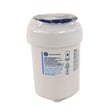
- Replace the water filter on schedule; use the correct GE refrigerator water filter MWFP
- Keep vents inside the refrigerator and freezer unblocked
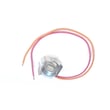
- If temperatures swing, test components such as the refrigerator temperature sensor WR55X10025
A refrigerator that runs longer than necessary uses more electricity and wears out expensive components (like the compressor and control board) faster. Simple airflow and sealing checks are the easiest way to protect long-term reliability.
Last updated: February 2026
Is GE Cafe considered high end?
Yes. GE Café is GE’s high-end (premium) appliance line; it’s positioned above standard GE models and typically emphasizes upgraded styling, finishes, and feature packages. For operating and feature details for your GE GNS23GSHBFSS bottom-mount refrigerator, use the GNS23GSHBFSS owner’s manual.
GE generally separates its refrigerator lines by design focus and feature level.
- GE (standard): everyday features and value-focused configurations
- GE Profile: premium performance and convenience upgrades
- GE Café: high-end styling plus premium feature sets
- GE Monogram: luxury tier with built-in aesthetics and top-tier fit and finish
| GE line | Positioning | Typical focus |
|---|---|---|
| GE | Mainstream | Core features, broad price range |
| GE Profile | Premium | More advanced controls and convenience |
| GE Café | High-end | Designer finishes, upgraded feature packages |
| GE Monogram | Luxury | Built-in options, highest-end materials |
Your GNS23GSHBFSS is a GE-branded refrigerator model; it is not a GE Café model. That matters because parts, trim options, and feature sets are model-specific.
- Use your model’s manual for control settings, water filter info, and care steps
- Match replacement parts by model number to avoid fit issues
- Expect different handle styles, dispenser options, and interior layouts across GE lines
Knowing the product tier helps set expectations for features and long-term maintenance costs. For example, routine water filter replacement is a common upkeep item; the correct filter for many GE setups is the refrigerator water filter MWFP.
Last updated: February 2026
What is the most common problem with a GE refrigerator?
The most common GE refrigerator problem is not cooling correctly (fresh food too warm, freezer too warm, or uneven temperatures). For GE model GNS23GSHBFSS, we start with airflow, temperature settings, and door sealing, then move to fan, sensor, and defrost checks using the GNS23GSHBFSS owner’s manual.
- Make sure the doors fully close and seal; food packages often hold a door open.
- Keep items away from rear air vents; blocked vents cause warm spots or freezing.
- Adjust controls one step at a time; allow time for temperatures to stabilize.
- Clean spills and odors; odors can transfer to ice.
- If ice is clumping, level cubes in the bin; piled cubes can shut the icemaker off.
| Symptom | Likely cause | Next step |
|---|---|---|
| Fresh food warm, freezer OK | Airflow restriction or damper issue | Clear vents; check damper movement |
| Freezer warm, little/no ice | Evaporator fan or defrost issue | Listen for fan; check for heavy frost |
| Slow ice production | Door left open or freezer not cold enough | Confirm door closure; adjust freezer setting |
| Bad taste/odor in ice | Food odors or dirty interior | Wrap foods; clean; use baking soda |
If the basic checks do not solve it, these model-compatible parts are common next steps:
- Refrigerator temperature sensor WR55X10025 (reports temperature to the control)
- Refrigerator evaporator fan motor WR60X10277 (circulates cold air)
- Refrigerator defrost heater WR51X10108 (melts frost off the evaporator)
- GE refrigerator water filter MWFP (restores water flow and taste)
A “not cooling” complaint is often caused by airflow, door sealing, or defrost problems, not the compressor. Fixing the root cause protects food, improves ice production, and prevents repeat issues.
Last updated: February 2026