 Owner’s manual



What is the life expectancy of a GE washing machine?
A GE washing machine typically lasts 10 to 14 years. For your GE GTW525ACP0WB top-load washer, lifespan depends most on load size, water quality, and routine care; simple habits like keeping it level and replacing fill hoses on schedule help it reach the high end of that range (and beyond).
What affects washer lifespan most
- Overloading strains the drive system, clutch, and gear case.
- Unbalanced loads increase vibration and wear on suspension components.
- Poor drainage makes the drain pump work harder and can leave water sitting in the tub.
- Old fill hoses raise the risk of leaks; GE recommends replacing hoses every 5 years.
- Washer not level can cause cabinet rubbing and squeaking.
Maintenance checklist (high impact)
- Keep loads evenly distributed; wash bulky items with similar-weight pieces.
- Level the washer using the leveling legs (prevents rubbing, noise, and shaking).
- Turn off water faucets when not in use; inspect hoses regularly.
- Replace supply hoses every 5 years (rubber or braided).
- If draining slows, check the drain path and consider the condition of the pump.
Common wear items vs. what they do
| Symptom | Likely system | Example part for GTW525ACP0WB |
|---|---|---|
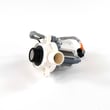
| Won’t drain, water left in tub | Drain system | GE washer drain pump assembly WH23X28418 |
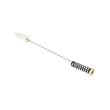
| Excessive shaking or banging | Suspension | Washer suspension rod and spring assembly WH16X26911 |
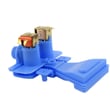
| Won’t fill or fills slowly | Water inlet | Washer water inlet valve assembly WH13X26535 |
Why it matters
A washer that is kept level, drains freely, and is not overloaded runs cooler and smoother. That reduces stress on the motor, gear case, and suspension, which are the parts that most often determine whether a washer reaches its full service life.
For model-specific operating and care guidance (including normal sounds and hose recommendations), follow the GTW525ACP0WB owner’s manual.
Last updated: February 2026
How do I tell what model my GE washer is?
For your GE washer, the model number is printed on the appliance ID label; on model GTW525ACP0WB, you can find the model and serial numbers under the lid. Write both down exactly as shown so you can match the correct parts, manual, and troubleshooting info.
Where to look on a GE washer
Check these common label locations (start with the first one):
- Under the lid (top-load washers like GTW525ACP0WB)
- On the back of the control panel
- On the side of the main cabinet near the bottom
- Behind the door or in the door jamb (front-load washers)
What to record (and why)
The label typically includes a model number and serial number. We recommend recording both.
| What to write down | Example format | Why it matters |
|---|---|---|
| Model number | GTW525ACP0WB | Ensures parts and diagrams match your exact washer |
| Serial number | Letters and numbers | Helps confirm production details when ordering or servicing |
Tips to avoid mix-ups
Small differences in model numbers can change the correct lid lock, drain pump, or control board.
- Copy the model number character-for-character (including any letters at the end)
- Take a clear photo of the label for reference
- Use the model number when checking cycle features and control layout in the GTW525ACP0WB owner's manual
- If you are ordering a repair part, match it to your model first (for example, a drain issue may point to the GE washer drain pump assembly WH23X28418)
Why it matters
Using the exact model number prevents ordering the wrong GE washer parts and speeds up troubleshooting, especially for issues tied to specific configurations like lid lock operation, drain behavior, and cycle selection.
Last updated: February 2026
How to rebalance GE front load washing machine?
For the GE GTW525ACP0WB (a top-load washer), rebalancing means redistributing the load and letting the washer correct the out-of-balance condition during spin. If the Spin light blinks and clothes are wetter than normal, spread items evenly in the basket and run Drain & Spin; see the GTW525ACP0WB owner's manual.
Quick steps to rebalance and finish the load
- Press Start/Pause to pause; the lid can unlock when paused (if it was locked).
- Open the lid and redistribute items evenly around the agitator/Infusor (do not pack items on one side).
- Remove a few items if the basket is overloaded; bulky items often need more space.
- Close the lid and select Drain & Spin to remove water and spin again.
- If the Spin light continues blinking, repeat redistribution with fewer items.
What the Spin light blinking means on this model
This washer detects out-of-balance during spin and tries to correct it automatically. Sometimes it cannot reach full spin speed, which leaves the load wetter than normal; redistribution plus Drain & Spin is the correct recovery.
Common causes of repeated out-of-balance
| Cause | What you will notice | What to do |
|---|---|---|
| Single heavy item (blanket, rug) | Thumping, walking | Add a few towels to balance, then Drain & Spin |
| Overloading | Poor turnover, vibration | Reduce load size; load loosely |
| Uneven loading | Clothes piled to one side | Re-load evenly around the basket |
| Worn suspension | Frequent off-balance even with normal loads | Inspect/replace suspension parts such as the washer suspension rod and spring assembly WH16X26911 |
Why it matters
Running out-of-balance reduces spin speed, so clothes come out wetter and cycles take longer. Correct loading also reduces vibration stress on the suspension, drive system, and lid lock.
Last updated: February 2026
Where is the filter on my GE Deep Fill washing machine?
On the GE GTW525ACP0WB top-load washer, there is no routine, user-access “lint filter” tied to the Deep Fill feature. Deep Fill is a water-level option; if you are looking for a “filter,” the most common service point is the drain pump area where debris can collect.
What to check first (quick steps)
- Unplug the washer before inspecting anything underneath.
- Confirm the issue you are trying to solve: not draining, slow draining, odor, or debris on clothes.
- Run a Drain and Spin (or a spin-only cycle) and listen for the drain pump running.
- Check the standpipe and drain hose for kinks or clogs.
- Review the cycle and option behavior in the GTW525ACP0WB owner’s manual.
Where debris typically collects on this model
Most top-load GE washers like GTW525ACP0WB do not have a front-access cleanout like many front-load washers. Instead, coins, hair pins, and lint can end up in the drain path.
Common “filter” locations by washer type:
| Washer type | Typical “filter” location | What you can usually do |
|---|---|---|
| GE top-load (like GTW525ACP0WB) | Drain pump or drain hose path | Inspect pump area; clear obstructions |
| GE front-load | Front lower access cleanout | Open cleanout; drain and remove debris |
If the washer is not draining or you suspect an obstruction, the part most directly involved is the GE washer drain pump assembly WH23X28418.
Why it matters
A partially blocked drain pump or drain hose can cause slow draining, standing water, extra noise during drain, and poor rinse performance. Deep Fill adds water, so any drain restriction becomes more noticeable when the tub has more water to remove.
Last updated: February 2026
What is the most common problem with GE washers?
The most common GE washer problem is a drain or spin issue: the washer finishes with clothes wetter than normal, pauses in spin, or will not drain fully. On the GE GTW525ACP0WB, out-of-balance loads and drain-hose setup problems are two frequent, fixable causes (see the GTW525ACP0WB owner’s manual).
Quick checks we recommend first
- Redistribute the load evenly, then run Drain & Spin (the manual notes the Spin light can blink when the washer detects out-of-balance).
- Confirm the lid is fully closed; this washer will not start filling or washing with the lid open.
- Check the drain hose for kinks and make sure the washer is not sitting on the hose.
- Verify drain height: the top of the drain outlet should be under 8 ft (2.44 m) above the floor.
- If the Fill light flashes, confirm both house water supply valves are fully open.
- If the washer seems “stuck” after a Fill warning, wait out the 4-minute lockout described in the manual.
Common symptoms and the most likely causes
| Symptom | Most common cause | What to do next |
|---|---|---|
| Wet clothes at end of cycle | Out-of-balance load | Redistribute; run Drain & Spin |
| Won’t drain or drains slowly | Kinked/incorrect drain hose, pump restriction | Inspect hose; check pump area |
| Won’t fill | Water valves off, supply issue | Open valves; retry after lockout |
| Won’t start a new cycle | Lid not opened between cycles | Open and close lid, then restart |
When a part is often involved
If the hose and load checks look good, the next common repair path is the drain system. A weak or jammed pump can cause no-drain or slow-drain complaints; for this model, the matching part is the washer drain pump assembly WH23X28418.
Why it matters
Drain and spin problems can look like a “bad washer,” but they are often caused by load balance, lid/lock behavior, or drain-hose installation. Fixing those first prevents unnecessary control board or motor replacements.
Last updated: February 2026
Why is my GE front load washer leaking from the bottom?
On the GE GTW525ACP0WB washer, a bottom leak almost always comes from the drain path (drain hose, pump, or tub-to-pump connections) or from the fill hoses dripping and running down the cabinet. Start by checking hoses and clamps, then inspect the pump area for cracks or seepage.
Quick checks we recommend first
- Unplug the washer and turn off both water faucets.
- Pull the washer forward and look for the exact drip point with a flashlight.
- Check the standpipe connection; the drain hose should not be shoved too far down (a tight fit can cause siphoning and overflow).
- Inspect both fill hoses for bulges, cracking, or wet fittings; GE recommends replacing fill hoses every 5 years.
- Run a short Rinse/Drain & Spin and watch the pump-out portion for leaks.
Most common bottom-leak causes (and what to do)
| What you see | Likely cause | What to do next |
|---|---|---|
| Water appears during drain/spin | Drain hose split or loose clamp | Inspect/replace the washer drain hose WH41X32477 and tighten clamps |
| Water pools under center/front | Drain pump housing or seal leaking | Check the GE washer drain pump assembly WH23X28418 for cracks or seepage |
| Slow drip even when not running | Fill hose or valve connection weeping | Replace hoses, snug fittings; do not overtighten |
| Overflow at standpipe | Drain hose too deep or no air gap | Keep no more than about 5 inches of hose in the drain pipe; maintain an air gap |
Why it matters
A bottom leak can damage flooring and can also lead to electrical issues if water reaches wiring or the motor area. Finding the exact point of origin (fill vs drain) prevents replacing the wrong part.
Model-specific notes for GTW525ACP0WB
- If you need a longer drain run, the manual calls out a drain hose extension kit (WH49X301).
- Use the routing and standpipe guidance in the GTW525ACP0WB owner’s manual to prevent siphoning and overflow.
Last updated: February 2026
What would cause a GE washer to not spin?
On the GE GTW525ACP0WB washer, a no-spin condition is most often caused by an out-of-balance load the washer cannot correct, the lid not being fully closed/locked, or a drain problem that leaves water in the tub. Start with load balance, lid lock, and draining checks in the GTW525ACP0WB owner's manual.
Quick checks we recommend first
- Redistribute the load evenly in the basket; then run Drain & Spin (the manual notes the Spin light can blink when out-of-balance is detected).
- Confirm the lid is fully closed; the washer will not agitate or spin with the lid open.
- Make sure the washer is plugged in and the breaker is not tripped.
- If the washer seems “stuck,” unplug it for 2 minutes, plug back in, and press Start.
- If water is still in the tub, inspect the drain hose for kinks and correct standpipe height.
If the tub will not drain, it usually will not spin
A washer typically will not reach full spin if it cannot pump water out. The manual calls out drain hose kinks/improper connection and notes the top of the drain outlet should be less than 8 ft (2.44 m) above the floor.
Common drain-related causes
- Kinked or crushed drain hose
- Washer sitting on the hose
- Standpipe too high or restricted
- Weak or failed pump (often a humming/gurgling sound without effective draining)
If you suspect the pump is not moving water, the GE washer drain pump assembly WH23X28418 is the model-matched replacement.
Other common causes of no-spin on this model type
| Symptom | Likely cause | What to do next |
|---|---|---|
| Spin light blinks; clothes wetter than normal | Load out of balance | Redistribute; run Drain & Spin |
| No spin with lid open or not latching | Lid lock issue | Check lid alignment; inspect lock wiring |
| Washer pauses during spin | Normal operation | Allow cycle to continue; it may pause to remove soapy water |
| Washer rocks or walks | Not level | Adjust leveling legs until stable |
Why it matters
Spinning depends on three basics: the washer must sense a balanced load, the lid safety system must be satisfied, and the tub must drain. Fixing those first prevents unnecessary parts replacement and gets clothes properly extracted.
Last updated: February 2026


