Owner’s manual
 Error Codes





What are the common problems with Kenmore 10672203201 refrigerators?
Common problems on the Kenmore 10672203201 top-mount refrigerator are warm temperatures (often from airflow, dirty condenser coils, or defrost issues), ice maker not making enough ice, water dispenser dripping or leaking, lights not working, doors not sealing or closing, and normal-but-loud operating noises. Our owner's manual troubleshooting steps cover the fastest checks first.
- Not cooling or too warm: blocked air vents, doors not fully closed, controls set incorrectly, dirty condenser coils
- Freezer warm or slow ice production: freezer temperature too high, heavy door openings, ice maker just installed (needs time)
- Ice maker not making ice: shutoff arm up (OFF), freezer not cold enough, water supply valve not open
- Water dripping after dispensing: air in water lines, not holding the glass under the dispenser long enough
- Lights not working: bulb loose/burned out, or a failed door/light switch
- Doors hard to open or won’t close: dirty or sticky gaskets, packages blocking the door
- Confirm the refrigerator is plugged into a grounded 3-prong outlet and the control is not set to OFF.
- Make sure air vents are not blocked by food items.
- Verify doors close firmly and gaskets are clean.
- Clean condenser coils (dirty coils make the compressor work harder and can cause warm temps).
- If ice is slow, wait 24 hours after temperature changes; if the ice maker was just installed, allow up to 72 hours for full production.
| Symptom | Often normal | Often needs attention |
|---|---|---|
| Longer run times | After installation or temp changes | Constant running with warm temps |
| Water in drain pan | During/after defrost cycle | Water pooling on floor |
| Dispenser drips | Brief drip after dispensing | Drips for hours or leaks inside |
| Noise | Fan/compressor cycling | New grinding/squealing, no cooling |
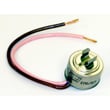
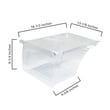
If troubleshooting points to a failed component, these model-matched parts are commonly involved:
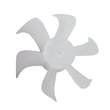
- Cooling airflow issues: refrigerator evaporator motor WPW10189703
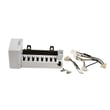
- Ice maker problems: ice maker assembly 4317943
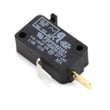
- Dispenser not responding: refrigerator dispenser switch WP2162361
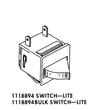
- Lights not turning on: refrigerator light switch W11384469
- Water supply problems: refrigerator inlet valve WPW10498990
Catching airflow restrictions, dirty coils, and door seal problems early helps your Kenmore 10672203201 hold safe food temperatures, reduces compressor run time, and improves ice maker performance.
Last updated: February 2026
What is a fridge with freezer on top called?
A fridge with the freezer on top is called a top-freezer refrigerator; it’s also commonly called a top-mount refrigerator. Your Kenmore 10672203201 is a top-mount design with the freezer compartment above the fresh-food compartment, each with its own side-swing door.
In a top-mount refrigerator, cold air is produced in the freezer section and circulates to the refrigerator section through vents. Keeping those vents clear helps both sections hold steady temperatures.
- Freezer compartment is on top
- Fresh-food (refrigerator) compartment is below
- Two separate doors that open from the side
- Airflow moves between compartments through built-in vents
- This layout is known for straightforward cooling and easy access to frozen foods
| Style name | Freezer location | Typical door layout | Common benefit |
|---|---|---|---|
| Top-freezer (top-mount) | Top | 2 doors | Classic layout, efficient use of space |
| Bottom-freezer | Bottom | 2 doors or drawer | Easier access to fresh foods |
| Side-by-side | Left side | 2 tall doors | Narrow door swing, equal access |
| French door | Bottom | 2 upper doors + freezer drawer | Wide fresh-food shelves |
Knowing the style helps with setup and everyday performance. On top-mount models like the Kenmore 10672203201, blocked vents can cause uneven cooling, moisture issues, or odor transfer between compartments.
- Keep packages away from freezer and refrigerator vents
- Wrap foods tightly to reduce odor transfer
- Leave space around the cabinet for ventilation (especially at the sides and top)
- Avoid placing the refrigerator near strong heat sources
For model-specific details like airflow locations, clearances, and door alignment steps, use the owner's manual.
Last updated: February 2026
What is the cubic foot of Kenmore refrigerator model 10672203201?
The Kenmore refrigerator model 10672203201 has a total capacity of about 21.9 cubic feet. This is the overall storage volume for the fresh food compartment plus the freezer, and it helps you compare usable space across similar top-mount refrigerators.
Capacity is a standardized measurement, but shelves, bins, and the ice maker can affect how much you can practically store.
- Expect the refrigerator section to hold most of the volume
- The freezer section takes the remaining share (top freezer)
- Adding an ice maker can reduce usable freezer space
- Door bins and crisper drawers improve organization more than total volume
- Overpacking can restrict airflow and cause uneven cooling
| Refrigerator type | Typical total capacity | Notes |
|---|---|---|
| Top-mount (top freezer) | 18 to 22 cu. ft. | Most common “standard” size |
| Bottom freezer | 20 to 25 cu. ft. | Often wider or deeper |
| Side-by-side | 22 to 28 cu. ft. | Narrower shelves, tall freezer |
Knowing the cubic feet helps when you are planning kitchen fit, food storage needs, and accessory choices (like an ice maker). If you are trying to maximize freezer space, we recommend confirming whether your unit has an ice maker installed and how much room it takes.
For the most accurate specifications and feature details for your exact configuration, check the owner's manual.
Last updated: February 2026
What's the average lifespan of a Kenmore refrigerator?
Most Kenmore refrigerators last 12 to 15 years on average. With consistent care (good airflow, clean seals, and stable temperatures), many units run longer; the best way to protect lifespan on Kenmore model 10672203201 is to follow the maintenance guidance in the owner's manual.
A refrigerator’s life is mostly determined by heat management, door sealing, and how hard the sealed system has to work.
- 12 to 15 years is the typical range for household refrigerators
- Heavy use, hot kitchens, and poor ventilation can shorten life
- Strong door sealing and steady temperatures reduce compressor run time
- Dusty condenser areas increase heat and wear
- Frequent door openings and overpacking can reduce cooling efficiency
These are the habits that most directly support long service life.
- Keep door gaskets clean; if they stick, clean them and apply a thin coat of paraffin wax (as described in the manual)
- Level the refrigerator so doors close fully and consistently
- Maintain airflow around the cabinet; avoid pushing it tight against walls
- Keep the freezer and fresh food sections organized so vents are not blocked
- Address small issues early (warm temps, frost buildup, unusual noises)
| Symptom | Often fixable? | What it commonly points to |
|---|---|---|
| Door not sealing, moisture, frost near door | Yes | Door alignment or gasket condition |
| Warm refrigerator but freezer seems OK | Sometimes | Airflow or evaporator fan issues |
| No ice production | Often | Ice maker or water supply/valve issue |
| Loud buzzing/clicking from rear | Sometimes | Fan, start components, or compressor strain |
If you’re troubleshooting ice production on this model, the ice maker assembly 4317943 is a common replacement part when the ice maker itself fails.
A refrigerator that seals well and sheds heat efficiently runs fewer hours per day. That reduces wear on the compressor and sealed refrigeration system, which are the biggest drivers of overall lifespan.
Last updated: February 2026