Owner’s manual


How to do a hard reset on a Kenmore washer?
For the Kenmore Elite washer model 11042832201, a “hard reset” is usually a power reset: unplug the washer (or switch off the breaker) for 2 to 5 minutes, then restore power and try a normal cycle. For model-specific button sequences and diagnostics, use the 11042832201 owner’s manual.
Hard reset (power reset) steps
- Press Pause/Cancel once to stop the cycle.
- Turn the washer off.
- Unplug the power cord (or turn off the dedicated breaker).
- Wait 2 to 5 minutes.
- Restore power, then select Drain/Spin or a quick cycle to test.
If the control is “stuck” in a mode
Front-load Kenmore Elite (horizontal-axis) washers can appear frozen when the control is in a special mode (like diagnostics) or when the door is still locked.
- Wait for the door lock to release (often 1 to 3 minutes after stopping).
- If the tub is full of water, run Drain/Spin first.
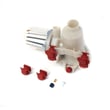
- If the washer will not drain, check for a clog at the pump filter area and consider the water pump 280187 if the pump hums but will not move water.
Common symptoms and what to try first
| What you see | Most likely cause | Best first step |
|---|---|---|
| No response from buttons | Control needs reset or no power | Power reset; verify outlet/breaker |
| Door won’t unlock | Water in tub or lock engaged | Drain/Spin; wait for unlock |
| Won’t drain after reset | Clog or failing pump | Check drain path; inspect pump |
| Fills incorrectly | Inlet or sensing issue | Check hoses/screens; run a test cycle |
Why it matters
A power reset clears minor control glitches without replacing parts, and it helps you confirm whether the issue is a temporary electronic lockup or a real failure (drain, door lock, inlet, or control).
Last updated: January 2026
Is Kenmore Elite high end?
Yes. Kenmore Elite is positioned as Kenmore’s higher-end line, typically offering upgraded performance, quieter operation, and more advanced features than standard Kenmore models. For your Kenmore Elite washer model 11042832201, the best way to confirm the exact feature set is to compare cycles, options, and specs in the 11042832201 owner's manual.
What “high end” usually means for Kenmore Elite washers
Kenmore Elite front-load (horizontal-axis) washers commonly focus on premium usability and fabric care, including:
- More cycle and temperature combinations for different fabrics
- Higher spin speeds for better water extraction (shorter dry times)
- Better vibration control for quieter operation
- Larger capacity designs (varies by model)
- More diagnostics and control features than entry-level models
Quick comparison: Kenmore vs Kenmore Elite (typical)
| Feature area | Standard Kenmore | Kenmore Elite |
|---|---|---|
| Cycle selection | Basic to moderate | Expanded, more specialty cycles |
| Noise and vibration | Standard | Improved control and insulation |
| Performance focus | Everyday cleaning | Enhanced cleaning and fabric care |
| Serviceability | Similar overall | Similar overall (more electronics on some models) |
Why it matters when buying parts or troubleshooting
“Elite” affects what parts and procedures apply. Even within Kenmore, different platforms use different components (door lock style, drain pump design, pressure switch calibration). When you’re diagnosing symptoms, matching parts to 11042832201 prevents ordering the wrong item.
- Drain or leak issues often point to the water pump 280187 or a hose/clamp connection
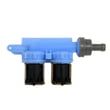
- Fill problems can involve the washer water inlet valve WP8181694 or flow sensing
- Door won’t lock or won’t start can involve the door lock system
Practical tip: confirm your exact configuration
Use the manual to verify the controls and options your washer actually has:
- Cycle names on the console
- Available spin speed selections
- Error code display behavior (if equipped)
- Recommended detergent type (HE) and load sizing
Last updated: January 2026
Does a Kenmore Elite washer have a filter?
Yes. Kenmore Elite model 11042832201 (a front-load, horizontal-axis washer) uses a drain pump clean-out area that acts like a filter by catching lint, coins, and small items before they reach the pump. The exact access steps and location are shown in the 11042832201 owner's manual.
Where the “filter” is on this washer
Most Kenmore Elite front-load washers do not have a tall, removable lint filter like a dryer. Instead, the common “filter” customers mean is the drain pump clean-out.
Typical places to check:
- Behind the lower front access panel (kick plate)
- At the drain pump housing clean-out cap
- In the tub-to-pump path if a blockage is suspected
How to check and clean it safely
Before opening any pump clean-out, we recommend planning for water.
- Unplug the washer.
- Have towels and a shallow pan ready.
- Open the lower access area and locate the pump clean-out.
- Drain water slowly (if your model uses a small drain hose, use it first).
- Remove debris from the clean-out and inspect the cap seal.
- Reinstall the cap firmly, then run a quick rinse and drain to confirm no leaks.
Parts that are commonly involved when “filter” issues happen
If the washer will not drain, drains slowly, or makes a grinding noise, these parts are often related:
| Symptom | Common cause | Related part for 11042832201 |
|---|---|---|
| Won’t drain / hums | Pump jammed or failed | Water pump 280187 |
| Slow drain | Partial blockage or collapsing hose | Washer tub-to-pump hose WPW10467168 |
| Leaks after cleaning | Loose clamp or damaged connection | Clamp WP285655 |
Why it matters
Keeping the pump clean-out clear helps prevent no-drain errors, reduces strain on the drain pump, and avoids water left in the tub that can cause odors.
Last updated: January 2026
What is the life expectancy of a Kenmore washer?
Most Kenmore washers last 10 to 12 years with normal household use and basic maintenance. For your Kenmore Elite washer model 11042832201 (horizontal-axis/front-load style), keeping the drain system clear and preventing leaks typically has the biggest impact on reaching that lifespan; see the 11042832201 owner's manual for care and cleaning details.
Typical lifespan and what affects it
A washer’s life depends more on usage and maintenance than brand alone.
- Loads per week: more cycles usually means faster wear on bearings, belt, and pump
- Detergent habits: too much HE detergent can cause excess suds and residue
- Drain health: coins, lint, and small items strain the pump and hoses
- Water quality: hard water can increase buildup in the tub and dispenser
- Leveling and vibration: chronic shaking stresses suspension and tub components
Parts that commonly limit lifespan (and what they do)
If your washer is otherwise in good shape, replacing a worn part can extend service life.
| Symptom | Commonly involved part | What it affects |
|---|---|---|
| Won’t drain, drains slowly, or is noisy during drain | Water pump 280187 | Removes water from the tub during drain/spin |
| Won’t fill, fills slowly, or fills with water off | Washer water inlet valve WP8181694 | Controls hot/cold water entering the washer |
| Door won’t lock or cycle won’t start | Door lock WP8182634 | Confirms door is locked for safe operation |
| Burning rubber smell, no tumble/spin, or squeal | Washer drive belt WPW10388414 | Transfers motor power to the drive system |
Maintenance checklist to help reach 10 to 12 years
- Use HE detergent and measure carefully (less is usually better)
- Run a monthly cleaning cycle (or hot wash) to reduce residue and odor
- Check pockets and use a garment bag for small items to protect the drain path
- Inspect fill hoses and the door bellow area for early signs of leaking
- Keep the washer level to reduce vibration and suspension wear
Why it matters
Knowing the typical life expectancy helps you decide whether to repair or replace. If your 11042832201 is within the 10 to 12 year range and the tub and bearings are sound, replacing a drain, fill, or door-lock component is often a practical way to keep it running reliably.
Last updated: January 2026