Owner’s manual



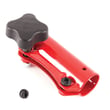
How to replace line on Craftsman gas trimmer?
To replace trimmer line on your Craftsman gas trimmer model 316791191, remove the spool, wind new line evenly in the correct direction, then feed the ends through the eyelets and reinstall the spool so the line can advance smoothly without tangling. Use the 316791191 owner's manual for the exact head style and winding direction.
Step-by-step: reload the trimmer line
- Shut the engine off and let the muffler cool completely.
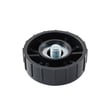
- Remove the bump knob or spool cap (most heads twist off; some use tabs).
- Pull the spool out and clean out grass, dirt, and melted line.
- Cut two equal lengths of trimmer line (many heads use two pieces; some use one long piece).
- Wind the line tight and level, laying each wrap next to the previous wrap (no crossing).
- Leave about 4 to 6 inches of line free on each side, then lock the ends in the spool notches (if present).
- Thread the line ends through the head eyelets and reinstall the spool and cap.
Avoid tangles and feed problems
Overlapping wraps are the most common reason line binds up inside the spool. These checks prevent that.
- Use the correct line diameter for the head (too thick binds; too thin breaks fast).
- Keep steady tension while winding so the line packs evenly.
- Do not overfill the spool; stop at the fill line or when the spool is nearly full.
- Replace worn eyelets or a damaged spool case if the line frays or sticks.
Quick troubleshooting table
| Symptom | Most common cause | What to do |
|---|---|---|
| Line will not advance | Line crossed/overfilled | Rewind with level wraps; do not overfill |
| Line breaks at the head | Worn eyelet or brittle line | Replace line; inspect spool case/eyelets |
| Line welds together | Running too hot or winding too loose | Wind tighter; avoid constant full-throttle edging |
Parts that commonly affect line feeding
If the head will not hold or feed line even after a careful rewind, these related parts are often involved:
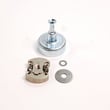
- Line trimmer spool retainer clip 791-610660 (retains the spool in the head)
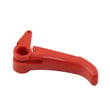
- Mtd line trimmer string cut-off blade 753-06126 (trims line to proper length)
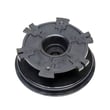
- Mtd line trimmer spool case and eyelet 753-04284 (guides line through the head)
Why it matters
Correct winding keeps the spool feeding smoothly, reduces line breakage, and prevents the bump head from jamming during trimming.
Last updated: January 2026
What are the most common issues with 316791191?
The most common issues we see on the Craftsman 316791191 gas line trimmer are starting problems, rough running or stalling, weak cutting power, and string head feed issues. These usually trace back to fuel delivery, airflow, ignition, or wear in the drive and cutting components; use the owner's manual for model-specific checks and adjustments.
Common symptoms and likely causes
- Won’t start or only starts with choke: dirty carburetor, restricted air filter, old fuel
- Starts then dies at idle: clogged carburetor passages, air leak at gasket, dirty filter
- Bogging under load: restricted muffler, fuel restriction, weak ignition
- String won’t feed or breaks constantly: worn spool parts, damaged shield or cutter blade
- Vibration or noisy shaft: worn flexible drive shaft or coupler
Quick checks we recommend first
- Drain old fuel and refill with fresh, properly mixed fuel (if your engine is 2-cycle).
- Inspect and replace the air filter if it is dirty or oil-soaked.
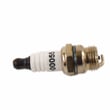
- Check the spark plug condition and gap; replace if fouled.
- Confirm the debris shield and string cut-off blade are intact and mounted correctly.
- Inspect fuel lines and the tank for cracks or leaks.
Parts that commonly solve these problems
| Symptom | Part to inspect/replace | What it affects |
|---|---|---|
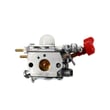
| Hard starting, surging, stalling | Mtd line trimmer carburetor 753-06288 | Fuel metering and idle stability |
| Runs rich, lacks power | Mtd line trimmer air filter 753-06417 | Airflow into the engine |
| Fuel smell, leaks, starvation | Ace lawn & garden equipment engine fuel tank 753-06250 | Fuel supply to the carburetor |
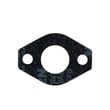
| High idle, erratic running | Lawn & garden equipment engine carburetor mount gasket 753-06253 | Seals air leaks at carb mount |
Why it matters
A small fuel or air restriction on a gas trimmer quickly turns into hard starting, plug fouling, and poor throttle response. Catching it early protects the carburetor, ignition coil, and clutch from unnecessary wear.
Last updated: March 2026
What string does a Craftsman 316791191 use?
The Craftsman 316791191 uses standard nylon trimmer line, but the correct diameter depends on the cutting head and spool setup on your unit. We match the line size by checking the head markings and the specifications listed in the 316791191 owner's manual.
How to identify the correct line size
Use these quick checks on your trimmer head before buying line.
- Look for the line diameter molded into the bump knob, spool cap, or debris shield
- Check the manual section for “cutting line” or “trimmer head” specifications
- Measure the old line with a caliper (or compare to a drill bit size)
- Confirm the head feeds smoothly after reloading (binding usually means the line is too thick or wound incorrectly)
- Replace worn eyelets or a cracked spool case if the line frays or jams
Typical line sizes for gas trimmers (what to expect)
Most gas trimmers in this class commonly use one of these diameters; the head determines what fits.
| Line diameter | Best for | Notes |
|---|---|---|
| 0.080 in | light grass | easier feeding, faster wear |
| 0.095 in | general trimming | common all-around size |
| 0.105 in | heavier weeds | can jam or overload some heads |
Parts that affect line fit
If the head components are damaged, even the correct line can bind.
- Spool case and eyelet condition
- Spool retainer/clip engagement
- Debris shield and string cut-off blade alignment
If you need to replace head components, the spool case and eyelet 753-04284 is one of the model-compatible parts that can affect feeding and line wear.
Why it matters
Using the correct line diameter keeps the 316791191 feeding reliably and helps maintain engine RPM. Line that is too thick can bind and strain the drive system; line that is too thin breaks faster and cuts poorly.
Last updated: January 2026