 Owner’s manual
 Error Codes




What is the disadvantage of a bottom freezer refrigerator?
A bottom-freezer refrigerator like the GE PVD28BYNBFS keeps fresh food at eye level, but the main disadvantage is that frozen items sit lower in a deep drawer, so you bend more and can lose visibility and organization compared with a top-freezer or side-by-side design.
- More bending for frozen food: the freezer drawer is low, which can be tougher for knees, backs, and mobility.
- Harder to organize: deep drawers can bury smaller items under larger packages.
- Heavier drawer loads: large frozen loads can make the drawer feel heavy and put more wear on slides over time.
- Needs clearance to open: the freezer drawer typically needs more forward space to fully extend.
- Kids access: children may have an easier time pulling out a heavy drawer and dropping items.
| Feature | Bottom freezer (like PVD28BYNBFS) | Top freezer | Side-by-side |
|---|---|---|---|
| Fresh food access | Best (eye level) | Good | Good |
| Frozen food access | Most bending | Less bending | Least bending |
| Freezer organization | Drawer can be deep | Shelves are simple | Narrow shelves, easier sorting |
| Door/drawer clearance | More (drawer extension) | Less | Moderate |
We recommend using the storage and removal steps in the PVD28BYNBFS owner's manual to make the freezer easier to manage.
- Group foods in bins (breakfast, snacks, meats) so you lift one bin instead of digging.
- Keep a “quick-grab” zone in the upper basket for everyday items.
- Avoid overloading the drawer; heavy loads make opening and closing harder.
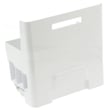
- If you need to remove baskets for cleaning or reorganizing, follow the manual’s basket removal steps.
Bottom-freezer designs are great for everyday refrigerated items, but if you use frozen food frequently, the drawer layout and bending can affect comfort, organization, and day-to-day convenience.
Last updated: February 2026
What is the most common problem with GE Profile refrigerators?
The most common GE Profile refrigerator issues are ice maker and water dispensing problems, followed closely by temperature control complaints (warm fresh food section, frost buildup, or inconsistent cooling). On the GE PVD28BYNBFS, these symptoms usually trace back to airflow, defrost sensing, or water supply components.
- Ice maker not making ice or making hollow cubes
- Water dispenser slow, sputtering, or not dispensing
- Fresh food section warm while freezer seems OK
- Frost or ice buildup on the evaporator cover
- Door alarm beeping because a door is not sealing or closing fully
Many “common problems” are really a few systems showing up in different ways.
| Symptom | Most likely system | Common part to check first (for this model) |
|---|---|---|
| No ice or slow ice | Water supply or ice maker | Refrigerator ice maker assembly WR30X39345 |
| Weak water flow | Filter or inlet valve | GE refrigerator water filter XWFE |
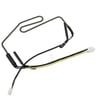
| Warm temps or frost | Defrost sensing/heating | Refrigerator defrost sensor WR55X29875 |
| Intermittent cooling | Controls or airflow | Door settings and vents per PVD28BYNBFS owner's manual |
- Confirm the temperature settings are correct and vents are not blocked by food.
- If water flow is weak, replace the filter and fully flush the system.
- If the dispenser sputters, purge air from the water line after any filter change.
- If ice production is poor, verify the ice bin is seated and the ice room is not iced over.
- If you see frost buildup, suspect a defrost problem (sensor, heater, or airflow restriction).
Ice maker and cooling complaints often share the same root causes: restricted airflow, a defrost system that is not clearing frost, or a water supply restriction. Fixing the underlying system prevents repeat failures and protects food temperatures.
Last updated: February 2026
What type of compressor is PVD28BYNBFS?
The GE PVD28BYNBFS bottom-mount refrigerator uses a high-efficiency, variable-speed (inverter-style) compressor; it can run faster and longer than older fixed-speed compressors, so a higher-pitched hum or gentle pulsating sound during operation is normal. For operating details and sound expectations, use the PVD28BYNBFS owner’s manual.
An inverter compressor varies its speed to match cooling demand instead of cycling fully on and off.
- Runs longer at lower speeds to hold steadier temperatures
- Can sound different than older refrigerators (higher-pitched hum)
- Often reduces big temperature swings by avoiding hard on/off cycling
- May run more after door openings, warm food loads, or during defrost recovery
These sounds are commonly normal on modern GE refrigerators:
| What you hear | When it happens | What it usually means |
|---|---|---|
| High-pitched hum or light pulsation | Compressor running | Variable-speed compressor operation |
| Whoosh after doors close | Right after closing doors | Pressure equalizing in the sealed system |
| Brief motor sound after dispensing ice | After ice dispense | Ice chute door closing to keep warm air out |
If cooling is weak or temperatures drift, check these first:
- Confirm controls are set near 37°F for fresh food and 0°F for freezer (factory recommendations)
- Make sure doors seal fully and are not held open by bins or packaging
- Clean condenser area if airflow is restricted (dust and pet hair raise run time)
- If you have a water/ice issue that seems related to cooling performance, replace the water filter on schedule; use the correct GE refrigerator water filter XWFE
Knowing you have an inverter-style compressor helps you troubleshoot correctly; longer run times and different compressor sounds are expected, and they often indicate the refrigerator is maintaining temperature efficiently rather than “struggling.”
Last updated: February 2026





