Owner’s manual
 View engine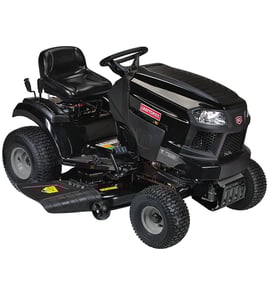


Is it worth repairing a lawn mower engine?
For the Craftsman 917287121 front-engine lawn tractor, repairing the engine is worth it when the problem is external and serviceable (fuel, spark, air, battery, belts) and the tractor is otherwise in good shape. If the engine has internal damage (knock, low compression, thrown rod), replacement is usually the better value.
Quick way to decide (repair vs. replace)
Use this checklist before spending money on parts or labor:
- Repair first if it is a no-start, hard-start, or runs-rough issue tied to fuel quality, spark, air flow, or a weak battery.
- Repair first if the tractor still cuts and drives well and you are mainly dealing with maintenance items.
- Lean toward replacement if the engine has loud internal knocking, metal in oil, or severe smoke that does not improve.
- Lean toward replacement if the tractor has multiple major problems at once (engine plus transmission or deck damage).
- Repair is usually worth it when you can do the work yourself and the fix is straightforward.
What we can confirm for this model
From the Craftsman 917287121 operator information, we can confirm key service specs that support “repair first” troubleshooting:
| Item | Spec for 917287121 |
|---|---|
| Fuel | Regular unleaded, minimum 87 octane |
| Fuel freshness | Use fuel within about 30 days |
| Spark plug | Champion RC12YC (gap 0.030 in.) |
| Oil capacity | 56 oz with filter; 48 oz without filter |
For step-by-step procedures and the troubleshooting chart, use the 917287121 operator's manual.
Common “engine problems” that are usually inexpensive fixes
Many engine complaints are caused by maintenance or drive-load issues, not a failed engine:
- Stale fuel or water in fuel (especially after storage)
- Dirty air filter or clogged air screen
- Weak battery or corroded battery terminals
- Fouled spark plug or loose plug wire
- Mower deck load from a worn belt or binding pulleys (can feel like the engine is weak)
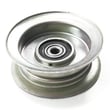
If the tractor loses power specifically when you engage the blades, check the deck drive system and consider inspecting the belt and idlers; the husqvarna lawn tractor belt, 1/2 x 101-1/6-in 592855001 is one compatible belt option listed for this model.
Why it matters
Choosing “repair first” for common tune-up issues can restore performance quickly and protect the rest of the tractor (deck, transmission, and electrical system). Choosing “replace” for internal engine damage can prevent repeated downtime and escalating repair costs.
Last updated: January 2026
What are the parts of a tractor engine?
On the Craftsman 917287121 front-engine lawn tractor, the engine is built from core internal parts (piston, crankshaft, valves) plus supporting systems for fuel, ignition, lubrication, air intake, and exhaust. For model-specific maintenance and safety steps, use the 917287121 operator's manual.
Main tractor engine parts (what they do)
Most lawn tractor engines, including the one used on model 917287121, are organized into these groups:
- Cylinder and cylinder head: form the combustion chamber.
- Piston, piston rings, and connecting rod: convert combustion pressure into motion.
- Crankshaft and bearings: turn piston movement into rotating power.
- Valve train (camshaft, valves, springs, guides): controls intake and exhaust flow.
- Ignition system (spark plug, ignition coil, flywheel magnets): creates spark at the right time.
- Fuel system (fuel tank, cap, line, filter, carburetor): stores and meters fuel.
- Lubrication system (oil, drain valve/plug, oil filter if equipped): reduces wear and carries heat away.
- Air intake and filtration (air filter, air screen): keeps dirt out of the engine.
- Exhaust system (muffler): routes exhaust and reduces noise.
Model-specific examples you can service on 917287121
These are common engine-related service items that apply to this tractor:
- Fuel cap assembly 581075501 (seals the fuel tank to help prevent leaks and contamination)
- Lawn tractor muffler 532137352 (reduces exhaust noise and directs exhaust away from the operator)
- Oil draining and routine oil changes (oil type and steps are listed in the manual)
Quick “system to part” map
| Engine system | Common parts included | What you may notice when there’s a problem |
|---|---|---|
| Fuel | tank, cap, line, filter, carburetor | hard starting, surging, stalling |
| Ignition | spark plug, coil, flywheel | no-start, misfire |
| Lubrication | oil, drain, filter (if equipped) | knocking, overheating, low power |
| Air intake | air filter, air screen | loss of power, black smoke |
| Exhaust | muffler | loud operation, reduced performance |
Why it matters
Knowing which engine “system” matches your symptom helps you troubleshoot faster and choose compatible replacement parts for your Craftsman 917287121.
Last updated: January 2026
What kind of engine does a Craftsman riding lawn mower have?
For Craftsman lawn tractor model 917287121, the operator’s manual describes a low-emission 20.0 HP gasoline-powered tractor with a 42-inch mower. The manual doesn’t list the exact engine model number; you’ll confirm that from the engine ID label under the hood.
What we can confirm for model 917287121
From the 917287121 operator’s manual, these engine-related specs are identified:
- Engine type: gasoline, low-emission
- Power rating listed: 20.0 HP
- Fuel: unleaded regular gasoline
- Fuel capacity: 1.50 gallons
- Spark plug: Champion RC12YC (gap 0.030 in.)
How to identify the exact engine model on your tractor
Even within the same tractor model, the most reliable way to match tune-up parts is the engine’s ID tag.
- Lift the hood and locate the engine label on the shroud/valve cover area
- Record the engine model, type, and code (or serial)
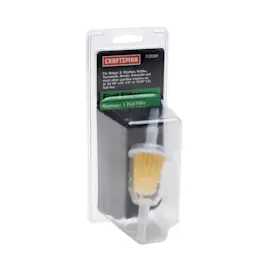
- Use those numbers when selecting engine-specific parts (air filter, fuel filter, carburetor parts)
Quick reference table
| Item | What applies to model 917287121 |
|---|---|
| Engine description | Low-emission gasoline engine |
| Power rating (manual listing) | 20.0 HP |
| Fuel capacity | 1.50 gallons |
| Spark plug | Champion RC12YC (0.030 in. gap) |
Why it matters
The tractor model number (917287121) identifies the chassis and deck family, but the engine ID is what ensures you get the correct maintenance parts and settings for your specific engine.
Last updated: January 2026