Owner’s manual
 Error Codes





What are the disadvantages of a bottom freezer?
Bottom-freezer refrigerators like the Samsung RF30HDEDTSR put frozen food down low, so the main disadvantages are more bending and lifting to reach heavy items, plus the freezer can feel less organized if you do not use bins well. For model-specific use and safety details, follow the owner's manual.
Common disadvantages (what you will notice day to day)
- You typically bend more to reach items in the freezer drawer.
- Heavy frozen foods (bulk meat, large bags of ice) are harder to lift from a low position.
- Drawer-style freezers can hide items under others, so food gets forgotten without good organization.
- If the freezer is overpacked, the drawer can be harder to open and close smoothly.
- Kids can be tempted to lean on or climb on drawers and doors, which is unsafe.
How to reduce the downsides
- Store the heaviest items in the upper freezer basket or closest-to-top area.
- Use smaller bins to separate categories (meat, vegetables, breakfast items).
- Keep airflow paths clear; do not pack food tightly against vents.
- Open doors and drawers for the shortest time possible to reduce frost buildup.
- Level the refrigerator so doors and drawers seal and operate correctly (leveling legs are at the bottom back of the freezer door on this style).
Quick comparison
| Feature | Bottom freezer | Top freezer |
|---|---|---|
| Fresh food access | Easier (eye level) | More bending for fridge items |
| Frozen food access | More bending | Easier reach |
| Handling heavy frozen items | Harder lift | Easier lift |
| Organization | Depends on baskets/bins | Often simpler shelves |
Why it matters
Bending and lifting are the biggest comfort issues, but organization and proper installation matter for performance too. Adequate clearance, good ventilation, and a level cabinet help the cooling system work correctly and can reduce energy use over time.
Last updated: February 2026
What is the best 30 inch refrigerator?
For most kitchens, the “best” 30-inch refrigerator is the one that fits your space, holds the food you buy weekly, and keeps temperatures steady with minimal frost and door-swing issues. If you are comparing to your Samsung RF30HDEDTSR, start by matching size, clearance needs, and features like ice and water.
How we recommend choosing the best 30-inch fridge
Use these practical checks first; they prevent the most common fit and performance problems:
- Measure the opening (width, height, depth) and confirm door swing clearance
- Confirm you have easy access to a water supply if you want an ice maker or dispenser
- Avoid installing where room temperature drops below 50°F (10°C)
- Leave clearance on the sides, back, and top for airflow (lower energy use and better cooling)
- Prioritize consistent temperature control over “extra” features if reliability is your top goal
For model-specific installation and clearance guidance, use the RF30HDEDTSR owner's manual.
Feature and value comparison (what matters most)
| What you care about | What to look for in a 30-inch refrigerator | Why it helps |
|---|---|---|
| Fit in a tight kitchen | True 30-inch width, hinge clearance, drawer clearance | Prevents doors hitting walls and drawers binding |
| Food freshness | Stable temps, good airflow, effective crisper design | Reduces freezing in fresh food section and spoilage |
| Ice and water convenience | Reliable ice maker design, easy filter access | Fewer clogs, leaks, and ice production issues |
| Serviceability | Common, available replacement parts | Faster, more affordable repairs |
Why “best” depends on your home
A refrigerator can be highly rated and still perform poorly if it is installed too tight to the wall or in a cold garage. Proper clearance and ventilation help the internal cooling system run correctly and can reduce power consumption.
If you are deciding between repair vs. replace
If your current refrigerator is not cooling evenly, freezing food in the fresh food section, or having ice issues, these parts are commonly involved on many refrigerators:
- Temperature sensor (controls temperature feedback)
- Evaporator fan (moves cold air through compartments)
- Door gasket (prevents warm air leaks)
- Control board (manages cooling and defrost cycles)
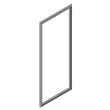
On this model, examples include the refrigerator temperature sensor DA32-10104N and the refrigerator door gasket DA97-13015E.
Last updated: February 2026
What is the life expectancy of a Samsung refrigerator?
Most Samsung refrigerators, including the Samsung RF30HDEDTSR, have a typical life expectancy of 10 to 15 years with normal household use and basic maintenance.
What affects how long it lasts
A refrigerator’s lifespan is mostly driven by heat load, airflow, and how hard the sealed system and fans have to work.
- Condenser and airflow: Keep vents and airflow paths clear so the unit does not run excessively.
- Door sealing: A weak seal makes the compressor run longer and can shorten overall life.
- Cleaning habits: Regular interior and exterior cleaning helps prevent odor, moisture issues, and wear.
- Water and ice system care: If you will be away, shutting off the water valve helps prevent leaks and related damage.
- Power interruptions: After unplugging, wait at least 5 minutes before plugging back in to protect components.
Maintenance checklist that supports a full lifespan
Use these as practical “do this, get more years” steps for RF30HDEDTSR.
- Clean interior surfaces with mild detergent; dry shelves and drawers before reinstalling.
- Wipe the control panel with a damp soft cloth (do not spray water directly).
- Keep air vents inside the refrigerator unblocked.
- If you will not use the refrigerator for 3 weeks or more, empty it, unplug it, close the water valve, wipe moisture, and leave doors open to reduce odors and mold.
- Address small issues early (warm temps, unusual fan noise, frost buildup) before they strain the compressor.
Common “wear” items vs. long-life components
These parts often drive service calls before the cabinet itself is worn out.
| Component type | What you may notice first | Typical fix path |
|---|---|---|
| Door sealing parts | Moisture, warm spots, longer run times | Inspect/adjust, then replace gasket if needed |
| Sensors and controls | Temps swing, error symptoms, inconsistent cooling | Test sensor, then control board if needed |
| Fans and airflow parts | Noise, weak cooling, frost patterns | Clear ice/obstructions, then replace fan motor/cover |
| Sealed system (compressor/evaporator) | Poor cooling in both sections | Professional diagnosis and repair |
Why it matters
A refrigerator that is kept clean, sealed, and well-ventilated runs fewer hours per day; that reduces stress on the compressor, evaporator fan, and control electronics, which is what typically determines whether you land closer to 10 years or closer to 15.
For model-specific care and cleaning steps, follow the owner's manual.
Last updated: February 2026
What is the most common problem with Samsung refrigerators?
The most common issues we see on Samsung refrigerators like model RF30HDEDTSR are cooling problems (warm fresh food or freezer), ice maker problems (no ice, small cubes, freezing up), and water-related leaks from supply, filter, or drain system. Use the RF30HDEDTSR owner's manual to confirm feature operation and basic checks.
Most common symptoms and what they usually point to
- Fridge not cold enough: airflow blocked, evaporator fan issue, temperature sensor problem, or frost buildup
- Freezer not cold enough: airflow restriction, frost/defrost issue, or sealed system performance problem
- Ice maker not making ice: low water pressure, frozen fill tube, ice room fan issue, or module failure
- Water under the crisper or on the floor: drain restriction or drain cap/drain tube issue
- Doors not sealing: gasket not sealing, hinge alignment, or flipper (mullion) not closing correctly
Quick checks we recommend first (before replacing parts)
- Check airflow: do not block interior vents with food packages (blocked vents can cause overcooling or uneven temps).
- Verify water pressure: proper ice maker operation typically needs 20 to 125 psi.
- Power reset correctly: if unplugged, wait at least 5 minutes before plugging back in.
- Inspect door sealing: look for gaps, torn gasket areas, or a flipper that does not fold/seat.
- Look for drain issues: if you see puddles, suspect a restricted drain path.
Parts that commonly relate to these problems (RF30HDEDTSR)
| Problem area | What fails most often | Example part for this model |
|---|---|---|
| Temperature control | Sensor reading wrong | Refrigerator temperature sensor DA32-10104N |
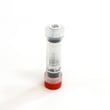
| Ice production | Frozen fill path | Samsung refrigerator ice maker fill tube and heater DA97-00209Z |
| Door sealing/alignment | Gasket not sealing | Refrigerator door gasket DA97-13015E |
| Water puddles | Drain restriction | Refrigerator drain cap DA67-01301A |
Why it matters
Cooling, ice maker, and leak symptoms often share the same root causes: restricted airflow, incorrect temperature sensing, or water supply and drainage problems. Catching these early helps prevent food spoilage, ice buildup, and water damage.
Last updated: February 2026