Installation guide
 Owner’s manual
 Error Codes





What are the electrical requirements for the KOSE500ESS02?
The KitchenAid KOSE500ESS02 electric wall oven needs a properly grounded, dedicated 240/208 VAC supply and is typically hardwired through a junction box using an approved conduit connector. For a single oven, the installation specs list about 17.2 amps at 240 VAC (about 4100 watts). See the KOSE500ESS02 installation guide for the exact wiring method and local code requirements.
For KOSE500ESS02 (single oven), the installation requirements list these typical power values:
- Supply voltage: 240 VAC or 208 VAC
- Power (single oven): 4100 W at 240 VAC, 3100 W at 208 VAC
- Current draw (single oven): 17.2 A at 240 VAC, 15.0 A at 208 VAC
- Grounded electrical supply: required
- Connection type: hardwired to a junction box (not a standard plug)
| Supply | Wattage | Amps |
|---|---|---|
| 240 VAC | 4100 W | 17.2 A |
| 208 VAC | 3100 W | 15.0 A |
These items are called out in the installation instructions and are important for a safe, serviceable install:
- Use a UL listed or CSA approved conduit connector
- Place the junction box close to the oven location (commonly within a few inches below the support surface for wall-cabinet installs)
- Provide a minimum 1-inch hole in the cabinet support surface for the appliance cable (as specified)
- Follow special procedures if your home has aluminum wiring (copper pigtail and approved connectors)
- Have a licensed, qualified electrical installer make the final connections
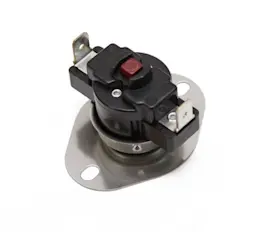
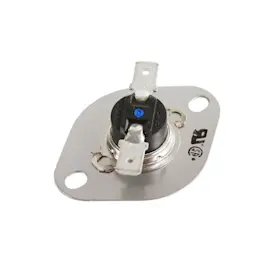
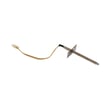
Correct voltage, grounding, and junction box placement help prevent nuisance shutdowns, overheating, and control problems; they also make future service easier if you ever need to access components like the range high-limit thermostat WP4449751 or control parts.
Last updated: February 2026
What is the life expectancy of a KitchenAid oven?
A KitchenAid electric wall oven like model KOSE500ESS02 typically lasts 15 to 20 years. Consistent cleaning, avoiding excessive self-clean cycles, and fixing heat or door-seal issues early helps you reach the full service life; the KOSE500ESS02 owner's manual covers care and operating basics.
- Heat stress from frequent high-temp cooking and repeated self-clean cycles
- Door seal (gasket) condition; leaks make the oven work harder and overheat nearby parts
- Electrical component wear (elements, controls, thermal safety devices)
- Ventilation and airflow around the wall oven cabinet
- Spill cleanup habits; baked-on spills can damage finishes and create smoke/odor issues
- Wipe up spills after the oven cools; keep the hidden bake area as clean as possible.
- Inspect the door gasket for gaps, tears, or flattening; replace if it no longer seals.
- Use self-clean only when needed; remove racks first if your manual instructs it.
- Confirm the oven vents are not blocked by foil, pans, or cabinet trim.
- If preheat times suddenly increase, check for weak heating performance and address it early.
| Part | What you may notice | What it typically indicates |
|---|---|---|
| Bake element | Slow preheat, uneven baking | Element weakening or failing |
| High-limit thermostat | Oven shuts off, overheats, error symptoms | Over-temp protection tripping |
| Door hinge | Door won’t close evenly | Seal leaks, heat loss |
If you are troubleshooting heating problems on KOSE500ESS02, the range bake element W11545804 and range high-limit thermostat WP4449751 are two common components involved in temperature control and safety.
A wall oven that is losing heat at the door or struggling to maintain temperature runs longer and hotter than it should. That extra strain shortens the life of key parts like the bake element, control system, and thermal cutoffs.
Last updated: February 2026
How do I find the model number on my KOSE500ESS02?
On the KitchenAid KOSE500ESS02 wall oven, the model number is printed on the model and serial label located on the bottom edge of the control panel on the right-hand side. Use that exact model number when ordering parts or checking specifications in the owner's manual.
Check these common label locations for KOSE500ESS02:
- Bottom edge of the control panel, right-hand side (primary location)
- Model and serial label under the control panel area
- Rating plate area referenced in the installation guide (under the control panel on single ovens)
Record the information exactly as shown on the label:
- Model number (example: KOSE500ESS02)
- Serial number
- Electrical rating details (useful for installation and troubleshooting)
The model number ensures you get the correct KitchenAid wall oven parts and documentation. Even small model variations can change which control board, bake element, door hinge, or oven rack fits.
| Item | What it’s used for | When you need it |
|---|---|---|
| Model number | Matching parts and diagrams | Ordering parts, checking fit |
| Serial number | Identifying production details | Service history, documentation |
| Rating information | Confirming power requirements | Installation, electrical checks |
Last updated: March 2026