Owner’s manual
 View engine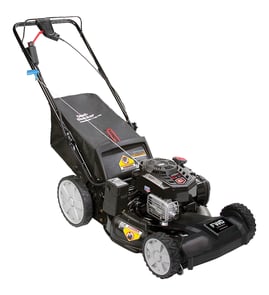



How do I tell what size lawn mower blade I need?
For Craftsman model 917387160, the correct blade is a 20-inch deck blade. The fastest way to confirm fit is to match your model number in the parts list or verify the blade details in the owner's manual.
The most reliable ways to confirm blade size
- Use your model number (best method): Model 917387160 uses a 20-inch blade.
- Check the blade stamping: Many blades have the length or part number stamped on the metal.
- Measure the old blade (backup method): Measure tip-to-tip diagonally across the blade.
- Match the center hole and adapter style: The center hole shape must match your blade adapter.
- Choose the blade type you want: Mulching, standard, or high-lift (bagging) depending on your mowing setup.
Blade fit checklist (what must match)
| What to match | What to look for | Why it matters |
|---|---|---|
| Blade length | 20 in. for this model | Prevents deck interference and ensures full cut width |
| Center hole | Same shape and size as the original | Ensures the blade seats correctly |
| Adapter interface | Fits the blade adapter key/hub | Prevents slipping and vibration |
| Hardware condition | Bolt and washers not worn | Helps keep proper clamping force |
If you are replacing the blade on this mower
We recommend using the exact replacement blade listed for this model: husqvarna lawn mower 20-in deck blade 532145106. The manual also specifies blade bolt torque of 35-40 ft. lbs., which is critical for safe operation.
Quick safety and install tips
- Disconnect the spark plug wire before working near the blade.
- Wear gloves and wrap the blade with a heavy cloth for handling.
- Inspect the blade adapter key; replace the adapter if it is damaged.
- Tighten the blade bolt to the specified torque (35-40 ft. lbs.).
- Replace a bent blade immediately; do not straighten it.
Why it matters
A blade that is the wrong length or has the wrong center hole can cause vibration, poor cut quality, deck damage, and unsafe operation. Using the correct 20-inch blade and proper torque keeps your Craftsman rotary lawn mower cutting cleanly and running smoothly.
Last updated: February 2026
What size is the nut on a Craftsman riding mower blade?
For Craftsman model 917387160 (a walk-behind rotary mower), the blade is held on with a blade bolt, not the same blade nut used on many riding mowers. Use the correct socket for the blade bolt on your mower and tighten it to 35 to 40 ft. lbs. as specified in the owner's manual.
What to check before you grab a wrench
Riding mowers and walk-behind mowers often use different blade fasteners, so match the hardware to the machine you are servicing.
- Confirm the equipment type: riding mower vs. walk-behind mower
- Look under the deck for a center blade bolt (common on walk-behind mowers)
- Clean packed grass and rust off the bolt head before measuring the socket size
- Block the blade with a wood block to keep it from turning
- Replace worn fastening hardware if the bolt head is rounded or threads are damaged
Blade hardware used on model 917387160
The manual calls out removing the blade and attaching hardware (bolt, lock washer, hardened washer) and specifies the blade bolt torque.
| Item | What you will see | Why it matters |
|---|---|---|
| Blade fastener | Center blade bolt | Determines the socket size you need |
| Tightening spec | 35 to 40 ft. lbs. | Prevents blade loosening and crankshaft damage |
| Related parts | Blade adapter and blade | Worn parts can cause vibration and poor cut |
Parts that commonly get replaced during blade service
If you are seeing wobble, vibration, or repeated loosening, we typically replace the wear parts along with the blade.
- Husqvarna lawn mower 20-in deck blade 532145106
- Lawn mower blade adapter 581547901
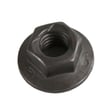
- Lock nut 532409149 (used in other assemblies on this mower)
Why it matters
Using the wrong “riding mower blade nut” size on a walk-behind mower leads to stripped hardware, under-tightening, and unsafe blade attachment. Following the model-specific torque spec keeps the blade secure and the cut quality consistent.
Last updated: February 2026
What kind of gas do you put in a Craftsman push mower?
For your Craftsman rotary lawn mower model 917387160, use fresh, clean unleaded gasoline and avoid high-ethanol fuels. Small engines like this mower run best on standard pump gas; do not use E15 or E85 because higher ethanol blends can cause hard starting and fuel-system problems.
What to use (and what to avoid)
- Use fresh unleaded gasoline from a busy station (less chance it is stale)
- Choose regular ethanol-blend gas (up to E10) when available
- Avoid E15 and E85 fuels (too much ethanol for most small engines)
- Never use old gas that has been sitting for weeks or months
- Keep the gas can clean and sealed to prevent water contamination
Fuel handling tips that prevent no-start problems
The manual calls out fuel safety and also lists stale fuel and water in fuel as common “won’t start” causes. Use these habits to keep the mower reliable:
- Let the engine cool several minutes before refueling
- Wipe up spilled gasoline before starting
- If the mower has been stored with fuel, drain and refill with fresh gas before troubleshooting
- Store fuel in an approved container; keep it out of heat and moisture
- For off-season storage, follow the storage steps in the owner's manual
Quick troubleshooting guide (fuel-related)
| Symptom | Most likely fuel cause | What we do first |
|---|---|---|
| Won’t start after sitting | Stale fuel | Drain tank, refill with fresh gas |
| Starts then dies | Water in fuel | Drain tank and carburetor, refill |
| Hard starting | Wrong fuel blend (E15/E85) | Replace fuel with fresh unleaded |
| Strong fuel smell in storage area | Unsafe storage | Move mower to ventilated area; follow storage steps |
Why it matters
Using the right gasoline protects the carburetor, fuel lines, and seals, and it prevents the most common small-engine issues like hard starting, surging, and stalling. Fuel quality is also a key part of routine tune-up and seasonal storage.
Last updated: February 2026
Is it cheaper to repair or replace a lawnmower?
For a Craftsman 917387160 walk-behind mower, it’s usually cheaper to repair when the problem is a normal wear item (blade, cable, fasteners) and you can do the work yourself. Replacement becomes the better value when the engine or deck is badly damaged or multiple major systems need work.
Quick rule of thumb (cost vs. value)
- Repair when the mower still has a solid deck, starts reliably (or needs basic tune-up work), and only needs 1 to 3 common parts.
- Replace when repairs stack up across drive, engine, and deck, or when the deck is rusted through or bent.
- Repair is most cost-effective when you already have basic tools and can follow the steps in the owner's manual.
What’s typically worth repairing on this model
These are common, straightforward fixes that usually make financial sense:
- Dull or damaged blade: replace the husqvarna lawn mower 20-in deck blade 532145106
- Blade mounting wear (vibration, blade won’t stay tight): inspect/replace the lawn mower blade adapter 581547901
- Operator control issues (engine won’t stay running when you release the handle, or control feels wrong): inspect/replace the control cable 532168552
- Loose handle hardware: replace a stripped knob such as the handle knob 532185577
When replacement is usually the better deal
Replacement is typically the better value if you see any of the following:
- Bent crankshaft symptoms (strong vibration right after a blade strike)
- Deck damage (cracks, severe rust, or a bent cutting deck that won’t track level)
- Repeated no-start after fuel, spark plug, and basic maintenance are addressed
- Multiple repairs needed at once (for example: blade system plus control cable plus wheel/drive issues)
DIY cost comparison table
| Situation | Typical best choice | Why |
|---|---|---|
| Blade is dull/bent, mower otherwise runs | Repair | Low parts cost, quick install |
| Blade adapter is worn, blade keeps loosening | Repair | Restores safe cutting and reduces vibration |
| Control cable is stretched/binding | Repair | Restores operator control and safe operation |
| Deck is rusted through or badly bent | Replace | Structural repair is rarely worth it |
| Strong vibration after impact (possible crankshaft issue) | Replace | Major engine repair often exceeds mower value |
Why it matters
A mower that vibrates, has a loose blade, or has damaged controls is a safety risk. Our guidance matches the manual’s emphasis on repairing damage before using the mower and keeping wear items maintained. Use the owner's manual for the correct maintenance schedule and safe service steps.
Last updated: February 2026
Why is my self-propelled lawn mower pulling to one side?
On the Craftsman 917387160 walk-behind mower, “pulling” to one side is caused by uneven rolling resistance: mismatched wheel height settings, a dragging wheel, or heavy grass buildup under the deck. Level the cutting height first, then check for drag at the wheels and blade area.
Fix it fast: the most common causes
- Set the cutting height to the same notch/position on both sides.
- Clean packed grass from under the deck; buildup creates constant drag.
- Check both rear wheels for free rotation; remove wrapped grass, string, or mud.
- Inspect the blade for bends or heavy damage that can create uneven cutting load.
- Mow slower in thick or wet grass; heavy discharge can make the mower feel like it “steers.”
Blade and blade adapter checks (drag and vibration)
A bent blade or a damaged blade adapter can add resistance and make the mower track poorly. The manual also calls out that the blade adapter key must be in good condition and aligned during installation.
- Disconnect the spark plug wire before tipping or servicing.
- Tip the mower with the air filter and carburetor facing up.
- Inspect the blade and adapter for cracks, wear, or a sheared key.
Helpful replacement parts (if damaged):
Quick diagnosis guide
| Symptom | Most likely cause | What to do first |
|---|---|---|
| Pulls all the time | Uneven height setting, wheel drag, deck buildup | Level height; clean deck; free the wheel |
| Pulls mostly in tall grass | Heavy cutting load on one side | Raise cut height; slow down; overlap passes |
| Pulls with vibration | Bent blade or damaged adapter | Inspect blade and adapter |
Why it matters
A mower that pulls is harder to control and usually indicates extra drag; fixing it improves cut quality and reduces wear on wheels, blade hardware, and the engine.
For safe tipping, blade removal, and correct blade orientation, follow the owner's manual.
Last updated: February 2026