Owner’s manual
 Error Codes


What is the advantage of a bottom mount fridge?
A bottom-mount refrigerator like Kenmore model 79573065411 keeps the fresh-food section higher up, so everyday items are easier to see and reach without bending. The freezer stays in the lower drawer, which helps many households organize frozen foods separately from frequently used refrigerated items.
Key benefits you will notice day to day
- Less bending for fresh food: produce, drinks, and leftovers sit closer to eye level.
- Better “grab-and-go” access: you open the refrigerator doors more often than the freezer.
- Freezer drawer organization: baskets and dividers make it easier to group frozen items.
- Energy habits can improve: quicker access can reduce door-open time.
- Good fit for door alignment and sealing: proper leveling helps doors close consistently (important for temperature stability).
What to consider before choosing (or living with) bottom-mount
Bottom-mount designs trade convenience up top for a lower freezer drawer. If you use the freezer constantly, you may notice more bending for frozen items.
| Feature | Bottom-mount refrigerator | Top-freezer refrigerator |
|---|---|---|
| Fresh food access | Higher, easier reach | Lower, more bending |
| Freezer access | Lower drawer | Upper door |
| Organization style | Drawer bins and baskets | Shelves and door bins |
Why it matters for performance and comfort
How often you open each compartment affects comfort and temperature stability. Keeping the most-used section (fresh food) at a comfortable height can reduce strain, and shorter door-open times help the refrigerator maintain set temperatures more efficiently.
Tips to get the most from your 79573065411 layout
- Store daily-use items at mid-shelf height.
- Keep airflow paths clear around shelves and bins.
- Make sure the cabinet is level so doors close easily; the front is typically set slightly higher than the rear.
- Check gasket contact if you notice moisture or warm spots near the door edges.
For model-specific use, care, and setup details (including leveling and alignment guidance), use the 79573065411 owner's manual.
Last updated: February 2026
What does "bottom mount" mean?
On your Kenmore 79573065411, “bottom mount” means the freezer compartment is located at the bottom (a pullout drawer), while the fresh food section is on top at eye level for easier everyday access.
Why this design is popular
A bottom-mount (bottom freezer) layout is built around how most people use a refrigerator day to day.
- Fresh foods are easier to reach because they are higher up
- The freezer uses a pullout drawer for frozen storage
- You bend less for refrigerated items (milk, produce, leftovers)
- Frozen items are grouped in the lower drawer, often with bins/dividers
- Door alignment and leveling matter more because the upper doors must seal evenly
What you will see on this model
The Kenmore 79573065411 is a bottom freezer refrigerator with a freezer drawer. The manual also describes removing the pullout drawer and Durabase style base, which are common bottom-mount features.
Quick comparison
| Style | Freezer location | Best for | Common tradeoff |
|---|---|---|---|
| Bottom mount (bottom freezer) | Bottom drawer | Frequent fresh-food access | More bending for freezer use |
| Top mount (top freezer) | Top compartment | Frequent freezer access | More bending for fresh-food use |
Why it matters for troubleshooting and maintenance
Knowing it is bottom mount helps you diagnose issues faster because many symptoms relate to door sealing, drawer closing, and airflow between compartments.
- If doors do not close easily, leveling legs and door alignment adjustments can help
- If you see frost or moisture, check door gaskets and drawer closure first
- If the freezer drawer is hard to open/close, inspect rails, bins, and obstructions
For model-specific layout details and care steps, use the owner's manual.
Last updated: February 2026
What model Kenmore fridge do I have?
Your Kenmore refrigerator’s model number is printed on the appliance’s rating label; on Kenmore units like model 795.7306*, you’ll typically find that label inside the fresh food compartment (side wall or ceiling area) or inside the freezer area. Use the exact model number from that label when ordering parts or checking instructions in the 79573065411 owner's manual.
Where to look for the model number label
Check these common spots on a Kenmore bottom-mount refrigerator:
- Inside the refrigerator compartment on a side wall (often near the crisper area)
- On the inside frame near the door opening (fresh food section)
- Inside the freezer compartment on an interior wall
- Behind the lower kick plate or toe grille area (less common, but worth checking)
- On a sticker that also lists the serial number and electrical ratings
What the model number looks like (and why it matters)
Kenmore model numbers are usually a series of digits; for this refrigerator family, the manual shows 795.7306*, which means multiple close variants share the same Use and Care Guide.
Quick guide
| What you see on the label | What it means | What to do next |
|---|---|---|
| 795.7306* | Model family covered by the same manual | Use the full label number to match parts |
| 79573065411 | Full model number (no dot) | Use this for parts lookup and diagrams |
| Serial number | Production identifier | Keep it for service records |
Tips to read the label correctly
- Copy the model number exactly as printed (include all digits)
- If you see a dot (example: 795.7306), also write the full number if shown elsewhere
- Take a clear photo before you close the door; it helps when ordering parts
Why it matters
The exact model number ensures we match the correct door gaskets, ice maker, control board, and other refrigerator parts; small model variations can change fit, wiring connectors, and mounting points.
Last updated: February 2026
How to tell if a Kenmore refrigerator compressor is bad?
On Kenmore bottom-mount refrigerator model 79573065411, a bad compressor usually shows up as poor cooling even though the unit has power, long run times, and unusual compressor-area noises or heat. Confirm basic airflow and condenser-coil condition first, then evaluate the sealed-system components.
Quick signs the compressor is failing
- Refrigerator and freezer temperatures keep rising even after 24 hours of operation
- Compressor runs almost constantly with little or no cooling improvement
- Clicking or buzzing from the compressor area (often with repeated start attempts)
- Compressor shell feels very hot to the touch (use caution)
- House breaker trips or the unit repeatedly loses power when the compressor tries to start
Rule out common look-alikes first (before replacing a compressor)
Many “bad compressor” symptoms are caused by airflow or control issues. We check these items first because they are faster and less expensive than sealed-system work.
- Clean dust from the condenser area and make sure airflow is not blocked
- Verify the condenser fan (if equipped) and evaporator fan are running
- Make sure doors seal tightly; warm air leaks can mimic weak cooling
- Confirm the temperature settings are correct and not in a demo or lock mode
- Listen for a steady hum (running) versus repeated click-then-silence (start failure)
For model-specific care and cleaning guidance (including condenser coil cleaning), use the 79573065411 owner's manual.
What parts are commonly involved when the compressor will not start
If the compressor is not starting, we typically focus on the start and protection components first, then the compressor itself.
| Symptom | Most likely area | Common next step |
|---|---|---|
| Clicks every few minutes, no cooling | Start/protection circuit | Test/replace overload device |
| Runs but won’t cool well | Sealed system (compressor, refrigerant, restriction) | Professional sealed-system diagnosis |
| Trips breaker on start | Compressor or wiring fault | Inspect wiring, test compressor windings |
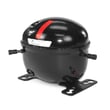
If you are replacing parts, the model’s compressor and protection parts on this page include the refrigerator compressor TCA38091801 and the refrigerator compressor overload protector 6750CL0001D.
Why it matters
A compressor is the heart of the cooling system. Misdiagnosing it can lead to unnecessary cost; checking coils, fans, gaskets, and start components first helps you pinpoint the real cause of warm temperatures and constant running.
Last updated: February 2026
Why is the bottom of my Kenmore refrigerator leaking water?
Water at the bottom of your Kenmore 79573065411 bottom-mount refrigerator is usually caused by a defrost drain problem (water cannot reach the drain pan), a door gasket leak creating excess condensation, or a water supply leak from the ice maker or dispenser line. Use the owner's manual to locate access points and follow safe service steps.
Quick checks that solve most leaks
- Look for a sheet of ice or standing water on the freezer floor; this points to a clogged or frozen defrost drain.
- Check the refrigerator and freezer door seals for gaps, tears, or areas that do not grip paper.
- Inspect the water line connection and valve area for drips, especially if you have an ice maker.
- Confirm the unit is level; a forward tilt can let water spill instead of draining correctly.
- Check for water running to the drain pan during defrost; the manual notes this is normal, but it should stay contained.
Most common causes and what to do
| What you see | Most likely cause | What we recommend |
|---|---|---|
| Water under crisper drawers, no obvious drip source | Defrost drain restricted or frozen | Clear the drain path; flush with warm water and remove ice buildup in the drain trough |
| Puddle near front corners after door openings | Door gasket not sealing | Clean and reshape gasket with warm water; replace if torn (see gasket parts below) |
| Water only when ice maker runs or dispenser is used | Water supply leak | Check fittings and tubing; test the lg refrigerator water inlet valve AJU72992601 for seepage |
| Water at bottom after long run times, dusty back | Poor airflow, heavy condensation | Clean condenser area and confirm fans run; keep vents clear |
Parts that commonly fix bottom leaks on this model
If you find a seal or water supply issue, these model-matched parts are common fixes:
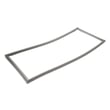
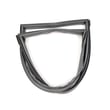
- Lg refrigerator door gasket, left ADX73550621
- Lg refrigerator door gasket, right ADX73550624
- Lg refrigerator freezer door gasket MDS64172919
- Lg refrigerator water inlet valve AJU72992601
Why it matters
A small leak can turn into ice buildup, warm temperatures, and floor damage. The manual also notes that water running into the drain pan during defrost is normal; the goal is making sure that water reaches the pan and does not overflow or escape.
Last updated: February 2026