Installation guide
 Owner’s manual


How many cubic feet is my Kenmore Elite washer?
Your Kenmore Elite washer model 11026922502 is a top-load, agitator-style design; washers in this class are typically about 3.2 to 3.6 cubic feet. For the exact capacity rating used for this specific model, check the specifications section in the 11026922502 owner's manual.
How to estimate capacity if you need a quick match
If you are comparing machines for fit and load size, these quick checks usually get you close:
- Basket diameter: larger diameter usually means higher cubic feet
- Agitator height and width: tall, wide agitators reduce usable space slightly
- Typical load size: if a “large” load fills the basket about 3/4 full, you are usually in the mid-3 cu ft range
- Cycle behavior: deep-fill, traditional top-loaders are commonly lower capacity than modern HE impeller models
Why the cubic feet number matters
Capacity affects what you can wash safely and how well the washer balances during spin. Overfilling can cause poor cleaning, out-of-balance spinning, and extra wear on suspension and drive components.
Capacity and loading guidelines (practical)
Use these rules to protect the basket, drive system, and fabrics:
- Load items loosely, not packed down
- Keep the load balanced (mix large and small items)
- For bulky items, wash one at a time if the tub cannot circulate freely
- Stop adding items when the basket is about 3/4 full for most mixed loads
Quick comparison: common washer capacities
| Washer type | Typical capacity range | Best for |
|---|---|---|
| Traditional top-load with agitator (like many Kenmore 110 models) | 3.2 to 3.6 cu ft | Everyday mixed loads |
| HE top-load with impeller | 4.0 to 5.5 cu ft | Larger loads, comforters |
| Front-load | 4.0 to 5.8 cu ft | Large loads, high efficiency |
If you are shopping parts or planning a repair
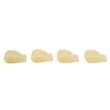
Capacity does not change when you replace common wear parts, but performance can. If your washer is not agitating or spinning well, common fixes include the agitator dog 80040 or the washer motor coupling 285753A. For ordering by model number or finding additional parts beyond the list shown, use Sears PartsDirect.
Last updated: February 2026
How to read Kenmore model numbers?
Kenmore model numbers tell us the appliance type and the manufacturing source, and the full model number is what we use to match the correct parts list and diagrams. For Kenmore Elite washer model 11026922502, the model and serial label is located under the washer lid (per the 11026922502 owner's manual).
Where to find the model number on this washer
On Kenmore Elite top-load washers like 11026922502, we look for the model and serial number label in one main spot.
- Lift the washer lid and look under the lid area for the model and serial label
- Write down the entire model number (all digits)
- Record the serial number too; it helps confirm production details
- Keep the purchase date with your records for future reference
Quick locator table
| Appliance | Most common model tag locations | What to copy |
|---|---|---|
| Top-load washer (like 11026922502) | Under the lid, around the opening | Full model number + serial number |
| Front-load washer | Door opening, behind door, or rear panel | Full model number + serial number |
| Dryer | Door opening or rear panel | Full model number + serial number |
How to “read” a Kenmore model number (what the digits mean)
Kenmore model numbers often start with a prefix that points to the manufacturing source and product platform. For many Kenmore laundry products, a prefix like 110 is commonly associated with Whirlpool-built designs. After the prefix, the remaining digits identify the specific series and configuration.
- Prefix (often 3 digits): identifies the manufacturing source/platform
- Middle digits: identify the base design/series
- Ending digits: identify feature or production variations
Why it matters for parts and troubleshooting
Even small model-number differences can change which parts fit (agitator style, lid switch design, drain pump mounting, timer or switch layout). Using the full model number helps us match the correct diagrams and compatible replacement parts.
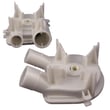
If you are ordering common wear items for this model, examples include the washer lid switch assembly WP8318084 and the washer drain pump WP3363394. You can also search by model number on Sears PartsDirect if you are shopping across multiple appliances.
Last updated: February 2026
What is the life expectancy of a Kenmore washer?
A Kenmore washer typically lasts 10 to 15 years with normal household use and basic maintenance. For the Kenmore Elite 11026922502, consistent care (balanced loads, no overloading, correct detergent and bleach use) is what most directly extends service life; see the 11026922502 owner's manual for model-specific care guidance.
Typical lifespan ranges (what to expect)
- Average household use: 10 to 15 years
- Light use (small loads, fewer cycles): up to 15 years
- Heavy use (large family, frequent loads): closer to 8 to 12 years
- Commercial or non-family use: faster wear; many components age sooner
What shortens washer life fastest
- Overloading the basket so clothes cannot move freely
- Running consistently unbalanced loads (excess vibration and strain)
- Using too much detergent (residue buildup) or incorrect detergent type
- Pouring chlorine bleach directly on fabrics (can damage items and create cleanup issues)
- Ignoring early symptoms (slow drain, no spin, loud agitation)
Quick maintenance habits that add years
- Keep loads balanced and avoid packing the tub tight
- Use the recommended amount of detergent and bleach
- Check pockets and tie strings or straps to prevent tangling
- If draining slows or water remains, inspect the drain path and consider replacing the washer drain pump WP3363394
- If the washer will not spin or stops when the lid opens, test the lid switch and replace the washer lid switch assembly WP8318084 if it fails
Common “age-related” repairs and what they affect
| Symptom | Often involved part | What it impacts |
|---|---|---|
| Won’t drain, water left in tub | Drain pump | Cycle completion, odor risk |
| Won’t spin or intermittently stops | Lid switch assembly | Spin safety and operation |
| Agitator slips or doesn’t move clothes well | Agitator dog | Wash performance |
| Loud noise, poor agitation/spin | Motor coupling | Drive between motor and transmission |
Why it matters
A washer’s life expectancy is mostly about mechanical strain and water management. Balanced loads and correct chemical use reduce stress on the drive system, basket, and seals, which helps your Kenmore Elite washer run longer with fewer major repairs.
Last updated: February 2026
How to force a Kenmore Elite washer to drain?
To force your Kenmore Elite washer model 11026922502 to drain, set it to a Drain/Spin (or Spin) cycle and start it; if it will not pump out, remove power and clear the drain path (hose and pump) so the drain pump can move water again. See the installation guide for drain hose setup details.
Fast ways to get the water out
- Try Drain/Spin first: Select Drain/Spin (or Spin) and press Start.
- Reset power: Unplug the washer for 1 minute, plug back in, then try Drain/Spin again.
- Gravity drain (controlled): If the tub is full, lower the drain hose into a shallow pan or floor drain to siphon water out (keep towels ready).
- Check for a kinked hose: Straighten the hose and re-run Drain/Spin.
What to check when it will not drain
Most “won’t drain” problems come from a blocked hose, a restricted pump, or a pump that is failing.
- Drain hose routing: The hooked end should not be forced straight, and the hose should be secure but still allow an air gap to prevent backflow.
- Standpipe or laundry tub: Make sure the hose is not shoved too far down; that can cause siphoning or slow draining.
- Pump obstruction: Coins, socks, and lint can jam the impeller.
- Pump failure: If you hear humming but no water movement, the pump can be seized.
If you need a replacement pump for this model, use the washer drain pump WP3363394.
Quick symptom guide
| What you notice | Most likely cause | What we recommend |
|---|---|---|
| Tub full, pump hums, no drain | Pump jam or failed | Inspect pump area; replace pump if needed |
| Drains slowly | Partial clog or kink | Correct hose routing; clear restriction |
| Drains then refills or smells | Backflow/siphoning | Re-route hose to maintain an air gap |
| Will not spin and will not drain | Lid switch issue on many top-loaders | Check lid switch operation |
Why it matters
A correct drain hose setup prevents backflow and siphoning, and a clear pump path prevents motor strain, cycle stoppages, and standing water that can cause odors.
Last updated: February 2026