Installation guide
 Owner’s manual
 Error Codes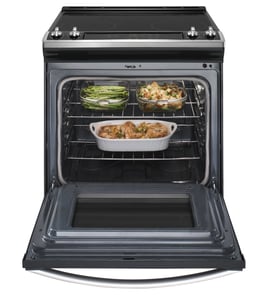


Are JennAir ovens gas or electric?
Jenn-Air ovens can be gas, electric, or dual-fuel depending on the model. For model SVE47500B, the documentation identifies it as a grill-range with a self-cleaning conventional oven (an electric range platform), so this specific unit is electric. See the SVE47500B owner's manual for the exact features and operating details.
How to tell if your Jenn-Air oven is gas or electric
Use these quick checks to confirm what you have at home:
- Look for a gas shutoff valve and flexible gas line behind the range (gas or dual-fuel).
- Check the power connection: electric ranges typically use a heavy 240V cord and a range receptacle.
- Open the storage drawer or rear access area: gas models usually have a visible gas regulator.
- Read the model tag (often on the oven frame behind the door or on a side trim panel).
- Confirm in the manual for your exact model and series.
Common Jenn-Air configurations (what it means for cooking)
| Type | Cooktop heat source | Oven heat source | What you will notice |
|---|---|---|---|
| Gas range | Gas burners | Gas | Fast flame response, gas smell possible during ignition |
| Electric range | Electric elements | Electric | Steadier heat, glowing elements, strong broil element |
| Dual-fuel range | Gas burners | Electric | Gas on top with electric baking and broiling |
Why it matters
Knowing whether your Jenn-Air oven is gas or electric helps you buy the right parts and troubleshoot correctly. For example, electric-oven issues often involve components like a bake element or control board, such as the range bake element WP71001680 used on SVE47500B.
Last updated: January 2026
Why is my JennAir electric oven not heating?
If your Jenn-Air range model SVE47500B is not heating, the most common causes are incorrect control settings (including a delayed start), a failed bake circuit component (like the bake element), or a control problem. Start by confirming the clock and bake settings, then check for obvious power issues.
Quick checks we recommend first
- Make sure Bake is selected and a temperature is actually programmed.
- Check for delayed start or timed cooking settings that prevent immediate heating.
- Confirm the display is responding normally and not stuck showing an “End” state from a previous timed cycle.
- Verify the range has full power (a tripped breaker can leave lights working but stop heating).
- Let the oven preheat; the display typically rises in 5° increments as it heats.
Most likely part-related causes
When settings are correct and the oven still stays cold, these parts are common suspects on electric ranges:
- Bake element: if it is broken, the oven will not heat in Bake.
- Oven control board/clock: if it is not sending power to the heating circuit, the oven may not heat.
- High-limit thermostat: if it opens due to overheating or failure, it can interrupt heating.
Helpful model-matched parts to consider:
Settings and symptoms guide
| What you see | What it usually means | What to do next |
|---|---|---|
| Oven never warms, no preheat rise | Controls not set, delayed start active, or no heat output | Recheck clock/timed settings in the SVE47500B owner’s manual |
| Display works but oven stays cold | Heating circuit problem (element, control, limit) | Inspect bake element; then test control output |
| “End” stays on display after cooking | Timed cycle ended but not cleared | Cancel the timed function per the SVE47500B owner’s manual |
Why it matters
An oven that will not heat is often a simple control-setting issue (especially delayed start), but if a heating component is failing, continued attempts to run the oven can lead to inconsistent cooking results and repeated shutdowns.
Last updated: January 2026
What are common problems with JennAir stoves?
Common problems we see on the Jenn-Air SVE47500B electric range include the oven not heating, uneven baking, a broiler that will not heat properly, surface elements that do not get hot enough, and downdraft ventilation that does not capture smoke well. Many issues trace back to control settings, power supply, or a failed heating or control component.
Most common symptoms and what to check first
- Oven does not heat: confirm the oven controls are set correctly and the clock is not set for a delayed start (see SVE47500B owner's manual).
- Uneven baking: verify rack position and allow proper airflow around pans; avoid blocking the oven vent.
- Broiler not working: confirm broil is selected and preheat time is adequate; inspect the broil element for damage.
- Surface element not hot enough: make sure the element is seated firmly and the control is set correctly; low house voltage can also reduce heat output.
- Ventilation not pulling smoke: check cross-ventilation, confirm the filter is installed correctly, and make sure the outside wall cap is not stuck shut.
Parts that commonly relate to these problems (when a component has failed)
If settings and power look good, these model-compatible parts are common suspects:
- Range bake element WP71001680 for no-bake or weak-bake symptoms
- Broiler element WPW10310260 for broil heat problems
- Range oven control board and clock WP71001799 for control, timing, or heating-command issues
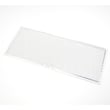
- Range downdraft vent grease filter WP71002111 for poor vent capture (especially if clogged or installed incorrectly)
Quick symptom-to-likely-cause table
| Symptom | Most likely category | First action |
|---|---|---|
| Oven will not heat | Settings or heating circuit | Verify bake settings and delayed start on the clock |
| Food bakes unevenly | Airflow or rack use | Adjust rack position; keep vent area clear |
| Broiler weak or dead | Broil element or control | Inspect broil element; confirm broil mode |
| Burner not hot enough | Element seating or voltage | Reseat element; check for low supply voltage |
| Downdraft weak | Filter, ducting, or make-up air | Check filter install; confirm ducting and wall cap |
Why it matters
Heating and ventilation problems can lead to undercooked food, longer cook times, excess smoke, and added strain on electrical components. Catching a simple control-setting or airflow issue early often prevents unnecessary part replacement.
Last updated: January 2026
How long do JennAir wall ovens last?
A Jenn-Air wall oven typically lasts about 15 years with normal use and basic maintenance. For the Jenn-Air SVE47500B electric range oven, keeping the door seal tight, using correct bake and broil settings, and addressing control or heating issues early helps you reach that lifespan.
Typical lifespan and what affects it
Most electric wall ovens and built-in oven cavities in electric ranges land in a similar lifespan range.
- Typical lifespan: 15 years
- Heavy use (daily high-heat cooking): closer to 12 to 15 years
- Light to moderate use: often 15 to 20 years
- Poor ventilation, frequent self-clean, or ignored faults: shortens life
Parts that most often determine “end of life”
When an oven stops heating consistently or won’t hold temperature, it is usually one of these items.
- Heating components (bake and broil)
- Electronic oven control and clock
- Door seal and door alignment
- Surface element control switch (for cooktop performance on range models)
- Power connection at the terminal block
Common SVE47500B examples
| Symptom | Most likely area | Example part for this model |
|---|---|---|
| No bake heat or slow baking | Bake circuit | Range bake element WP71001680 |
| No broil heat | Broil circuit | Broiler element WPW10310260 |
| Display issues, erratic operation | Control electronics | Range oven control board and clock WP71001799 |
Why it matters
A 15-year lifespan is realistic only when the oven heats correctly and shuts off correctly. The SVE47500B manual notes that the oven preheats in roughly 7 to 11 minutes under normal conditions; longer preheats and uneven cooking are early signs that a heating or control part may be wearing out.
Maintenance habits that help you reach 15 years
Use these habits to reduce stress on the heating system and controls.
- Avoid slamming the oven door; it protects the door seal and hinges
- Keep the oven cavity clean so heat reflects properly
- Confirm the oven door is fully closed during baking
- If you see beeps or fault behavior, troubleshoot promptly using the SVE47500B owner’s manual
- Ensure the range is installed and powered correctly per the SVE47500B installation guide
Last updated: January 2026