Error Codes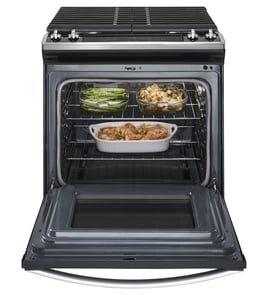



How do I know if my gas oven igniter is bad?
On the GE JGB720SEJ5SS gas range, a bad oven igniter usually shows up as an oven that will not heat, takes a long time to light, or lights with a delayed “whoosh.” If the igniter glows but the burner never lights, the igniter is typically too weak to open the gas valve.
Common signs of a failing igniter
- Bake or broil will not ignite, but you smell gas briefly
- Igniter glows dull orange or red instead of getting bright
- Long preheat times (often 60 to 90+ seconds before ignition)
- Burner lights late with a “whoosh” after a delay
- Oven temperature is inconsistent because the burner cycles poorly
Quick checks we recommend (safe and practical)
- Watch the ignition sequence: set Bake and look through the oven bottom openings (do not put your face near the opening). The igniter should glow and the burner should light shortly after.
- Listen for the gas valve: a weak igniter may glow but never pull enough current to open the valve.
- Inspect the igniter (power off): cracks, white spots, or a damaged glow bar point to replacement.
Electrical test (best confirmation)
If you are comfortable using a meter, testing helps confirm the diagnosis.
| Test | What you do | What it means |
|---|---|---|
| Resistance (ohms) | Unplug range, disconnect igniter leads, measure across igniter | Open/infinite reading indicates a failed igniter |
| Current draw (amps) | Clamp meter on igniter lead during ignition | Low amp draw commonly causes slow or no ignition |
For meter basics, we use the steps in how to use a multimeter to test electrical parts video.
Why it matters
A weak igniter can delay ignition and cause poor heating performance. Replacing the igniter restores normal burner lighting timing, steadier oven temperatures, and more reliable preheating.
Part to check for this model
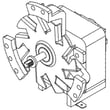
For this GE range, the oven ignition system commonly involves the range oven burner igniter WB13X40206.
Last updated: February 2026
What is the lifespan of a GE oven?
A GE oven (including the GE JGB720SEJ5SS free standing gas range) typically lasts 13 to 15 years with normal household use and basic maintenance.
What affects lifespan the most
A range usually fails early because of heat stress, ignition wear, spills, or gas and electrical issues. These habits make the biggest difference:
- Keep burner caps seated correctly after cleaning to prevent uneven flames and overheating
- Wipe up boilovers quickly so liquids do not seep into valves, switches, or the spark system
- Avoid slamming the oven door; it stresses hinges and can damage door alignment
- Use cookware that matches burner size to reduce excess heat on grates and the cooktop
- Keep vents clear so heat can escape and electronics run cooler
Parts that commonly wear out first (and what they do)
If your range is otherwise in good shape, replacing a wear part can extend service life.
| Symptom | Common wear area | Example part for JGB720SEJ5SS |
|---|---|---|
| Oven will not heat or heats slowly | Ignition system | Range oven burner igniter WB13X40206 |
| Burners click but do not light reliably | Spark/ignition control | Range spark module WB13X24741 |
| Oven light out | Light bulb or socket | 40a15bulb 40A15 or range light socket WB08T10026 |
When replacement makes more sense than repair
We usually recommend considering replacement when one of these is true:
- The gas valve/regulator or control board fails and the repair cost is high
- Multiple burners and the oven have ignition problems at the same time
- The oven cavity or door structure is damaged and heat leaks are obvious
- You are facing repeated service calls within a single year
Why it matters
Knowing the typical 13 to 15 year lifespan helps you decide whether to invest in a repair (like an igniter or spark module) or plan for a new range, especially if your JGB720SEJ5SS is already in the second half of its service life.
Last updated: February 2026
Why is my GE gas stove not igniting?
On the GE JGB720SEJ5SS gas range, a burner that will not ignite is usually caused by moisture or debris around the igniter electrode, a mis-seated burner cap, or a failed ignition component (spark module, switch, or wiring). Start with cleaning and correct burner assembly, then test ignition parts.
Quick checks that fix most no-ignite problems
- Confirm the gas shutoff valve is fully open.
- Make sure the burner cap is centered and sitting flat; a crooked cap can prevent ignition.
- Dry the burner head and cap completely after cleaning (moisture can stop sparking).
- Clean the igniter tip and the metal burner ports with a soft brush; clear food spills and grease.
- Listen for clicking when you turn the knob to LITE; no clicking often points to an ignition circuit issue.
What the symptoms usually mean
| What you notice | Most likely cause | What to do next |
|---|---|---|
| No clicking on any burner | Spark system not powering or failed module | Check power to the range; then inspect/replace the range spark module WB13X24741 |
| Clicking but no spark at one burner | Dirty/wet electrode, cracked ceramic, loose wire | Clean and dry; inspect electrode and wire connection under the cooktop |
| Spark is present but no flame | Gas not reaching burner (valve/orifice issue) | Verify gas supply; if only one burner, inspect the range surface burner valve WB21X20260 and burner orifice |
| Burner lights with a match but not by spark | Weak/no spark or poor grounding | Clean, dry, and inspect electrode; check wiring and spark module output |
Why it matters
When ignition is delayed or inconsistent, unburned gas can build briefly before lighting. Getting the burner cap, electrode, and ignition circuit working correctly helps the burner light quickly and evenly.
Parts we commonly see involved
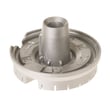
- Range surface burner cap WB28K10222 (misaligned or damaged caps disrupt gas flow and ignition)
- Range spark module WB13X24741 (controls spark to the electrodes)
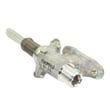
- Range surface burner valve WB21X20260 (if a single burner is not feeding gas)
Last updated: February 2026