Owner’s manual
 Error Codes


What is the warranty on LFXS30766S?
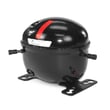
For the LG LFXS30766S refrigerator, the compressor (Linear/Inverter) warranty is 10 years for parts and 5 years for labor. For the rest of the warranty coverage and exclusions, use the warranty section in the LFXS30766S owner’s manual.
What’s covered (at a glance)
Here’s the model-specific compressor coverage we can confirm for LFXS30766S:
- Compressor (Linear/Inverter): 10 years parts
- Compressor (Linear/Inverter): 5 years labor
- Other components: coverage varies by item and is listed in the warranty details
Where to find the full warranty details
We recommend checking the warranty section because it spells out what counts as a covered failure, what documentation is needed, and what situations are excluded.
- Look for the “WARRANTY” section near the back of the LFXS30766S owner’s manual
- Keep your proof of purchase with your model and serial information
- If you’re troubleshooting a cooling issue that might involve the compressor, note any symptoms and error codes before scheduling service
Common warranty-related scenarios
| Scenario | Why it matters | What to do first |
|---|---|---|
| Compressor not cooling | Compressor coverage may apply | Confirm temps, listen for compressor/fan operation |
| Ice maker or dispenser issue | Often not compressor-related | Check water supply, filter status, and settings |
| Noises or vibration | May be normal operation | Compare to normal sounds guidance in the manual |
Why it matters
Knowing the exact LFXS30766S warranty terms helps you decide whether to troubleshoot, replace a part, or schedule service, especially for high-cost sealed-system components like the compressor.
Last updated: January 2026
What is the problem with the LG bottom freezer refrigerator?
On the LG LFXS30766S, the most common “problem” we see customers describe is uneven cooling: the fresh food section warms up while the freezer stays very cold. This is usually caused by restricted airflow, a temperature-sensing issue, or a cooling-system component that is not running correctly (fan, defrost, or compressor-related).
Quick checks we recommend first (no parts)
- Make sure food packages are not blocking air vents in the refrigerator section.
- Confirm the doors close and seal fully; a small gap can cause warm fridge temps and excess frost.
- Set the refrigerator and freezer to normal targets and give it 24 hours to stabilize.
- Clean dust from the condenser area; poor heat release can reduce cooling.
- If the unit was recently installed or moved, allow a few hours for temperatures to pull down.
For control panel features, temperature display behavior, and basic troubleshooting steps specific to this model, use the LFXS30766S manual.
When the freezer is cold but the fridge is warm
This pattern usually points to an airflow or defrost issue rather than a total cooling failure.
| Symptom | What it often means | What to check next |
|---|---|---|
| Freezer OK, fridge warm | Cold air not moving into fresh food section | Vents blocked, fan operation, frost buildup |
| Fridge temps swing up and down | Sensor or control reacting incorrectly | Error codes, sensor checks |
| Frost/ice buildup in freezer | Defrost system not clearing frost | Defrost sensor, heater, airflow |
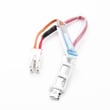
If you suspect a defrost sensing problem, a common component to inspect is the refrigerator defrost sensor assembly 6615JB2005R.
Why it matters
Uneven cooling can spoil food in the fresh food section even when the freezer seems “fine.” Catching airflow restrictions, frost buildup, or a failing sensor early can prevent longer run times and added strain on the compressor.
Helpful DIY references
Last updated: January 2026
Why is my LG bottom freezer not freezing?
If your LG LFXS30766S freezer isn’t freezing, the most common causes are airflow problems (frost-clogged evaporator area or a failed fan), a sealed-system/compressor start issue, or a control/sensor problem. Start with settings and airflow checks before moving to electrical parts.
Quick checks first (no tools)
- Make sure the freezer temperature is set cold enough and not in a special mode; see the control panel section in the LFXS30766S owner’s manual.
- Give the unit time after changes; allow 2 to 3 hours to see improvement after adjusting settings.
- Confirm the freezer drawer is closing fully and sealing all the way around.
- Avoid overpacking; blocked vents reduce cold air circulation.
- If the unit was recently installed or moved, verify it has proper clearance and is level.
What to check next (most likely causes)
Airflow and frost buildup
A heavy frost blanket on the freezer evaporator can stop airflow and prevent freezing.
- If you hear no fan noise when the freezer is running, the evaporator fan motor may be failing.
- If frost returns quickly after a manual defrost, suspect a defrost system or sensor issue.
Helpful parts to consider for this model:
- Refrigerator freezer evaporator cover and fan assembly AEB72913929
- Refrigerator defrost sensor assembly 6615JB2005R
Compressor start or sealed-system problems
If the compressor is struggling to start, you may hear clicking, buzzing, or repeated start attempts.
- A failed start relay or overload protector can prevent the compressor from running.
- If the compressor runs but cooling is still weak, sealed-system issues are possible and typically require a technician.
Helpful parts to consider for this model:
- Refrigerator compressor start relay EBG60663230
- Refrigerator compressor overload protector 6750CL0001D
Symptoms and likely direction
| What you notice | Most likely direction | What we usually check |
|---|---|---|
| Fridge is cold but freezer is warm | Airflow/defrost issue | Evaporator fan, frost pattern, defrost sensor |
| Clicking every few minutes | Compressor start issue | Start relay, overload protector |
| No fan sound, poor airflow | Fan failure or ice blockage | Fan assembly, ice buildup behind cover |
Why it matters
A freezer that can’t hold temperature can lead to food spoilage and can also force the compressor to run longer than normal. Catching airflow or start-component problems early can prevent bigger cooling failures.
Last updated: January 2026