Owner’s manual
 Error Codes

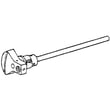
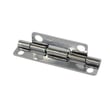
Can you still get parts for a Kenmore sewing machine?
Yes. You can still get replacement parts and accessories for many Kenmore sewing machines, including Kenmore model 38517324990, by matching the exact model number and the part description to the parts list in the owner's manual.
Having the right identifiers prevents wrong-part returns and helps you find compatible items faster.
- Model number: 38517324990
- Part number (if listed)
- Part description (example: presser foot, needle plate, hook cover plate)
- Where the part is located (front cover, needle area, hook/bobbin area)
- Symptom you are trying to fix (won’t sew, fabric not moving, locks up)
Your manual lists accessories and repair parts and explains how to identify them by name and number.
| Part type | What it affects | When to replace it |
|---|---|---|
| Needle plate and screws | Stitch quality and fabric feeding | Bent plate, burrs, needle strikes |
| Presser foot and thumb screw | Fabric control | Foot won’t hold fabric evenly |
| Bobbin winder parts | Bobbin winding | Bobbin won’t wind or winds unevenly |
| Power cord/foot control connection area | Power and speed control | Intermittent power, loose connection |
Use the symptom to narrow the section of the machine to inspect first.
- If fabric is not moving: check the drop feed lever position and feed dogs for lint buildup
- If the machine locks up: remove thread tangles in the hook/bobbin area and rethread
- If the motor won’t run: confirm the power switch is on and the machine is plugged in, then inspect the foot control connection
- If stitches skip or break: replace the needle, rethread the upper thread path, and verify tension settings
For step-by-step troubleshooting by symptom, use sewing machine fabric not moving or sewing machine locks up.
Kenmore sewing machine parts are model-specific. Using the exact 38517324990 parts list and terminology (part number plus description) is the most reliable way to get a correct match and restore normal stitch quality, feeding, and safe operation.
Last updated: February 2026
What are the disadvantages of mechanical sewing machines?
Mechanical sewing machines like the Kenmore 38517324990 are simple and durable, but the tradeoff is fewer built-in features and less automation than computerized models. They handle everyday sewing well, but advanced functions (like extensive decorative stitches) typically require more manual setup and skill.
- Fewer built-in stitch options and limited specialty stitches
- No automatic stitch programs; you set stitch length, width, and tension manually
- Less convenience automation (often fewer one-touch features)
- More trial-and-error when changing fabrics, thread types, or needle sizes
- Not ideal for feature-heavy work (large decorative stitch libraries or automated functions)
Mechanical machines are great for hemming, basic garment construction, and repairs. When you move into more demanding work, the limitations show up as extra setup time and more reliance on correct threading, tension, and needle selection.
| Task type | Mechanical sewing machine experience | Why it can feel harder |
|---|---|---|
| Basic seams and hems | Usually straightforward | Simple stitch and tension needs |
| Stretch fabrics | More setup-sensitive | Needle choice and tension matter more |
| Thick layers (denim, canvas) | Possible, but slower | Requires correct needle and steady feeding |
| Decorative stitching | Often limited | Fewer stitch patterns and controls |
- Thread the upper path and bobbin exactly as shown in the owner's manual
- Match needle size and type to fabric (replace bent or dull needles)
- Avoid pulling or pushing fabric; let the feed system move it
- Keep lint cleared from the bobbin and shuttle area to prevent jams and thread breaks
- Unplug the machine before cleaning, lubricating, or making adjustments near the needle area
Most “mechanical machine problems” are really setup issues. The Kenmore 38517324990 manual troubleshooting guidance ties many symptoms (skipped stitches, thread breaks, puckering, poor feeding) to threading, tension, needle condition, and lint buildup, so good setup restores performance quickly.
Last updated: February 2026
What kind of needles does a Kenmore 38517324990 use?
The Kenmore sewing machine model 38517324990 uses standard household sewing machine needles; for general sewing, we recommend size 11 (75) or size 14 (90). Use specialty needles (ball point, denim, leather, topstitching) based on fabric type and thread weight; see the owner's manual needle chart for the best match.
Use the needle style that matches what you are sewing; this prevents skipped stitches, thread breaks, and fabric damage.
- Universal: everyday woven fabrics (cotton, broadcloth, many blends)
- Ball point (knits): jersey, tricot, swimwear, synthetic knits
- Blue needle (knits): helps reduce skipped stitches on knits and synthetics
- Denim needle: denim, canvas, sailcloth, duck
- Wedge point leather: leather, suede, vinyl
- Topstitching needle: heavier topstitch thread; larger eye for smoother feeding
The manual’s guidance for this model aligns with typical home sewing needs.
| Needle size | Typical use | Notes |
|---|---|---|
| 11 (75) | general sewing, lighter fabrics | a go-to size for many projects |
| 14 (90) | general sewing, medium fabrics | another go-to size |
| 16 (100) | heavier fabrics | helps pierce thicker layers |
| 18 (110) | very heavy fabrics | use with appropriate thread |
If stitches look uneven or the machine skips, the needle is usually the first fix.
- Install the needle fully seated and tightened
- Replace needles often; rough or blunt tips cause snags and skipped stitches
- Match thread weight to needle size (fine thread with smaller needles)
- Use ball point or blue needles for knits to reduce skipped stitches
- If you hit a pin or thick seam, replace the needle immediately
Using the right needle system, type, and size helps your Kenmore 38517324990 form consistent stitches, protects delicate fabrics, and reduces timing-related symptoms that are actually caused by a damaged or wrong needle.
Last updated: February 2026
What year is Kenmore sewing machine model 38517324990?
Kenmore sewing machine model 38517324990 is part of the Kenmore 385.17324XXX model family shown in the owner's manual. That model family was sold across multiple production runs, so the exact build year depends on the original purchase date and the specific “XXX” variation, not the base model family number alone.
Use these identifiers together; they are the most reliable way to date a Kenmore 385-series machine.
- Check the rating/ID plate on the machine body for a full model format like 385.17324XXX
- Look for a serial number and record it exactly as printed
- Confirm whether your machine uses Foot Controller model YC-482J-1 (listed for 385.17324XXX)
- Compare your machine’s features (stitch selector, buttonhole style, light type) to the diagrams in the manual
- Use your original receipt or warranty paperwork if you still have it
| What you have | What it tells us | What it does not tell us |
|---|---|---|
| 38517324990 (base model listing) | It maps to the 385.17324 mechanical platform | The exact manufacturing year |
| 385.17324XXX (full family format) | It identifies the correct manual, controller compatibility, and parts family | Still not a single guaranteed year |
| Purchase date/receipt | The most accurate “year in service” | Not always the factory build date |
The year affects parts compatibility (for example, foot control, wiring, and switch style), troubleshooting steps, and which diagrams match your machine. For Kenmore 385-series machines, using the correct 385.17324XXX variation prevents ordering the wrong components.
If you are trying to date the machine because it is showing a code or acting up, these guides help you match symptoms to the right fix:
Last updated: February 2026