Owner’s manual
 Error Codes


What is the capacity of the Samsung rfg238aars?
The Samsung RFG238AARS has a total capacity of 23.9 cu. ft., with 8.1 cu. ft. in the freezer. For additional model-specific details and feature notes (like Twin Cooling and storage layout), we recommend checking the RFG238AARS user manual.
Capacity breakdown for RFG238AARS
- Total capacity: 23.9 cu. ft.
- Freezer capacity: 8.1 cu. ft.
- Refrigerator (fresh food) capacity: 15.8 cu. ft. (total minus freezer)
- This is a French door, bottom-mount style refrigerator
Quick reference table
| Compartment | Capacity |
|---|---|
| Refrigerator (fresh food) | 15.8 cu. ft. |
| Freezer | 8.1 cu. ft. |
| Total | 23.9 cu. ft. |
Why it matters
Knowing the compartment capacities helps when you are comparing refrigerators, planning food storage, or deciding how much freezer space you will realistically have for bulk items.
Last updated: January 2026
Why is ice forming in the bottom of my Samsung fridge?
Ice forming in the bottom of your Samsung RFG238AARS is usually caused by meltwater that cannot drain away, so it refreezes into a sheet of ice. The most common triggers are warm, humid air leaks at the door gasket, a blocked/iced drain path, or airflow issues that increase frost and defrost water.
Quick checks we recommend first
- Make sure the freezer drawer and both fresh food doors close fully; remove any bins or packages that prevent a tight seal.
- Inspect door gaskets for gaps, tears, or hardened spots; clean the gasket and mating surface with mild soap and water.
- Look for frost buildup on the freezer back wall; heavy frost often points to an airflow or defrost-related issue.
- Verify vents are not blocked by food packages; poor circulation can increase frost and defrost water.
- Confirm temperatures are set normally (avoid extra-cold settings that can worsen icing).
For model-specific operating and temperature guidance, follow the steps in the RFG238AARS user manual.
What typically causes “ice on the bottom” in this model style
In a bottom-mount or French door refrigerator like the RFG238AARS, defrost water should flow through a drain and into a drain pan. If that drain area freezes or clogs, water backs up and refreezes on the freezer floor.
Common causes vs. what you’ll notice
| Likely cause | What you’ll see | What usually helps |
|---|---|---|
| Door not sealing (humid air leak) | Frost near door edges, recurring ice | Clean/reshape gasket, correct door alignment, reduce door openings |
| Drain path iced or restricted | Ice sheet on freezer bottom, water under drawer | Defrost and clear drain area, keep vents clear |
| Airflow restricted | Uneven temps, frost patterns | Reorganize food, keep vents open |
Why it matters
A recurring ice sheet can block the freezer drawer, reduce cooling efficiency, and lead to water leaking onto the floor when the ice melts.
When to consider service
If ice returns quickly after a full manual defrost and you confirm the doors seal well, a technician may need to check the defrost system, drain heater (if equipped), or related wiring.
Last updated: January 2026
How to fix error code 33E on Samsung refrigerator?
On our Samsung RFG238AARS refrigerator, the specific meaning of error code 33E cannot be confirmed from the model’s available RFG238AARS user manual. When a code is not listed for a given model, we treat it as a display or communication alert and start with a safe reset, then check for common ice maker and airflow issues that can trigger false alarms.
What to do first (safe, model-appropriate steps)
- Unplug the refrigerator or switch off the breaker.
- Wait at least 5 minutes (the manual notes waiting before plugging back in after power loss).
- Restore power and allow the display to stabilize.
- Confirm the doors fully close and gaskets seal.
- Check that vents inside the fresh food section are not blocked by packages.
If the code returns: focus on the most common triggers
Even when a code is not documented for RFG238AARS, these conditions commonly cause repeated alarms on Samsung French door units:
| What to check | What you might notice | What to do |
|---|---|---|
| Ice buildup near the ice maker or fill area | Little or no ice, clumping, frost | Defrost the area; avoid using high heat on plastics and wiring |
| Loose or wet connectors after cleaning | Code appears after moving/cleaning | With power off, reseat accessible harness plugs you can reach safely |
| Temperature swings from frequent door openings | Frost, soft ice, warm spots | Reduce door openings; verify recommended temps are set |
| Cooling performance issue | Warm fridge/freezer, long run times | Check condenser area for dust and ensure airflow around the cabinet |
When a part may be involved
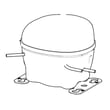
If you also have poor cooling (not just a code), a sealed-system problem can be a possibility and typically requires professional diagnosis. One key component in that system is the Samsung refrigerator compressor MKV190CL2BASH.
Why it matters
Repeated error displays often show up when temperatures are unstable or when ice maker areas freeze up. Addressing airflow, door sealing, and ice buildup helps protect food temperatures and prevents recurring ice jams.
Related help
For Samsung code patterns on similar French door designs, use our Samsung rfg29 french door refrigerator error codes as a general reference.
Last updated: January 2026