Installation guide
 Owner’s manual
 Error Codes




What is the life expectancy of a GE washing machine?
A GE washing machine typically lasts 10 to 14 years. For your GE WHRE5550K2WW washer, consistent maintenance (especially hose care, proper loading, and keeping the tub dry between loads) is what most often determines whether you land closer to 10 years or push beyond it. See the WHRE5550K2WW owner's manual for model-specific care guidance.
What affects washer lifespan the most
- Usage volume: multiple loads per day shortens life faster than a few loads per week.
- Overloading and unbalanced loads: increases stress on the tub, suspension, and drive system.
- Water quality: hard water and sediment can accelerate valve and seal wear.
- Moisture and residue: leaving the lid closed traps moisture and can lead to odor and buildup.
- Installation and leveling: an unlevel washer vibrates more and wears parts faster.
Maintenance that extends life (best practices for WHRE5550K2WW)
- Leave the lid open after washing so moisture can evaporate.
- Load items loosely and evenly around the outside of the basket; avoid laying bulky items across the Infusor area.
- Replace fill hoses on a regular schedule; GE recommends every 5 years.
- Keep the washer level; adjust the front leveling legs and recheck after moving.
- Wipe up spills promptly and clean the basket with a soft cloth and mild detergent (avoid harsh cleaners).
Quick lifespan guide
| What you do | Typical outcome | Why it helps |
|---|---|---|
| Replace hoses every 5 years | Fewer leaks and water damage | Prevents burst hose failures |
| Keep loads balanced | Less vibration and noise | Reduces wear on suspension and bearings |
| Leave lid open between loads | Cleaner, less odor | Lowers moisture-related buildup |
When “end of life” is approaching
These symptoms often point to major wear items (seal, bearing, drive, or suspension):
- Loud roaring or grinding during spin
- Persistent leaking from the tub area
- Excessive shaking even after leveling
- Frequent failure to spin or drain
Why it matters
A washer can run for years with minor issues, but chronic vibration, leaks, or poor draining can quickly turn into bigger repairs. Staying ahead on loading habits, leveling, and hose replacement is the simplest way to protect the tub, motor, and control components.
Last updated: January 2026
What is the most common problem with GE washers?
The most common GE washer problem is a no-spin or no-agitate condition. On the GE WHRE5550K2WW, this is often tied to the lid safety system (the washer will not agitate with the lid up) or a drain issue that prevents the unit from reaching spin. See the WHRE5550K2WW owner's manual for model-specific troubleshooting steps.
Most common symptoms we see (and what they usually point to)
- Won’t spin or agitate: lid not fully closed, failed lid switch, or control not starting the cycle
- Won’t drain or drains slowly: drain pump problem, kinked drain hose, or standpipe setup issue
- Fills and drains at the same time: drain standpipe too low (must be above 30 inches)
- Leaks: oversudsing from too much detergent, hose issues, or tub seal wear
- Odor or residue: lid kept closed after use, detergent buildup, or infrequent cleaning cycles
Quick checks before replacing parts
- Close the lid firmly and restart the cycle; this model uses a lid safety feature that prevents agitation and spinning with the lid up.
- Reset the electronics: unplug for 2 minutes, plug back in, then press Start.
- Confirm water supply: turn hot and cold faucets fully on.
- Use HE detergent and measure carefully; too many suds can cause poor draining and leaks.
- Verify drain setup: standpipe height must be above 30 inches.
Parts that commonly solve “won’t spin” or “won’t start” complaints
| Symptom | Likely area | Example part for WHRE5550K2WW |
|---|---|---|
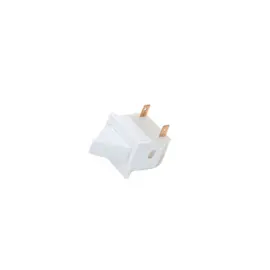
| No spin/no agitate with lid closed | Lid safety circuit | Washer lid switch assembly WH12X10334 |
| Hums but won’t drain/spin | Drain system | Washer drain pump assembly WH23X10030 |
| Intermittent operation or odd behavior | Controls | Washer electronic control board (model-specific) |
Why it matters
A washer that cannot drain or confirm the lid is closed often will not enter high-speed spin. Fixing the root cause prevents repeat shutdowns, reduces oversudsing leaks, and helps protect the drive system.
Last updated: January 2026
How do I know if my GE washer control board is bad?
If your GE WHRE5550K2WW washer won’t start, behaves erratically, or repeatedly stops mid-cycle after you’ve confirmed power, water supply, and lid closure, the electronic control board is a top suspect. We recommend running the basic reset and checks in the WHRE5550K2WW owner's manual before replacing parts.
Quick checks before blaming the control board
- Verify the outlet has power and the washer is firmly plugged in.
- Check the house breaker or fuse; the washer should be on a dedicated outlet.
- Confirm both hot and cold faucets are fully open.
- Close the lid completely; this model uses a lid safety feature that prevents operation with the lid open.
- Reset the electronics: unplug the washer for 2 minutes, plug it back in, then press Start.
Symptoms that point to a bad control board
A failing control board often shows up as control-related problems rather than purely mechanical ones.
- No response when you press Start (with power and lid closed)
- Cycle starts then stops or changes behavior without you changing settings
- Repeated “won’t drain” or “won’t spin” complaints with no blockage found
- Intermittent operation (works sometimes, dead other times)
- Visible damage on the board (burn marks, overheated spots)
Control board vs. other common causes
| Symptom | More likely cause | What to check first |
|---|---|---|
| Washer won’t operate at all | Power, lid safety, control board | Outlet, breaker, lid closure, 2-minute reset |
| Won’t drain | Drain pump or blockage | Hoses, pump, then control logic |
| Won’t spin but agitates | Lid safety or drive system | Lid function, then drive components |
| Random pauses | Normal operation in some cycles | Confirm cycle behavior in the manual |
Parts that are commonly involved in “won’t start” complaints
If the washer acts like it thinks the lid is open, the lid switch circuit is a frequent culprit.
- Washer lid switch assembly WH12X10334
- Wiring connections to the lid switch and control
- User control settings (cycle and load size)
Why it matters
Replacing a control board is one of the higher-cost repairs on a washer. Doing the power, lid-safety, and reset checks first helps you avoid replacing the wrong part and gets your GE washer running sooner.
Last updated: January 2026