


How to remove string trimmer head craftsman?
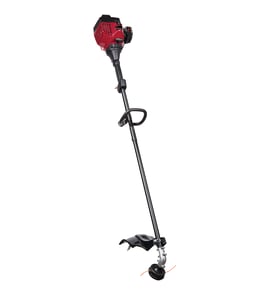
To remove the trimmer head on your Craftsman 944515580 gas line trimmer, lock the shaft (or head) so it cannot spin, then unthread the head from the gearbox. Most Craftsman heads loosen by turning clockwise (left-hand threads), but confirm by checking which direction tightens as you start.
Safe prep before you start
- Shut the engine off and let it cool completely
- Disconnect the spark plug boot so it cannot start accidentally
- Wear gloves; the cutting line and debris can be sharp
- Work on a flat surface with the trimmer supported
- If the head is stuck, apply penetrating oil and wait 10 to 15 minutes
Common removal method (works on many Craftsman gas trimmers)
- Align the locking holes/notches: Rotate the head until the notch/hole in the head base lines up with the notch/hole in the gearbox housing.
- Lock the shaft: Insert a small screwdriver, Allen key, or locking pin through the aligned holes to keep the shaft from turning.
- Unthread the head: With the shaft locked, spin the head off by hand. If it is tight, use a strap wrench or large adjustable pliers carefully on the head housing.
Which way do I turn it?
Most string trimmer heads use left-hand threads so they do not loosen during operation.
| What you do | Typical direction |
|---|---|
| Loosen/remove head | Turn clockwise |
| Tighten/install head | Turn counterclockwise |
If the head will not come off
- Re-check that the shaft is fully locked; if it slips, the head will never break free
- Tap the head lightly (rubber mallet) to help break corrosion
- Inspect the gearbox area for damage; a worn gearbox can bind the shaft
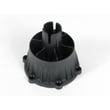
- If the drive system feels stripped or spins freely, inspect the Craftsman line trimmer gearbox 530096099 and the line trimmer flexible drive shaft 530096218
Why it matters
Removing the head the right way prevents stripped threads and protects the gearbox and drive shaft. That saves time when you need to replace a worn head, service the cutting line, or troubleshoot vibration.
Last updated: February 2026
What's the difference between a whipper, snipper, and a line trimmer?
A whipper snipper and a line trimmer are the same tool; the name changes by region. Both use a spinning nylon line to cut grass and light weeds. If you need to cut thicker brush, you typically step up to a brush cutter style trimmer head and drivetrain.
Quick definitions
- Line trimmer: Common U.S. term for a handheld trimmer that cuts with nylon line.
- Whipper snipper: Common Australia/New Zealand term for a line trimmer.
- String trimmer / weed eater: Other common names for the same line-trimming tool.
What changes between “light trimming” and “heavier cutting”
Even within the same category, capability depends on the build and attachments.
- Engine power and clutch design
- Shaft type (straight vs curved) and shaft length
- Gearbox strength and cutting head type
- Line diameter supported (thin line for edging; thicker line for heavier weeds)
- Whether it can accept brush blades (many line trimmers cannot)
How this applies to Craftsman model 944515580
Your Craftsman 944515580 is a gas line trimmer, so it is designed primarily for grass, edging, and typical yard weeds. If you are seeing poor cutting performance, the issue is often wear or driveline problems rather than “wrong tool name.”
Common parts that affect cutting performance
| Symptom | Common cause | Example part on this model page |
|---|---|---|
| Head spins weakly or intermittently | Worn or slipping driveline | Line trimmer flexible drive shaft 530096218 |
| Excess vibration or noisy head | Worn gearbox | Craftsman line trimmer gearbox 530096099 |
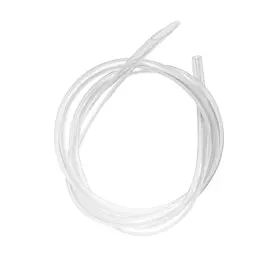
| Engine runs but won’t stay running | Fuel delivery issue | Briggs & statton line trimmer fuel line 699876 |
Why it matters
Using the right term helps you find the right repair help and parts. More importantly, matching the tool to the job prevents premature wear on the shaft, gearbox, and cutting head.
For troubleshooting steps by symptom, we recommend starting with our line trimmer symptoms landing page.
Last updated: February 2026
How to unflood a string trimmer?
To unflood your Craftsman 944515580 gas line trimmer, stop adding fuel, open the throttle fully, and pull-start repeatedly to clear excess fuel from the cylinder. If it still will not fire, dry the spark plug and let the engine air out for a few minutes.
Quick unflood steps (works for most gas trimmers)
- Move the stop switch to ON/RUN (a bad switch can mimic a flooded engine; see lawn & garden equipment kill switch 530069572).
- Set the choke to OFF (or RUN) and hold the throttle wide open.
- Do not press the primer bulb again; extra priming usually makes flooding worse.
- Pull the starter rope 8 to 15 times to purge fuel.
- If it sputters, keep the throttle open and continue pulling until it starts.
If it is badly flooded (strong fuel smell, wet plug)
- Turn the switch OFF.
- Remove and dry the spark plug; pull the starter a few times with the plug out to blow out fuel.
- Reinstall the plug, set choke OFF, hold throttle wide open, then pull-start.
Helpful checks while you are there
- If the air filter is soaked or dirty, replace it; restricted airflow makes flooding more likely (see lawn & garden equipment engine air filter 696923).
- If the primer bulb is cracked or sticking, it can over-fuel the engine (see line trimmer primer bulb 696989).
Why it matters
A flooded engine has too much fuel and not enough air for ignition. Clearing the cylinder and restoring airflow gets the fuel-to-air mix back into a range where the spark plug can light it.
Common causes of repeated flooding
| What you notice | Most likely cause | What to do |
|---|---|---|
| Floods after priming | Over-priming | Prime only as needed, then start |
| Floods after storage | Old fuel or varnish | Drain fuel, clean carburetor, tune up |
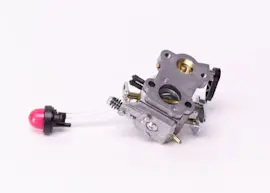
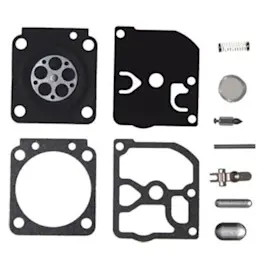
| Starts then dies, smells rich | Carburetor issue | Inspect/replace carburetor |
For deeper troubleshooting, use our DIY symptom guide: line trimmer won't start.
Last updated: February 2026
Can I use .095 trimmer line?
Yes, you can usually use 0.095-inch trimmer line on a Craftsman 944515580 gas line trimmer if the trimmer head is rated for that diameter. The key is matching the line size to the head’s capacity; oversized line can reduce RPM and cause feed problems.
Quick fit check (before you buy or spool)
- Check the trimmer head label or spool markings for the supported line diameter range.
- If your head is a bump-feed style, confirm the eyelets are large enough for 0.095 line.
- If the engine bogs down with thicker line, step down to a smaller diameter.
- Use round line for general trimming; use twisted or serrated line only if your head supports it.
- Replace worn drive components if the head stalls or chatters under load.
What changes when you go to 0.095 line
0.095 line is tougher and lasts longer in heavy weeds, but it also adds load to the engine and drivetrain.
| Line diameter | Best for | Tradeoffs |
|---|---|---|
| 0.065 to 0.080 | Light grass, edging | Wears faster in thick weeds |
| 0.085 | General purpose | Balanced durability and load |
| 0.095 | Heavy grass, weeds | More vibration, lower RPM, harder feeding |
If the head stops spinning or vibrates more
Thicker line can expose existing wear in the shaft or gearbox. If you notice slipping, binding, or intermittent head rotation, inspect the drive system and consider replacing the line trimmer flexible drive shaft 530096218 or the Craftsman line trimmer gearbox 530096099.
Why it matters
Using the correct line diameter helps your Craftsman trimmer cut cleanly without overheating the clutch/gearbox, stalling the engine, or causing constant line-feed jams.
Last updated: February 2026
How to replace trimmer line on Craftsman 944515580?
To replace trimmer line on your Craftsman 944515580, you remove the bump knob (cap), lift out the spool and spring, wind new line onto the spool in the correct direction, then reinstall the spring and snap the cap back on so the head feeds line smoothly.
Before you start
- Shut the engine off and let the muffler cool completely.
- Disconnect the spark plug boot so the trimmer cannot start.
- Work over a bench or towel so the spring and spool do not get lost.
- Use the correct diameter line for your trimmer head (most gas trimmers use 0.080 in to 0.095 in line).
Steps to replace the line (typical bump-feed head)
- Remove the bump knob/cap: Press the two side tabs (if equipped) and pull the cap straight off.
- Lift out the spool and spring: Note how the spring sits in the head.
- Cut new line: Cut one length (often 10 to 20 ft) or two equal lengths if your spool uses two pieces.
- Wind the line: Feed the line into the spool anchor hole/slot and wind tightly in the direction shown on the spool arrow.
- Set the line ends: Lock the line into the spool retaining notches so it does not unwind.
- Reassemble: Drop the spring and spool back in, thread the line ends through the eyelets, then push the cap on until it clicks.
Quick checks after reassembly
| What to check | What “good” looks like |
|---|---|
| Cap seated | Cap snaps on and does not wobble |
| Line routing | Line passes cleanly through both eyelets |
| Feed action | Bump advances line; line trims to length at the deflector blade |
Why it matters
Correct winding direction and tight, even wraps prevent tangles, poor feeding, and vibration. If the head will not feed line after restringing, the spool may be worn or the drive components may be slipping.
If it still will not feed line
- Clean grass and debris from the head and eyelets.
- Replace a cracked or sticky bump knob/head components.
- If the cutting head is not spinning consistently, inspect the shaft and gearbox; common wear items include the line trimmer flexible drive shaft 530096218 and the Craftsman line trimmer gearbox 530096099.
- Use our DIY troubleshooting for feeding and cutting issues: solving common problems with line trimmer cutting lines.
Last updated: February 2026